


Painted Rococo Wall Console
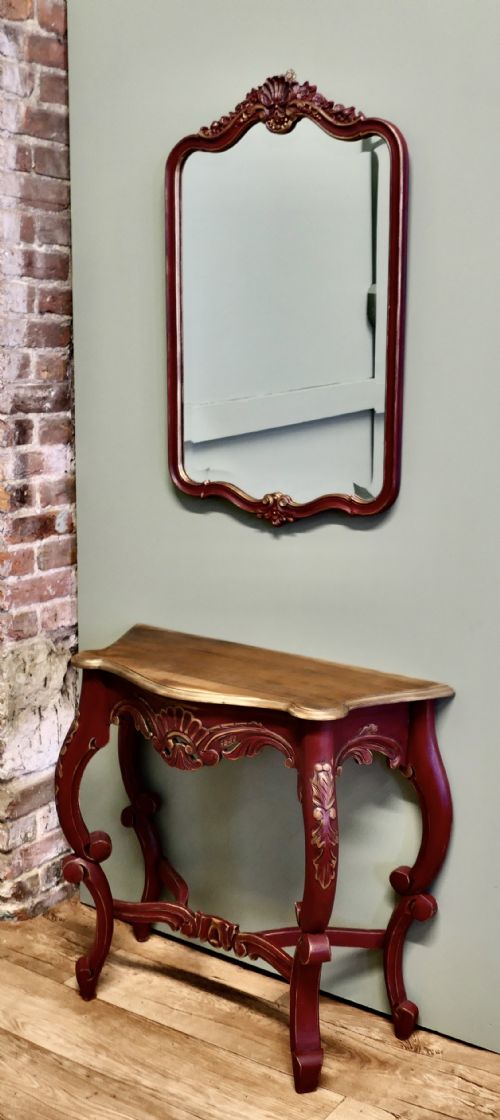
These painted rococo wall console tables bring asymmetric curves and antique finishes to a room, mounted securely to the wall for a striking architectural silhouette.
Painted Rococo Wall Console
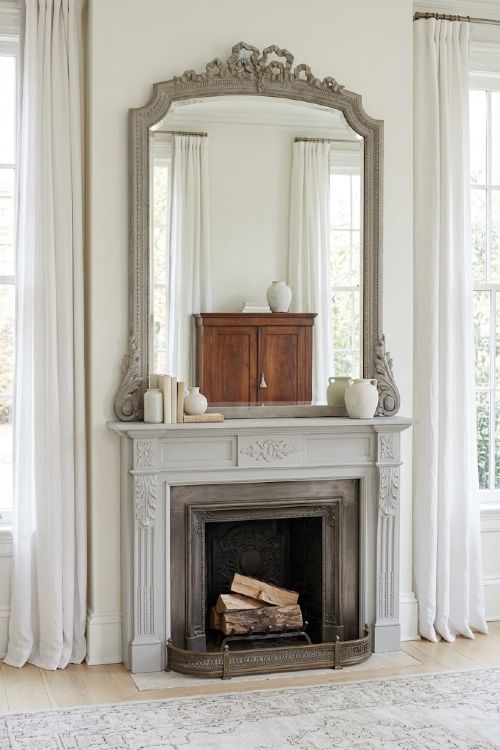
A painted rococo wall console combines the sweeping, asymmetric curves of the style with wall-mounted stability, freeing floor space while offering a display surface. The form encompasses both console tables supported by legs against a wall and smaller wall brackets designed purely for suspension.
Examples on this page span from the eighteenth century through the nineteenth century into the nineteen-twenties and nineteen-thirties revival periods. French and Italian origin dominate the selection, accompanied by occasional Spanish, Irish, and Chippendale style pieces.
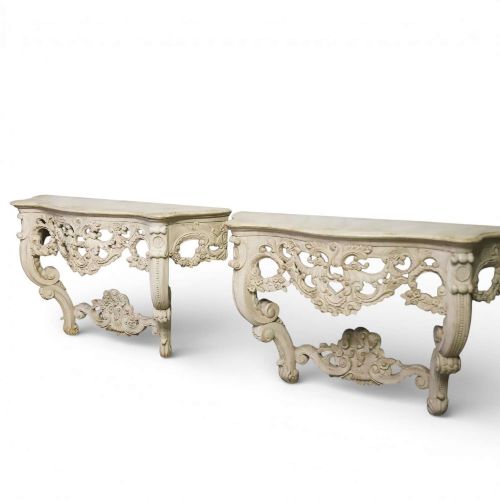
Buyers most frequently encounter nineteenth-century interpretations alongside nineteen-twenties and nineteen-thirties decorative reproductions. These later pieces often carry an antique white finish or parcel gilt highlights over carved wood.
Materials and construction
Carved wood provides the structural base for these console tables and brackets, shaped into intricate serpentine outlines and scrolling foliage. Gesso and gold leaf are frequently applied over the wooden armature to create gilt highlights that catch the light.
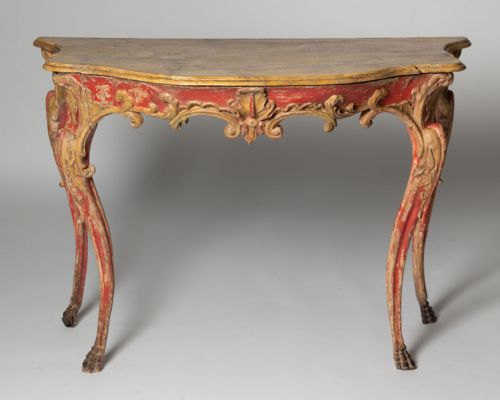
Surface decoration relies heavily on paint, ranging from distressed antique white to rich polychrome schemes on Italian and French models. Heavy marble tops, including sienna varieties, provide a cool, durable counterpoint to the ornate wooden bases below.
Listings span multiple centuries, uniting eighteenth-century origins with nineteenth-century revival pieces and nineteen-thirties interpretations.
Quality and craftsmanship
Depth and precision of the hand-carving separate standard decorative work from superior examples, particularly in the rendering of rococo scrolls and asymmetric motifs. Crisp execution in the wooden structure dictates how successfully the piece holds complex curves without losing visual balance.
The integration of the painted finish and gilding reveals much about the maker's hand, where layered paint and subtle parcel gilt create depth rather than flat coverage. Quality also manifests in the weight and geological patterning of fitted marble tops, which anchor the lighter carved frames.
The Painted Rococo Wall Console Glossary
- Rococo
- An eighteenth-century style characterised by ornate, asymmetric scrollwork, shell motifs and fluid natural forms. It emerged in France before spreading across European decorative arts.
- Console table
- A table designed to be fixed against a wall, historically supported by front legs with the rear secured to the masonry. Many versions rely on wall brackets for total support.
- Parcel gilt
- A technique where portions of an object are selectively gilded with gold leaf while other areas remain painted or exposed. This creates contrast against painted woodwork.
- Serpentine
- A curved line that follows a convex-concave-convex path, commonly seen on the front edges of console tables. It adds rhythmic movement to the silhouette.
- Gesso
- A plaster-like mixture applied to wood surfaces to provide a smooth base for painting and gilding. It allows for crisp relief details when carved.
- Sienna marble
- A decorative yellow-brown marble with dark veining, quarried in Italy. It provides a luxurious contrasting surface for fine console tables.
Painted Rococo Wall Console: Frequently Asked Questions
How do you hang a wall console?
These tables and brackets are designed to be anchored directly into wall studs or masonry using heavy-duty fixings. Because many carry heavy marble tops, secure wall attachment is essential for safety.
Professional installation is recommended to ensure the weight of the marble and the carved frame is adequately supported by the wall structure.
What is the difference between French and Italian styles?
French rococo pieces tend to feature refined, highly theatrical asymmetric carving with delicate painted and gilt finishes. Italian versions often display bolder proportions with richer polychrome painting and pronounced serpentine curves.
Both traditions embrace the exuberant scrollwork of the eighteenth century, though later nineteenth-century revivals adapted these traits for Victorian and Edwardian interiors.
How do I care for a painted and gilt surface?
Dust the carved wooden surfaces gently with a soft, dry cloth to prevent the accumulation of dirt in the recesses. Avoid chemical polishes and moisture, which can damage aged paint and fragile gold leaf.
Marble tops can be wiped with a damp cloth and mild soap, but ensure liquids do not seep into the unsealed underside or the wooden frame.
Are these pieces from the eighteenth century?
While eighteenth-century originals exist, the selection includes many nineteenth-century revival pieces and nineteen-thirties interpretations. Each listing specifies the exact period or century of manufacture based on construction and style.
Revival pieces from the Victorian era and the nineteen-thirties captured the same decorative impulse using traditional hand-carving and finishing techniques.