

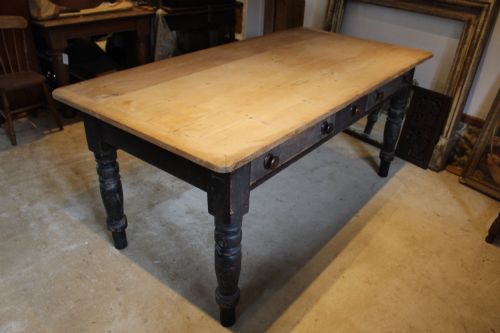
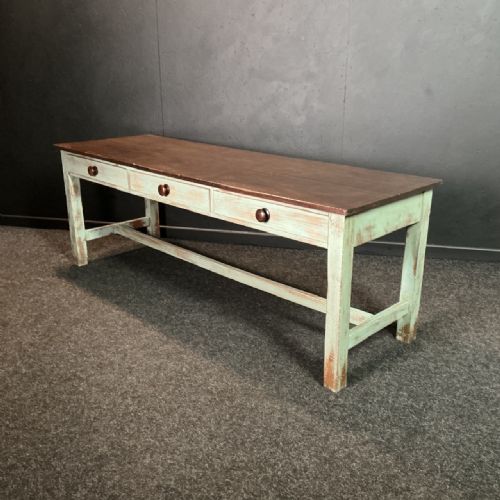
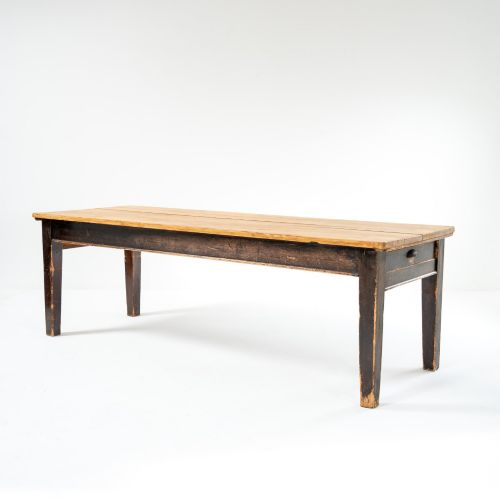
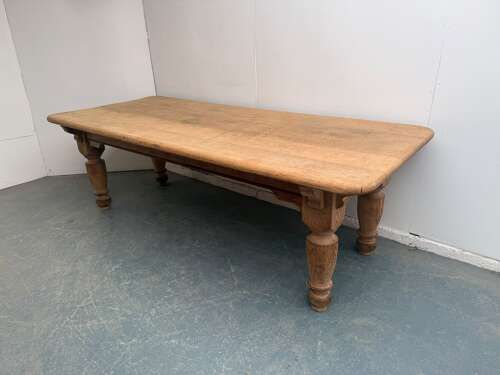


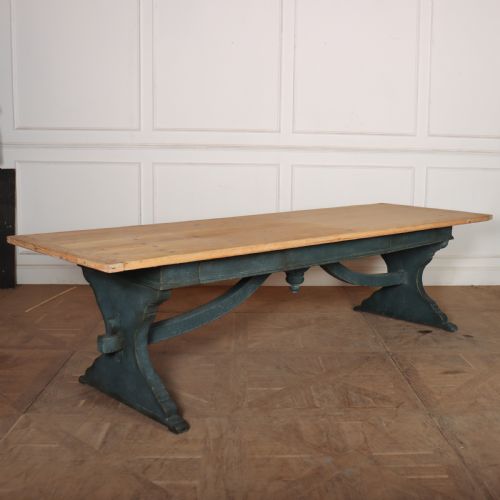
Painted Refectory Table
A painted refectory table brings long lines and honest working surfaces to a room, offering plenty of elbow room for dining and family life.
Painted Refectory Table
When you search for a painted refectory table, you are looking at long, narrow dining surfaces built for communal meals and everyday work. The examples seen on this page span the 19th century and the early 20th century, drawing on rustic farmhouse, Victorian country, and Welsh vernacular traditions.
The version you are most likely to meet here is constructed from pine, often bearing layers of old paint on the base while retaining a scrubbed wooden top. These pieces originate from English, Welsh, and Italian country houses, taverns, and dairies where sturdy proportions mattered most.
Lengths vary significantly, accommodating anywhere from intimate gatherings to large groups seated along benches or chairs. The forms range from simple four-legged tavern tables to trestle designs and X-framed pine structures with cleated ends.
How they were made
Makers relied primarily on solid pine and oak for the bulk of these tables, utilising sturdy timber planks for wide table tops. Iron braces or fixings sometimes reinforced the underframes, particularly on tavern and trestle variants designed for heavy daily use.
Surfaces were finished with simple painted coatings applied to the bases and legs, while the tops were often left bare or scrubbed clean through generations of washing. Carpenters utilised traditional joinery methods such as cleated ends to keep long timber planks stable against warping.
Painted Refectory Table Retail Price Guide 2026
Typical asking prices for painted refectory table among the pieces listed under this phrase on Sellingantiques today, from the lower quarter to the upper quarter. They describe what is for sale here now, not the wider market.
Recorded forms on this page include harvest tables, trestle tables, and X-framed tavern tables designed for heavy use.
What varies in quality
The distinction between ordinary and superior examples lies in the integrity of the timber and the depth of surface history. Tables retaining their original paint layers and thick, well-worn scrubbed tops hold greater appeal than those stripped down or heavily reworked.
Proportion and scale also dictate quality, as longer harvest and refectory formats require exceptional timber selection to prevent sagging across extended spans. Subtle details like X-framed stretchers or pegged joints elevate a piece beyond standard utilitarian workshop production.
The Painted Refectory Table Glossary
- Refectory table
- A long dining table traditionally used in monastic refectories and later adopted in domestic halls and farmhouses. These pieces are characterised by their elongated proportions.
- Cleated ends
- Wooden battens fixed across the grain at the short ends of a table top. This technique helps prevent the main planks from warping over time.
- Scrubbed top
- A wooden table surface cleaned repeatedly with water and a stiff brush, leaving the grain raised and pale. This finish results from decades of practical kitchen use.
- Trestle table
- A table supported by side assemblies rather than four independent corner legs. This design provides maximum legroom along the length of the surface.
- Harvest table
- A large utility table traditionally brought out for seasonal gatherings and communal farm labour meals. They typically offer substantial seating capacity.
Painted Refectory Table: Frequently Asked Questions
How many people will a long refectory table seat?
These tables vary greatly in length, with some smaller examples seating four to six diners comfortably. Longer harvest and tavern formats can accommodate ten or more guests depending on bench or chair placement.
Measuring the available clearance around your room helps determine the ideal length for daily movement and seating.
Can I use a painted farmhouse table for daily dining?
These tables were originally built for heavy daily use in kitchens, dairies and taverns, making them robust enough for modern family life. The sturdy timber construction handles daily meals and kitchen tasks without difficulty.
Using placemats or coasters helps protect the scrubbed top from moisture and heat while preserving the historic character.
How do I care for a scrubbed wooden top?
Scrubbed pine and oak tops respond well to simple cleaning with a damp cloth and mild soap when necessary. Avoiding harsh chemical cleaners prevents the open grain from drying out or discolouring.
Applying occasional natural wax can nourish the wood if the surface begins to feel overly dry from central heating.
What is the difference between a tavern table and a refectory table?
Tavern tables generally feature compact proportions designed for public houses, often utilising four legs or simple stretchers. Refectory tables tend to be considerably longer and narrower, built for communal dining halls.
Both forms share utilitarian roots, but refectory formats offer expanded seating down the full length of the span.