


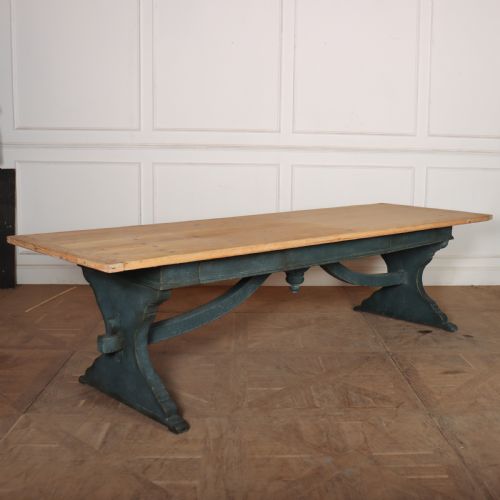
Blue Painted Kitchen Table
A blue painted kitchen table anchors a room with domestic character, bringing tactile painted wood and time-worn utility to everyday spaces.
Blue Painted Kitchen Table
When searching for a blue painted kitchen table, you encounter robust utility furniture designed for hard work rather than polite display. The evidence shows these surfaces spanning English, French, Scandinavian, and Italian country traditions, with pine as the primary vehicle for paint.
Most examples hail from the nineteenth century, including specific utilitarian forms such as bakers tables and shop counters adapted for domestic use. Alongside tables, the listings include country house dresser bases and trestle construction that share the same vernacular pedigree.
You are most likely to meet nineteenth-century pine tables carrying layered painted surfaces from regional European workshops. These pieces bridge the gap between pure utility and decorative country style, showing the marks of daily preparation and service.
How they were made
Makers constructed these tables predominantly from solid pine and painted timber, choosing softwoods that accepted pigment readily and withstood the constant scrubbing of a busy kitchen. Construction relied on straightforward joinery, sturdy trestle supports, and thick plank tops designed to absorb daily wear.
The painted finish was applied directly to timber, often building up layers over decades of use and redecoration. Hardware such as brass occasionally appears on associated fitted elements, while the primary surfaces rely on pigment and timber integrity rather than elaborate decorative veneers.
Blue Painted Kitchen Table Retail Price Guide 2026
Typical asking prices for blue painted kitchen table among the pieces listed under this phrase on Sellingantiques today, from the lower quarter to the upper quarter. They describe what is for sale here now, not the wider market.
The site listings feature nineteenth century pine tables alongside English country house dresser bases and Italian trestle tables.
What varies in quality
Quality in these domestic tables rests on the integrity of the original timber structure and the character of the paint surface. Pieces that retain their honest working proportions and untouched layered paint stand apart from those stripped down or excessively refinished.
Proportion and regional detail define the upper tier of these utilitarian forms, where bakers tables and shop counters display thoughtful joinery beneath their pigment. The distinction lies between honest domestic survival and heavy-handed later intervention.
The Blue Painted Kitchen Table Glossary
- Pine
- A softwood commonly used for country furniture because it is accessible and easy to work. It provides a stable base for painted finishes.
- Trestle Table
- A table consisting of two or more supports connected by a horizontal beam, holding a loose or fixed top. This form offers stability and legroom.
- Dresser Base
- A low sideboard or cabinet featuring drawers and sometimes cupboards below a flat top. They served as primary storage and preparation surfaces in country kitchens.
- Shop Counter
- A heavy-duty commercial table built for retail use, later repurposed for domestic kitchens due to its generous proportions and robust build.
Blue Painted Kitchen Table: Frequently Asked Questions
Are these tables suitable for daily kitchen use?
These tables were built for heavy domestic labour, making them durable companions for modern kitchens. Their solid timber construction handles daily life with ease.
Protective measures like beeswax help maintain the painted surfaces against moisture and daily spills. They function well as central work areas or dining spots.
How do I identify a nineteenth century pine table?
Nineteenth century examples show hand-planed surfaces, traditional joinery pegs, and timber shrinkage consistent with age. Pine was the standard softwood utilised across European country workshops during this era.
Examining the underside and drawer construction reveals the hand methods of the period. Tool marks and construction quirks confirm their nineteenth century origins.
What is a bakers table?
A bakers table is a specialised utilitarian surface designed for rolling dough and food preparation. They typically feature heavy pine construction and sturdy legs built to withstand downward pressure.
Many survivors carry traces of flour, grease, and original paint layers from their working past. Their sturdy build makes them sought-after centrepieces for modern cooking spaces.
How do French and Scandinavian styles differ?
French country tables often display warmer timber tones and softer painted finishes suited to rustic interiors. Scandinavian and Gustavian pieces lean toward lighter palettes, including pale blues and greys.
Regional joinery techniques and proportions also vary between these traditions. Both styles prioritise functional utility over ornate decoration.