




Painted Porcelain Wall Art
These painted porcelain wall art pieces bring hand-painted ceramic plaques and chargers into interiors, framed for display.
Painted Porcelain Wall Art
Painted porcelain wall art encompasses hand-painted ceramic plaques, chargers, and plates created for display in domestic interiors. Buyers examining this category will find pieces spanning the nineteenth and early twentieth centuries, originating from European manufactories and Asian kilns.
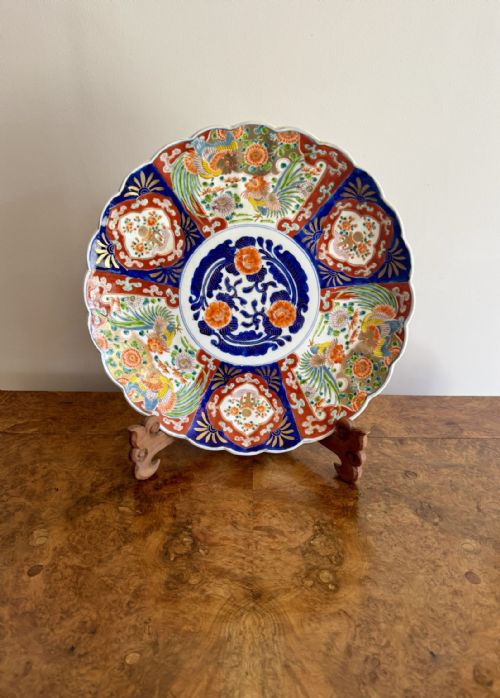
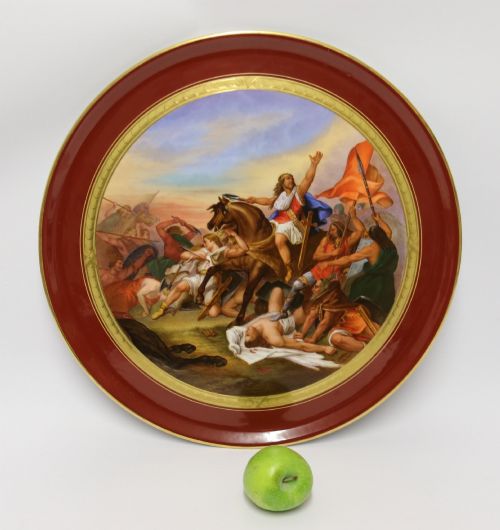
The selections include framed portrait plaques, botanical studies, mythological scenes after Renaissance masters, and decorative Imari charges. Victorian and Edwardian examples sit alongside Japanese Meiji period wares and Chinese Republican period panels.
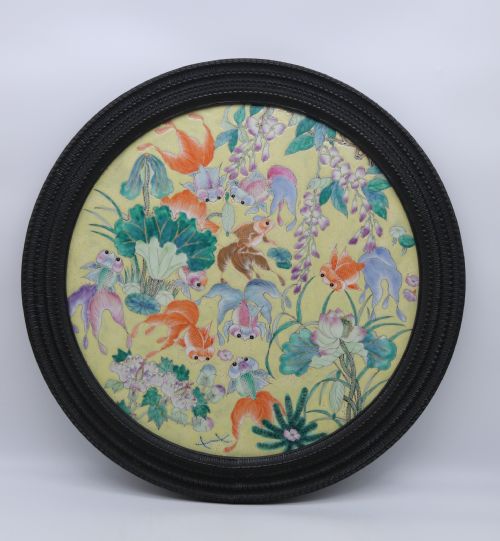
Wall plaques mounted within carved wood frames and decorative plates pierced for hanging represent the primary formats encountered. Makers ranging from Royal Worcester to KPM dominate the European offerings, while Japanese chargers depict aquatic scenes and traditional figures.
Materials and Manufacture
These works utilise hard-paste and soft-paste porcelain bodies finished with coloured glazes and enamel pigments. Painters applied mineral colours by hand before firing the ceramics at high temperatures to vitrify the pigments into the glaze.
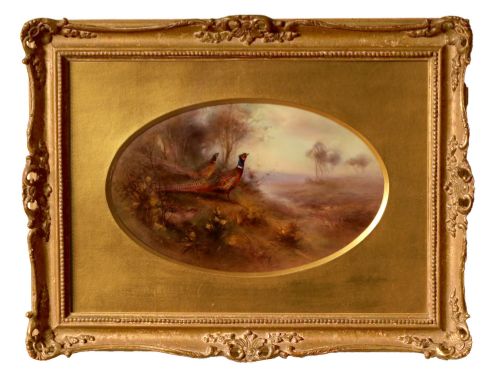
Many European plaques and chargers incorporate giltwood frames, gold leaf accents, and glass protection to house the ceramic surface. Wood backings and original hanging mounts frequently secure the heavy porcelain plates and panels.
Listings feature porcelain pieces spanning the nineteenth century through the 1930s, incorporating wood, giltwood, glass, and gold leaf elements.
Assessing Quality
The integrity of the porcelain body, the depth of the glaze, and the preservation of the original giltwood or carved frame contribute to the overall standard of the piece.
James Stinton·Royal Worcester·KPM·Copeland Pottery
The Painted Porcelain Wall Art Glossary
- Charger
- A large decorative plate intended for display on a wall or sideboard rather than for table service. These substantial ceramic pieces often feature complex pictorial scenes across their wide surface.
- Enamel
- Vitreous material fused to the porcelain surface through kiln firing to create permanent, glossy colours. Artists layer these pigments to achieve detailed pictorial representations.
- Imari
- Japanese export porcelain decorated in underglaze blue, iron red, and gold. The style originated in the Edo period and proved widely popular across nineteenth-century European interiors.
- Plaque
- A flat panel of porcelain created specifically to display a painted image independently of vessel forms. These items are frequently framed in wood for wall mounting.
- Hard-paste porcelain
- A dense, durable ceramic composed of kaolin and petuntse fired at high temperatures. European factories such as Vienna and Sevres developed specific recipes for this refined material.
Painted Porcelain Wall Art: Frequently Asked Questions
How do I hang a heavy porcelain plaque?
Heavy porcelain plaques require secure wall anchors and robust picture wire attached directly to the frame structure rather than the backing board. Professional mirror or picture hangers distributed evenly across the weight bear the load safely.
Ensure the frame surrounds and supports the ceramic edge entirely before mounting. Wall studs provide the most reliable anchor point for substantial nineteenth-century pieces.
Were these plates originally made for walls?
Many decorative chargers and plates feature factory-drilled foot rings or original wire attachments designed specifically for wall display. European manufactories produced large cabinet plates intended solely for visual appreciation.
Standard dining wares rarely feature the elaborate signature artwork found on these display pieces. The presence of fitted frames often confirms an intended domestic wall placement.
How do I clean painted porcelain art?
Dust the surface gently with a soft, dry ostrich feather duster or a clean artist's brush to remove particles. Avoid liquid cleaners, damp cloths, or chemical solvents which might damage fragile overglaze enamels or gilt accents.
Glass fronts on framed plaques protect the painted surface from airborne grease and dust. Unframed chargers require careful handling without touching the painted ceramic directly.
How can I tell Victorian from Edwardian plaques?
Victorian porcelain painting frequently embraces elaborate mythological narratives, deep rich enamel palettes, and heavy gilt ornamentation. Signatures appear less common on mid-century domestic output compared to later decades.
Edwardian and early twentieth-century pieces often reflect more naturalistic studies, such as the game birds by artists like Stinton. Lighter pastel tones and Impressionist influences distinguish these later compositions.