


Painted Porcelain Timepiece
A painted porcelain timepiece brings together hand-painted ceramic panels and intricate metalwork to anchor a mantelpiece with nineteenth-century French elegance.
Painted Porcelain Timepiece
A painted porcelain timepiece combines mechanical clockwork with decorative ceramic components, originating primarily during the nineteenth century in France and Victorian Britain. Buyers examining these objects encounter mantel clocks and carriage timepieces featuring porcelain dials, painted plaques, or complete ceramic cases.
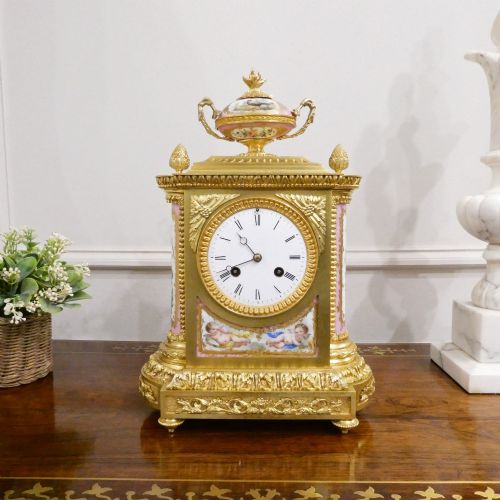
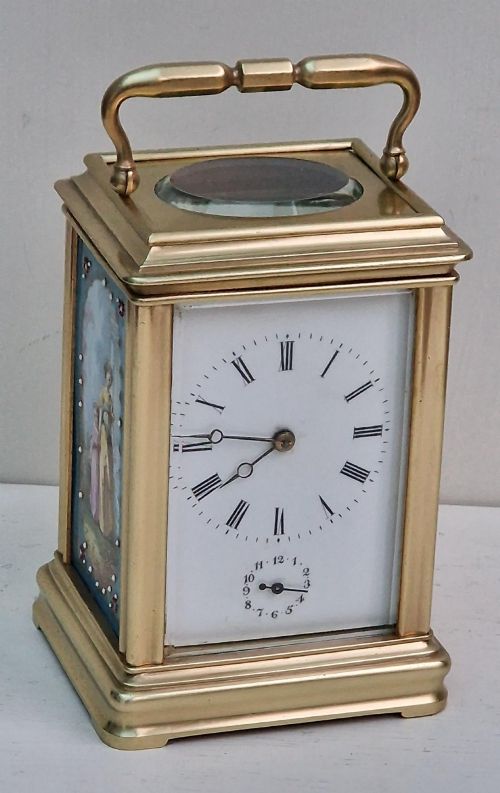
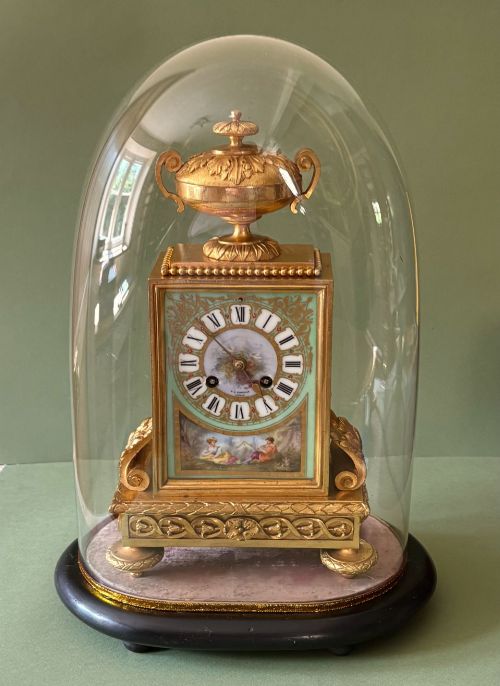
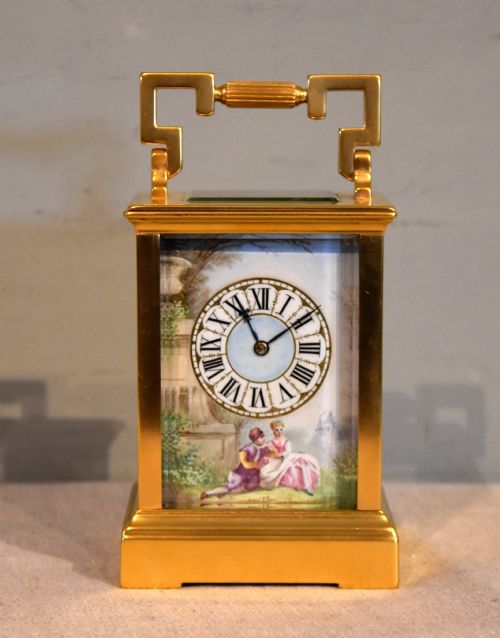
The versions most frequently met on this page are French nineteenth-century mantel clocks, often styled in the Rococo Revival or Louis XVI Revival taste. These typically pair hand-painted porcelain panels with gilt bronze, ormolu, and brass mounts, alongside carriage timepieces featuring porcelain face panels.
Makers such as Jean-Baptiste Delettrez and Japy Frers produced these works during periods spanning from eighteen-forty to nineteen-hundred, incorporating enamel details and extensive gilding. The overarching aesthetic merges functional timekeeping with the decorative arts of the Victorian and Edwardian eras.
How they were made
Makers constructed these timepieces using porcelain for the dials and decorative panels, housed within brass, gilt bronze, or ormolu frameworks. Artisans applied hand-painted designs directly onto the ceramic surfaces before firing them, frequently adding rich gilding to highlight the surrounding metal mounts.
The mechanical movements sat behind glass or within metal cases, accompanied by enamel chapter rings and delicate hands. Ormolu and gilt bronze elements were cast and chased to complement the curved porcelain plaques typical of Rococo and Louis XVI revival designs.
Materials recorded across current inventory include porcelain, glass, brass, gilt bronze, ormolu, enamel, and gilding.
What varies in quality
Quality in a painted porcelain timepiece rests on the precision of the hand-painted ceramic work and the crispness of the gilt bronze or ormolu casting. Superior examples display finely detailed figures or floral scenes on the porcelain panels without blurring or fading.
The refinement of the metal mounts and the execution of the architectural or rococo framing distinguish finer workshop productions from standard output. Well-preserved enamel dials and fully integrated movements by recorded makers elevate the standing of an individual piece.
Jean-Baptiste Delettrez·Japy Frers
The Painted Porcelain Timepiece Glossary
- Ormolu
- Gilded bronze produced by applying a mercury-gilding mixture to cast bronze, creating a rich golden surface finish frequently seen on nineteenth-century French clock mounts.
- Enamel
- A glassy substance fused to metal or ceramic through firing, commonly utilised for the chapter rings and numerals on clock dials.
- Rococo Revival
- A nineteenth-century design style mimicking the asymmetrical curves, scrolls, and natural motifs of the eighteenth-century French Rococo movement.
- Louis XVI Revival
- A classical revival style drawing on straight lines, symmetry, and architectural motifs from the reign of the French monarch.
- Carriage timepiece
- A portable clock originally designed for travel during the nineteenth century, often fitted with a glass-panelled brass case and porcelain elements.
Painted Porcelain Timepiece: Frequently Asked Questions
What periods do these clocks represent?
These items predominantly date from the nineteenth century, encompassing Victorian and Edwardian eras alongside specific decades like eighteen-sixty and eighteen-eighty.
French workshops produced the majority of these designs, often employing Revival styles that reference earlier eighteenth-century aesthetics.
How were painted porcelain timepieces used?
Owners placed these timepieces on mantelpieces, boudoir surfaces, and drawing-room side tables to serve both as functional clocks and decorative centrepieces.
Smaller carriage formats allowed for portability, while larger mantel versions remained fixed as prominent interior ornaments.
How do I identify French revival styles?
Rococo revival pieces display flowing asymmetrical curves, C-scrolls, and naturalistic floral motifs, whereas Louis XVI revival items feature stricter symmetry and classical architectural lines.
Both styles integrate painted porcelain panels into gilt bronze or ormolu mounts to achieve their decorative effect.
What materials are standard in these pieces?
Standard construction combines porcelain panels and dials with brass, gilt bronze, or ormolu frameworks, supplemented by glass panels and enamel details.
Gilding and hand-painted ceramic art form the visual core of each timepiece.