

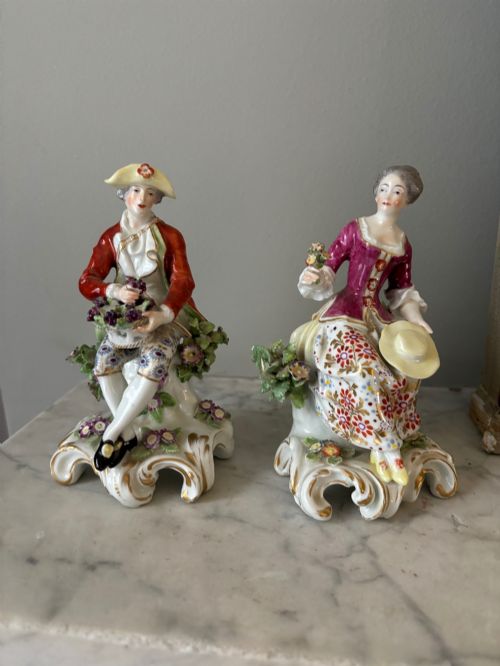
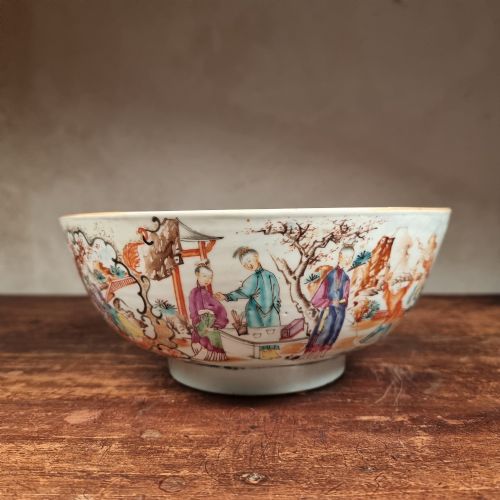
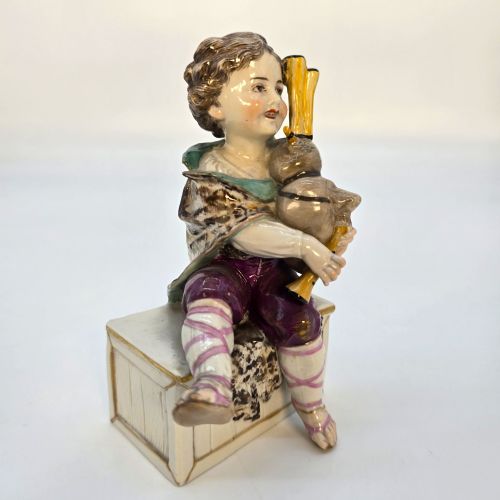
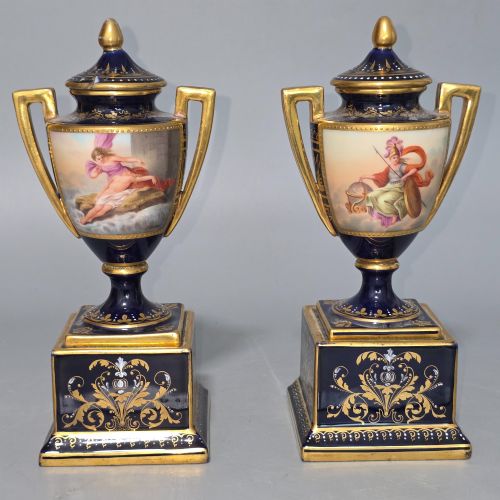
Painted Porcelain Figure
When a painted porcelain figure catches the eye, it brings centuries of kiln craft and character into the room.
Painted Porcelain Figure
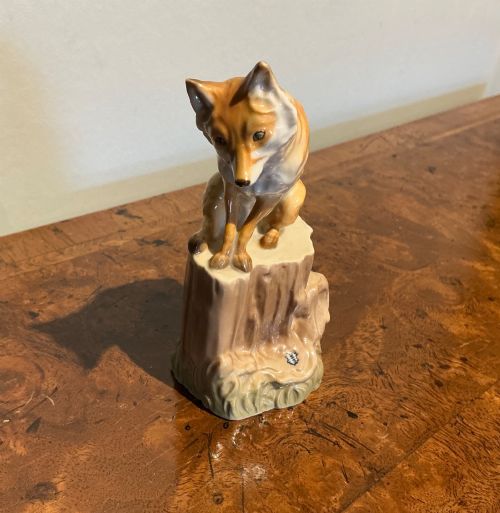
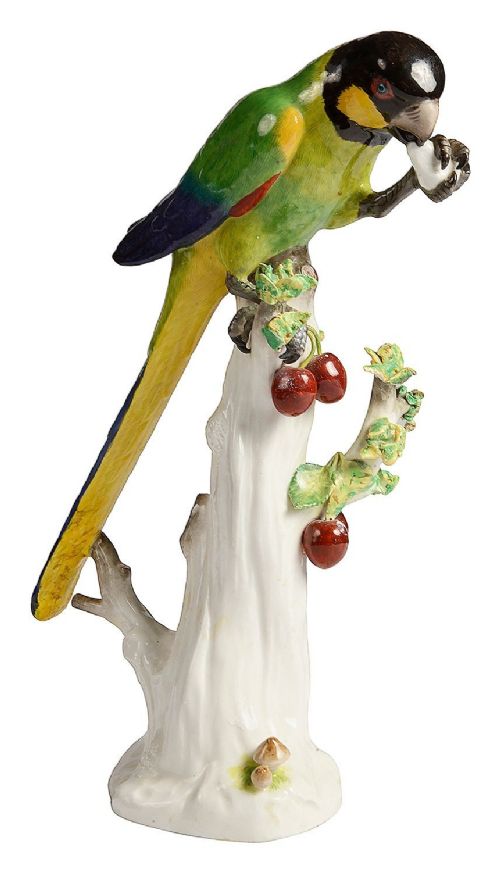
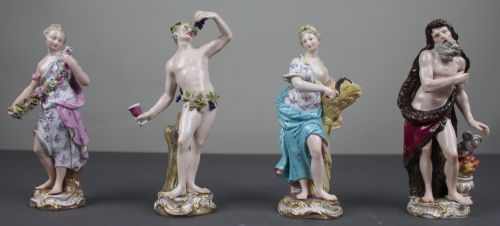
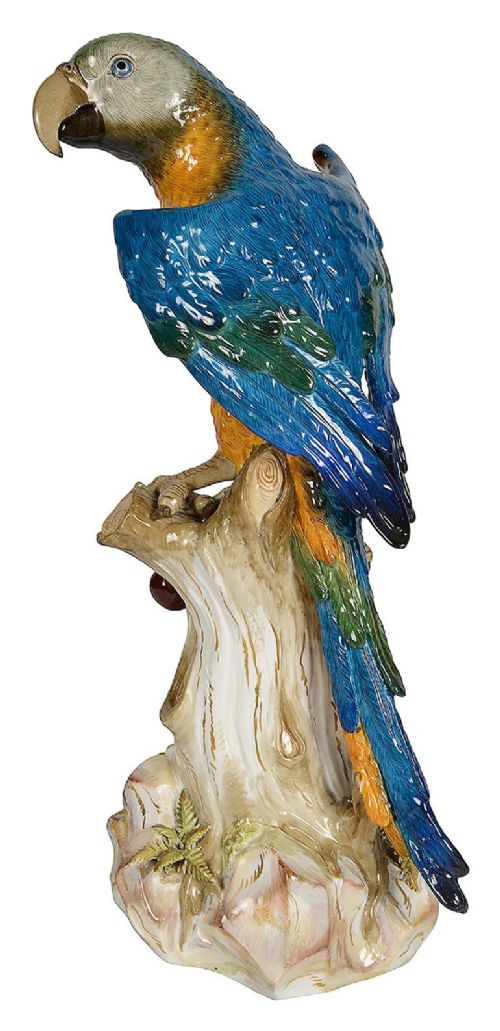
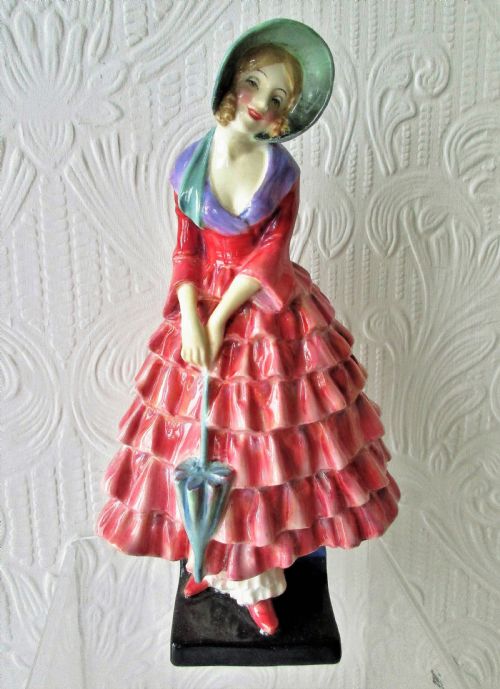
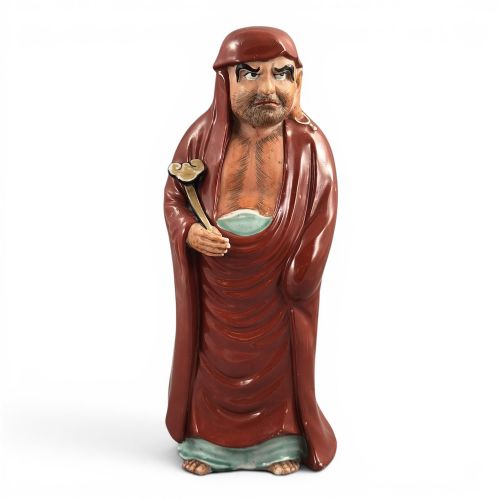
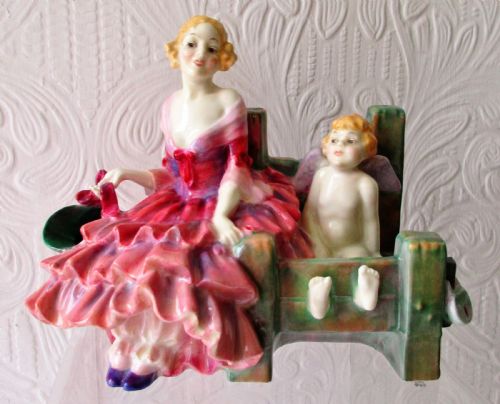
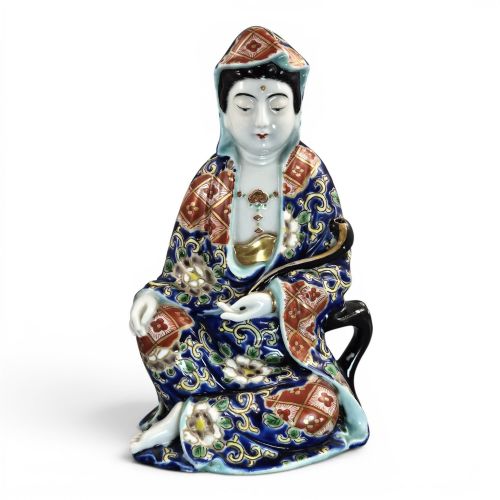
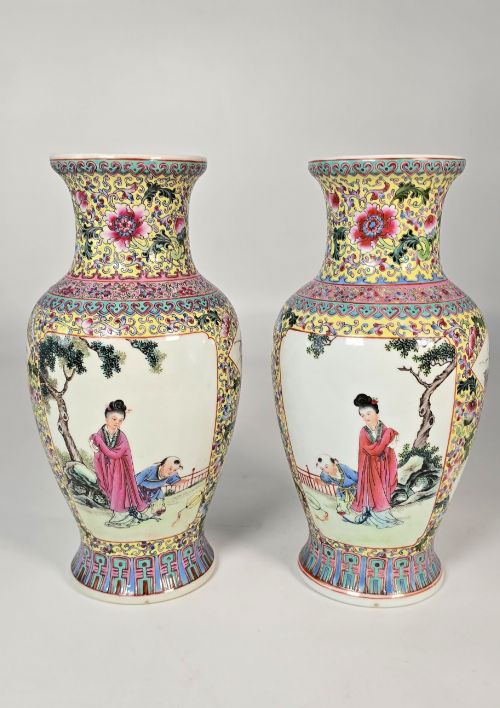
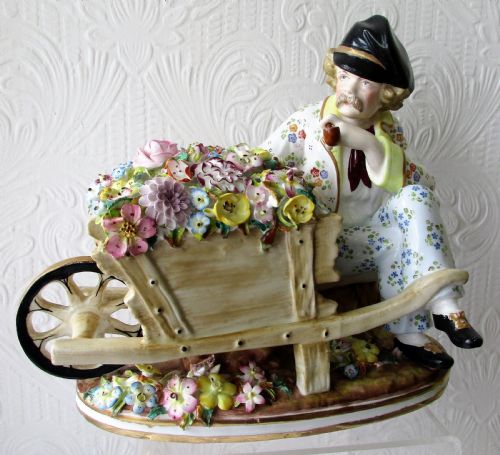
A painted porcelain figure represents a rich tradition of ceramic sculpture spanning European factories and Asian kilns, capturing everything from literary characters and allegorical figures to animals and deities. Buyers seeking a painted porcelain figure encounter diverse expressions, ranging from eighteenth-century Meissen models and English figures to twentieth-century Art Deco studies and Japanese okimono.
The selections on this page draw heavily from nineteenth-century European output, Victorian English character studies, and continental porcelain groups, alongside twentieth-century works from factories like Royal Doulton and Karl Ens. Common forms include single character figurines, matched pairs of seasonal figures, and animal subjects executed in hard-paste or soft-paste porcelain.
Makers from various regions utilised distinct stylistic approaches, moving from rococo pastoral scenes and neoclassical pairs to bold twentieth-century modernist lines. Each piece reflects the aesthetic priorities of its period, whether the ornate detailing of a nineteenth-century German factory or the clean geometry of an Art Deco dancer.
How They Were Made
The creation of these pieces begins with moulded or slip-cast ceramic bodies formed from hard-paste or soft-paste porcelain, sometimes finished as unglazed biscuit porcelain. Artisans then applied underglaze and overglaze enamel colours by hand before firing the pieces in kilns to fuse the pigments to the glaze surface.
Details such as facial expressions, garment patterns, and natural elements received meticulous hand painting, often accented with gold leaf or gilt highlights. Complex forms, particularly lace figures or multi-figure groups, required delicate assembly of individually modelled components prior to the final firing.
Listings feature hard-paste porcelain, soft-paste porcelain, and bone china across the 18th Century, 19th Century, and 1930.
What Varies in Quality
The preservation of fragile applied elements, such as delicate porcelain lace, floral bouquets, and intricate extremities, significantly influences the integrity of a piece. Firing stability also plays a role, with higher-grade figures avoiding warping or heavy kiln dust trapped in the glaze during production.
Royal Doulton English Porcelain·Volkstedt Rudolstadt Factory·Bourdois & Bloch Paris·Letu & Mauger Paris·Karl Ens
The Painted Porcelain Figure Glossary
- Hard-paste porcelain
- A dense, durable ceramic material fired at very high temperatures, composed primarily of kaolin and petuntse. It resists scratching and does not absorb moisture.
- Soft-paste porcelain
- An artificial ceramic body developed in Europe to imitate Chinese porcelain, fired at lower temperatures than hard-paste. It has a warmer tone and a softer glaze.
- Biscuit porcelain
- Unglazed ceramic ware fired once to vitrify the body, leaving a matte, porous surface resembling marble. It is frequently utilised for neoclassical figures and groups.
- Enamel
- Vitreous coloured glass fused to the porcelain surface during a secondary low-temperature kiln firing. It provides the vibrant palette seen on garments and decorative motifs.
- Okimono
- A Japanese decorative carving or figurine designed for display on a shelf or in a tokonoma alcove. These pieces often depict mythological figures, deities, or daily life.
Painted Porcelain Figure: Frequently Asked Questions
How do I identify early Meissen figures?
Early Meissen figures often display crossed swords marks in underglaze blue, though the style of the mark evolved significantly from the eighteenth century onward. Stylistic clues include rococo scroll bases, naturalistic posture, and hand-painted polychrome enamel details characteristic of eighteenth-century German modelling.
Examination of the paste and glaze under magnification reveals the characteristic texture of early hard-paste porcelain. Model numbers and incised worker marks frequently appear on the underside or base rim of authentic pieces.
What is the difference between porcelain and pottery figures?
Porcelain figures are made from refined clay containing kaolin, fired at high temperatures until the body becomes vitrified and non-porous. When held to the light, thin sections of porcelain often appear translucent.
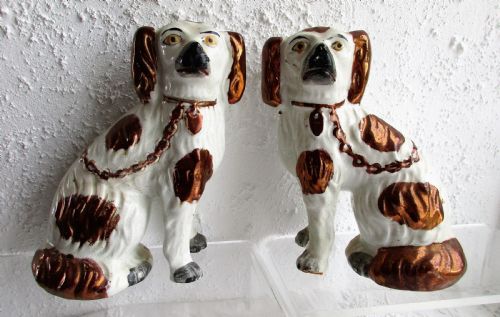
Pottery figures, such as earthenware or Staffordshire pottery, utilise coarser clays fired at lower temperatures, resulting in an opaque and more absorbent material. Pottery pieces generally feel heavier and thicker in the hand than porcelain equivalents.
How should I display antique porcelain figures?
Display these figures in enclosed cabinets away from direct sunlight to protect the hand-painted enamel colours from fading over time. Stable shelving prevents accidental knocks, which pose the greatest risk to delicate extremities like fingers, lace, and projecting limbs.
Maintaining a stable room temperature without sudden humidity fluctuations protects the structural integrity of older ceramic bodies and glazes. Avoid placing figures near heat sources or in high-traffic hallways.