


Painted Pine Welsh Dresser
A painted pine welsh dresser brings honest rural utility and warm colour into a modern room.
Painted Pine Welsh Dresser
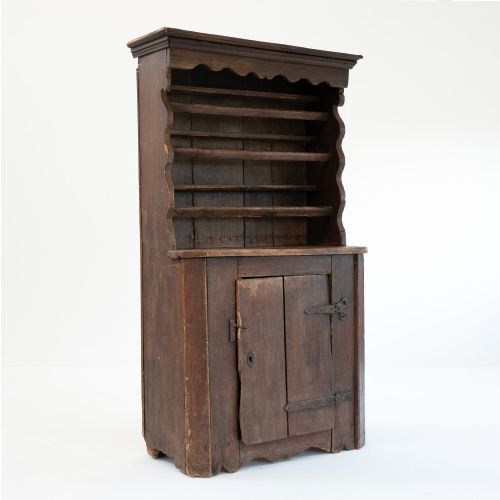
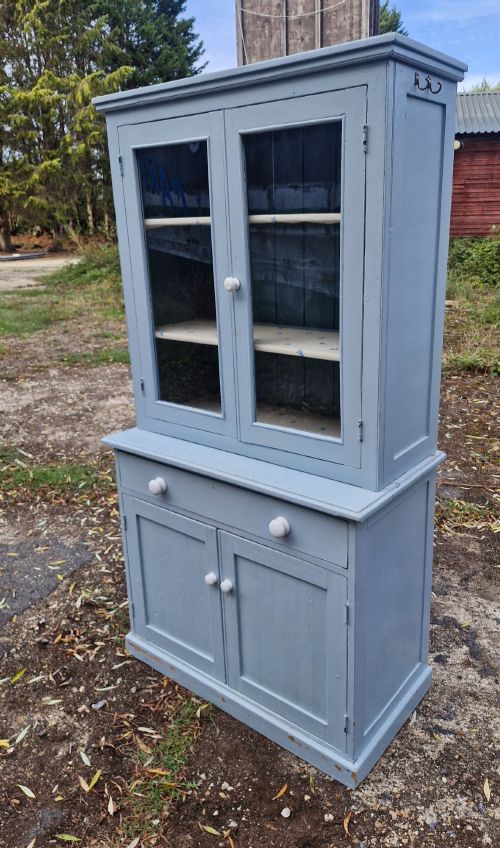
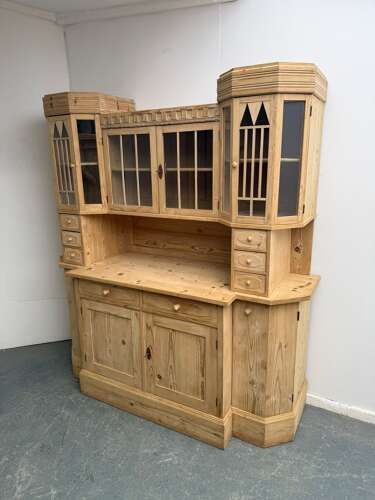
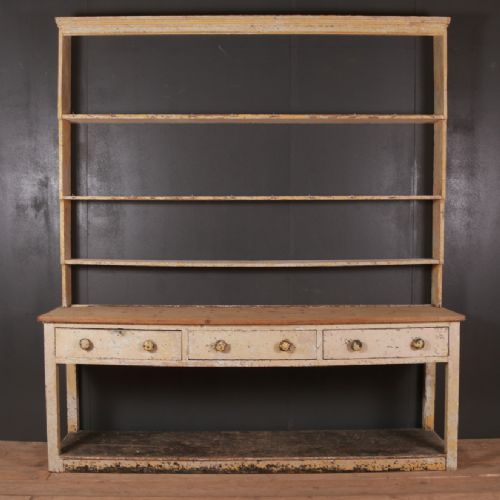
A painted pine welsh dresser is a traditional kitchen and dining storage piece combining lower cupboards or drawers with an upper plate rack for display. The pieces on this page span the eighteenth, nineteenth, and early twentieth centuries, reflecting regional workshops from Wales, England, Ireland, and Scandinavia.
Most examples you will encounter take the form of two-part kitchen cupboards, pot board dressers, and open rack dressers in soft pine. Regional vernacular shows up clearly in variations such as West Country dressers, Irish dressers, and dog kennel designs featuring a central arched recess below.
How they were made
Joiners built these domestic pieces from local softwood timbers, primarily pine, utilising pegged joints, hand-cut dovetails for drawers, and board construction for backs and shelves. Surfaces received coats of lead-based or oil paint, often applied in layers over generations.
Hardware consists of simple brass pulls, wooden knobs, and wrought iron hinges or latches. Pot boards and lower bases carry the substantial weight of daily kitchen earthenware and provisions.
What varies in quality
The standard of a painted pine welsh dresser depends on the integrity of its proportions, the survival of its early or original painted surface, and minimal structural alteration. Pieces retaining their original upper racks paired with the correct base hold greater historic coherence.
Finely executed mouldings, undisturbed backboards, and authentic regional quirks distinguish a master vernacular carpenter's work from standard utilitarian production.
The Painted Pine Welsh Dresser Glossary
- Pot board
- An open lower shelf beneath a dresser base traditionally used for storing pots and heavy kitchen utensils. This feature sits directly off the floor on stile feet.
- Dog kennel
- A central open space beneath the lower drawers or cupboards of a dresser, historically used to house a farm dog. It creates a distinctive architectural break in the base elevation.
- Rack
- The upper shelving superstructure attached to the dresser base, fitted with plate grooves and vertical boarded backs. Racks display ceramic plates and platters.
- Vernacular
- Architecture and furniture built by local craftsmen using traditional regional methods and local materials rather than academic architectural designs. These pieces suit local domestic needs.
- Dovetail
- A joint formed by interlocking wedge-shaped fingers, commonly used in drawer construction to resist pull forces. Hand-cut dovetails indicate earlier manufacturing dates.
Painted Pine Welsh Dresser: Frequently Asked Questions
How do I date a pine dresser?
Examine the construction methods, nail types, and backboards. Hand-cut nails and irregular pine boards point to eighteenth or early nineteenth-century origins.
Later pieces from the Victorian era or twentieth century display uniform machine-sawn timber and modern fixings.
Are the painted finishes original?
Many pieces carry layers of paint applied over decades of domestic use. Original surfaces show craquelure, subtle fading, and wear consistent with age.
Later repainting is common in vernacular furniture, as owners refreshed kitchens to match changing tastes.
How do I clean a painted pine dresser?
Dust gently with a dry, soft cloth and avoid chemical sprays that soften old paint layers. Moisture can damage vulnerable historic finishes.
Feed bare interior pine sparingly with traditional wax if the wood becomes dry.
Will a two-part dresser fit my ceiling?
Most dressers on this page separate into an upper rack and a lower base for transport. Measure your ceiling height before placing the assembled unit.
Ensure the wall can support the weight if you anchor the upper rack securely.