
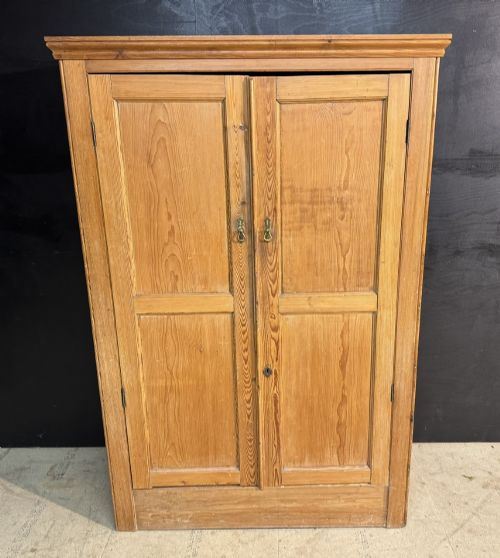
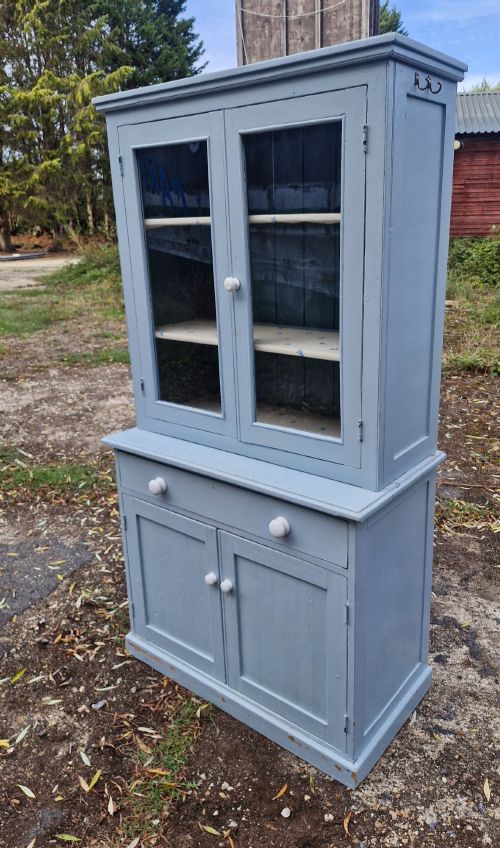
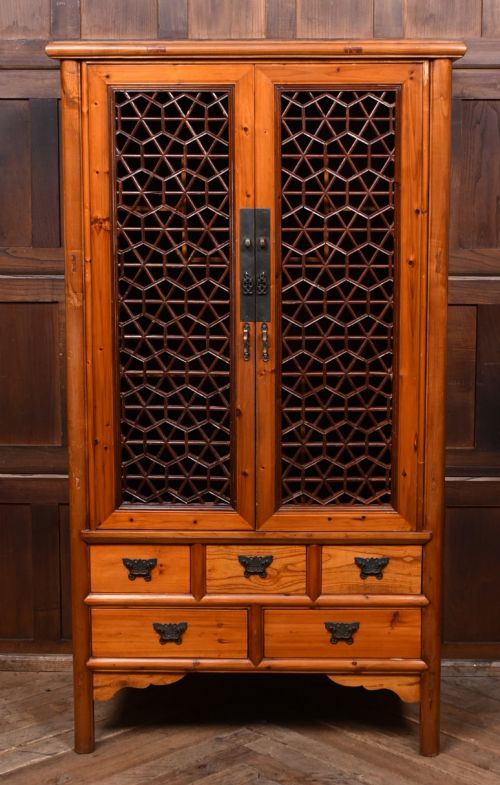

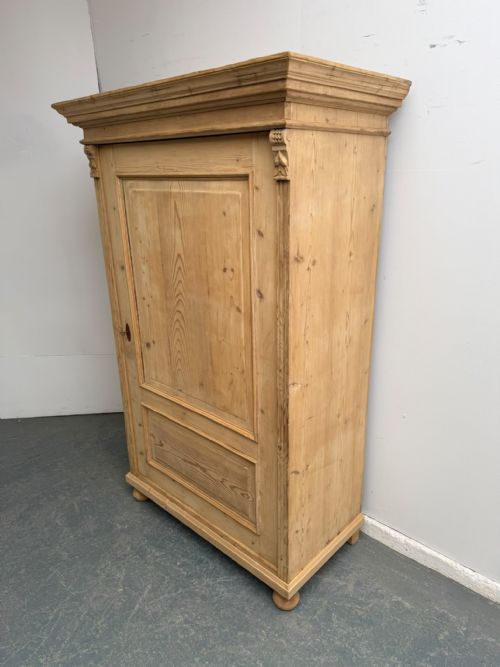
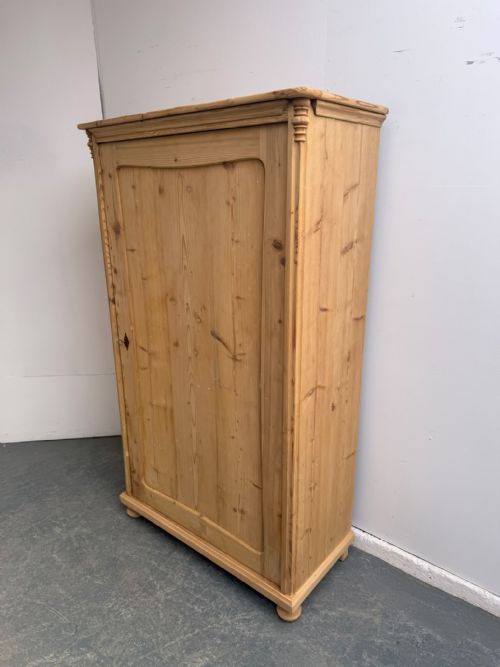


Freestanding Pine Pantry Unit
A freestanding pine pantry unit brings robust vernacular utility into modern kitchens, offering generous storage through period cupboards and larder cabinets.
Freestanding Pine Pantry Unit
When you search for a freestanding pine pantry unit, you encounter a selection of utilitarian cupboards and larder cabinets originating primarily from the Victorian era and the nineteenth century. These pieces encompass kitchen dressers, housekeepers cupboards, and linen cupboards designed for domestic storage.
The versions most frequently met on this page range from Victorian country and rustic farmhouse styles to English country designs, alongside notable examples such as a Japanese Meiji period larder cupboard. Forms span from single door vented kitchen cupboards to substantial four door beaded pieces and two part painted kitchen units.
Constructed to stand independently without fitted kitchen integration, these units served households by keeping provisions and linens organised. The inventory reflects a strong representation of nineteenth century craftsmanship tailored to practical domestic duties.
How they were made
Makers utilised solid pine as the primary timber, often enhanced by paint finishes or prepared for waxing and painting according to regional and period custom. Cedar appears alongside pine in certain constructions.
A Japanese Meiji period larder cupboard sits comfortably alongside traditional English country and rustic farmhouse pieces.
What varies in quality
Distinction across the range rests upon the integrity of the joinery and the sophistication of the architectural detailing, such as fielded panels and beaded mouldings. Simpler utilitarian cupboards contrast with more ambitious four door configurations or multi part kitchen units.
The survival of original surface treatments, whether historic paint or honest timber patination, defines the character of each piece. Structural proportion and the thoughtful integration of brass and iron hardware further separate standard storage pieces from finer examples.
The Freestanding Pine Pantry Unit Glossary
- Freestanding
- A piece of furniture designed to stand independently on the floor rather than being built into a wall or fitted kitchen. This portability allowed households to rearrange their domestic spaces as needed.
- Larder cupboard
- A tall storage cabinet traditionally used for keeping food fresh before the advent of household refrigeration. These often include vented elements to maintain air circulation.
- Fielded panel
- A central panel in a door or wall that has its edges thinned or bevelled to fit into a surrounding groove. This traditional technique allows the wood to expand and contract with humidity changes.
- Housekeepers cupboard
- A large storage piece traditionally used by a household manager for linens, dry goods, and domestic supplies. They typically feature substantial proportions and generous internal shelving.
- Beaded
- A decorative moulding detail where a narrow, semi-circular profile is worked into the edge of a board or frame. It adds subtle texture and visual refinement to plain timber surfaces.
Freestanding Pine Pantry Unit: Frequently Asked Questions
What is a freestanding pine pantry unit used for?
These units serve as versatile storage cabinets in contemporary and traditional kitchens alike. They provide dedicated space for dry goods, tableware, and household linens.
The independent structure allows them to be placed in dining rooms, pantries, or hallways without permanent installation. Their deep shelves and tall doors accommodate bulk provisions and bulky kitchen items with ease.
How do I date a nineteenth century pine cupboard?
Dating relies on examining construction methods, hardware types, and timber characteristics. Nineteenth century pieces often show hand planed surfaces and traditional joinery marks.
The presence of original brass or iron hinges and latches also helps place a piece within the Victorian period or around specific decades like eighteen fifty or eighteen eighty.
Are these units sold painted or waxed?
Many listings describe pieces as ready to wax or paint, reflecting their historical treatment or recent preparation. Some retain old or original painted surfaces from the nineteenth century.
Buyers can choose to maintain the existing painted finish or strip and wax the pine to expose the natural grain. This flexibility lets the furniture adapt to various interior colour schemes.
What is the difference between a larder and a housekeepers cupboard?
A larder cupboard was traditionally designed for food storage and frequently incorporates vented panels to promote airflow. Housekeepers cupboards were generally built for storing household linens and dry goods.
While both share a tall, freestanding form, larder units often prioritize ventilation whereas housekeepers cupboards focus on expansive shelving and large cabinet doors.