




Painted Mahogany Bookcase
A painted mahogany bookcase is a refined storage piece combining rich timber with decorative pigment, and buyers seek them for elegance and utility.
Painted Mahogany Bookcase
A painted mahogany bookcase brings together the deep, warm tones of tropical hardwood and the decorative flourish of applied colour. When you search for a painted mahogany bookcase, you encounter forms ranging from tall open shelving to glazed display cabinets and corner cupboards.
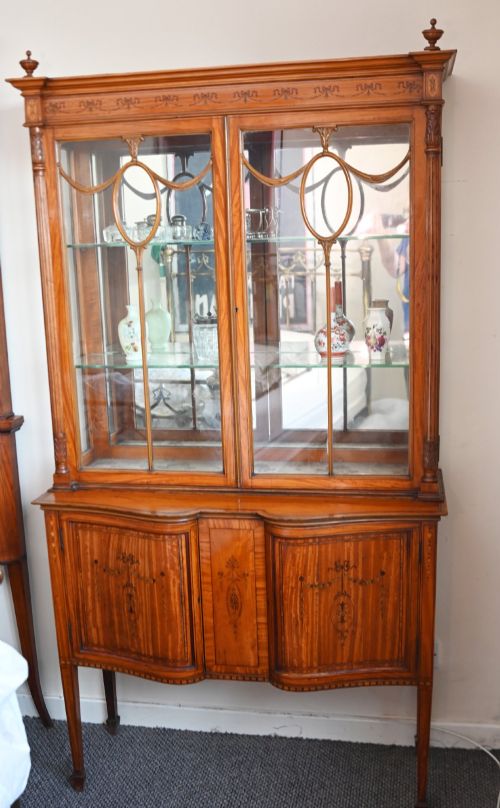
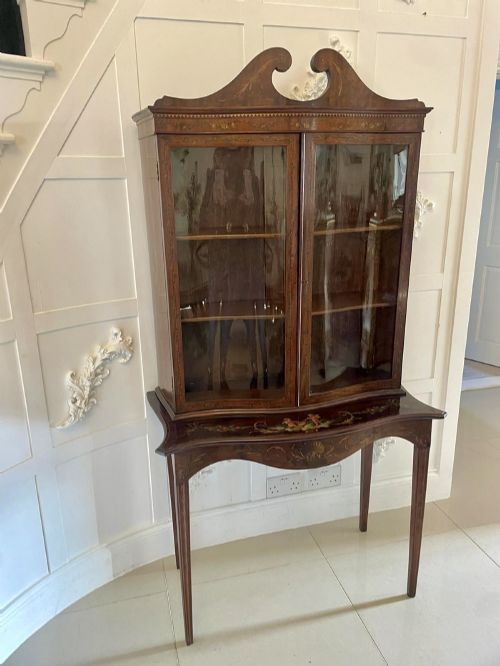
The pieces appearing on this page span several distinct periods including Victorian, Edwardian, and twentieth-century interpretations. Edwardian examples dominate the selection, often featuring delicate satinwood inlays alongside hand-painted floral motifs.
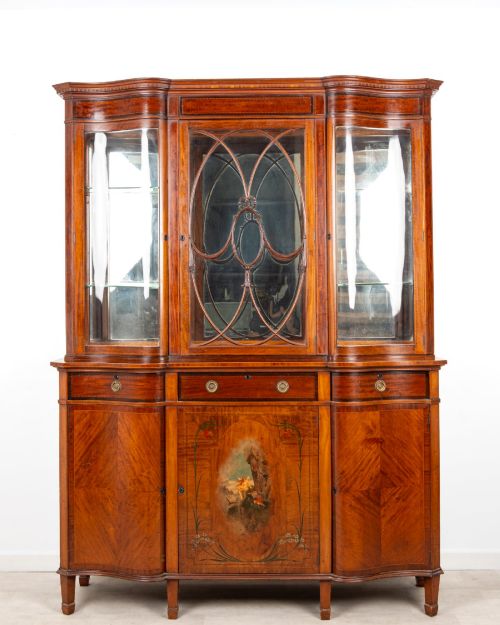
Makers and designers drew on Georgian, Sheraton, Adams, and Louis XV Revival styles to create these functional items. Whether configured as a breakfront vitrine or a serpentine display unit, each item serves to house volumes while adding visual interest to a room.
Materials and construction methods
Makers utilised solid mahogany and supporting secondary timbers like softwood to build the foundational carcasses of these pieces. Mahogany provided a stable, durable base that accepted fine joinery and took polish well, while glass was fitted into doors to protect books and display items.
Surface decoration involved careful hand painting directly onto the wood or onto prepared panels, sometimes utilising styles associated with Vernis Martin. Brass hardware, ormolu mounts, and satinwood stringing or marquetry completed the ornamentation of the finer cabinets.
Listings feature Edwardian, Victorian, and twentieth-century pieces constructed from mahogany, satinwood, and glass, spanning display cabinets, bookcases, and corner cupboards.
Distinctions in quality and execution
Quality reveals itself in the crispness of the hand-painted decoration and the precision of the timber selection. Superior pieces display finely rendered floral details or figural panels that show a practiced artistic hand rather than hurried stencilling.
The choice of secondary woods and the subtlety of satinwood inlay distinguish standard production from exceptional cabinet work. Heavier proportions and simpler glazing bars separate more utilitarian corner cupboards from elaborately mounted display cabinets.
Jewell of Holborn
The Painted Mahogany Bookcase Glossary
- Mahogany
- A durable, reddish-brown tropical hardwood prized for its stability and grain. It forms the primary structural material for the majority of these cabinets.
- Satinwood
- A pale, lustrous timber utilised for contrasting stringing, banding, and inlay work. It frequently highlights the borders of Edwardian painted pieces.
- Vernis Martin
- A simulated Japanese lacquer technique developed in eighteenth-century France and emulated later. It involves multiple layers of translucent varnish over painted panels.
- Serpentine
- A gently undulating curved line shape used on the front facades of cabinets. This contour softens the profile of the furniture.
- Vitrine
- A glass-fronted display cabinet designed for showing porcelain, books, or curiosities. These pieces often feature glazed side panels to admit maximum light.
Painted Mahogany Bookcase: Frequently Asked Questions
What periods do these bookcases date from?
The pieces span from the Victorian and Edwardian eras through to the mid-twentieth century. Edwardian examples are particularly common in this selection.
Production also encompasses late nineteenth-century revivals and later twentieth-century interpretations reflecting earlier stylistic traditions.
How were the painted decorations applied?
Decorations include hand-painted floral motifs directly on the mahogany or satinwood surfaces. Some pieces incorporate painted panels executed in the Vernis Martin tradition.
Artisans combined these pigments with fine wood inlays and stringing to create decorative borders and focal points.
Are these pieces strictly for books?
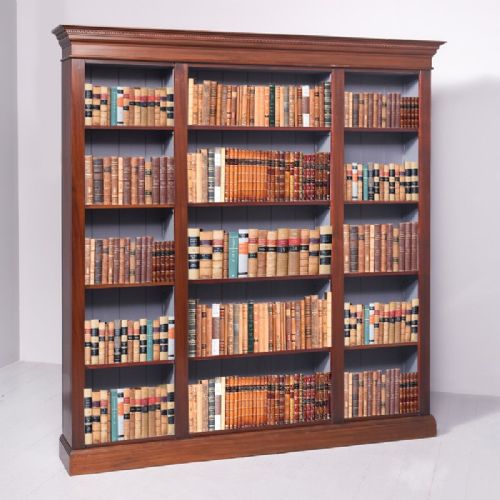
While some listings describe open bookcases suitable for volumes, many take the form of display cabinets and vitrines. These glazed units were designed to showcase decorative objects alongside books.
Corner cupboards and cabinets provide alternative configurations intended to utilise specific room layouts efficiently.
Which styles influence their appearance?
Designers drew heavily on historical aesthetics including Georgian, Sheraton, and Adams styles. French influences also appear through Louis XV Revival and Vernis Martin pieces.
These revivals adapted eighteenth-century motifs for Victorian and Edwardian domestic interiors.