




Painted Lacquer Jewellery Box
These painted lacquer jewellery box examples bring together centuries of meticulous decorative craft and domestic utility for storing small treasures.
Painted Lacquer Jewellery Box
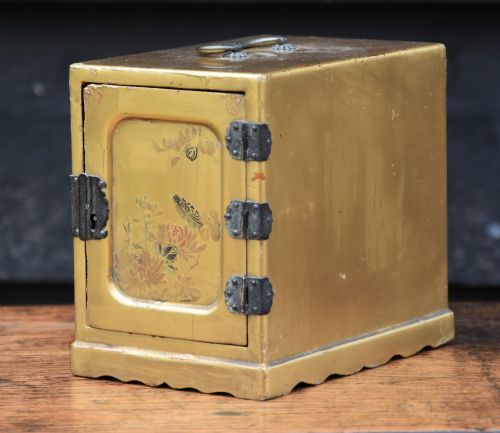
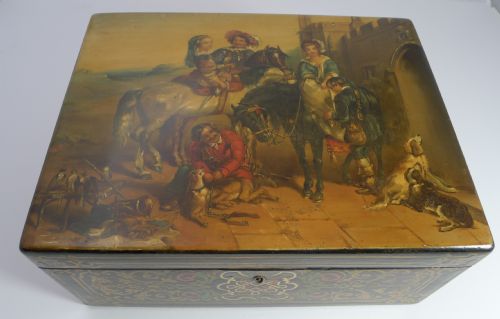
A painted lacquer jewellery box is a refined storage piece designed to hold personal valuables, taking forms such as small table cabinets, keepsake cases, and traditional trinket boxes. When you search for a painted lacquer jewellery box, you encounter items originating from diverse traditions, including Georgian chinoiserie, Japanese Meiji period works, and Russian folk art.
The pieces on this page span several key eras, ranging from Regency penwork and Georgian creations through to Victorian papier-mâché cabinets and early twentieth-century Russian painted works. These containers served functional roles on dressing tables and in travelling campaigns, housing rings, necklaces, and keepsakes.
You are most likely to meet Victorian papier-mâché examples alongside nineteenth-century Japanese lacquer items and Regency period items. Each object reflects the prevailing decorative tastes of its origin, whether through orientalist motifs, delicate penwork, or hand-painted portraits.
Materials and construction methods
Makers utilised lacquering techniques on solid timber, oak, or moulded papier-mâché foundations to create durable and smooth surfaces. These structural bases received multiple coats of lacquer to form a hard, glossy sheen capable of sustaining intricate painted decoration.
Artists applied oil paint, ink, and gold leaf directly onto the prepared lacquer ground to build up detailed figurative scenes, landscapes, or geometric borders. Additional embellishments frequently included brass hardware, inlaid elements, and fine penwork to accentuate the opening edges and internal compartments.
Listings feature items spanning the Georgian, Regency, and Victorian periods alongside early twentieth-century examples.
Differentiating quality across examples
The standard of execution in the hand-painted details separates simpler utilitarian containers from masterwork items. Finely rendered portraits, delicate gold leaf application, and crisp penwork indicate a higher tier of craftsmanship.
Structural integrity of the underlying papier-mâché or timber foundation contributes significantly to an item's standing. Well-preserved lacquer surfaces free from extensive crazing or crude restoration reflect superior original manufacture and careful historical ownership.
Jennens and Bettridge
The Painted Lacquer Jewellery Box Glossary
- Lacquer
- A durable resinous finish applied to wood or papier-mâché surfaces to create a smooth, protective, and decorative coating. It hardens into a lustrous skin that resists moisture and wear.
- Papier-mâché
- A composite material made from paper pulp or layers of paper pasted together, reinforced with glue, and moulded into shape before drying. It provides a lightweight yet rigid base for lacquer and paint.
- Penwork
- A meticulous decorative technique utilising fine ink lines, often with tinted washes, to create intricate imagery resembling engravings on wooden objects. Regency makers applied this method extensively to box surfaces.
- Kodansu
- A traditional Japanese small cabinet featuring multiple internal drawers, typically finished with elaborate lacquer and metallic powder decoration. These pieces were imported and prized by European collectors.
Painted Lacquer Jewellery Box: Frequently Asked Questions
What were painted lacquer jewellery boxes used for?
These containers served to safely store rings, brooches, and delicate personal keepsakes on dressing tables or boudoirs.
Their compartmentalised interiors protected valuable accessories from dust and tangling during daily domestic use.
How do I identify a Regency penwork box?
Regency penwork boxes display extremely fine, ink-drawn decoration resembling copperplate engravings rather than thick brush-painted oils.
They frequently feature architectural views, classical motifs, or geometric borders rendered entirely in precise black ink upon light wood grounds.
What is papier-mâché in these boxes?
Papier-mâché is a strong composite formed from layered paper and pulp treated with binding agents and pressed into moulds.
This technique allowed nineteenth-century makers to create smooth, curved box bodies that accepted black lacquer finishes exceptionally well.
How should I care for a lacquer box?
Keep painted lacquer boxes away from direct sunlight and strong heat sources to prevent the lacquer from drying and cracking.
Dust the surface gently with a soft, dry cloth and avoid applying modern chemical polishes or damp cleaners.
Are Russian lacquer boxes different?
Russian lacquer pieces often feature distinct folk art painting traditions, including hand-painted portraiture and narrative scenes.
Created around the early twentieth century, these papier-mâché boxes utilise rich oil paints and are frequently signed by the artist.