
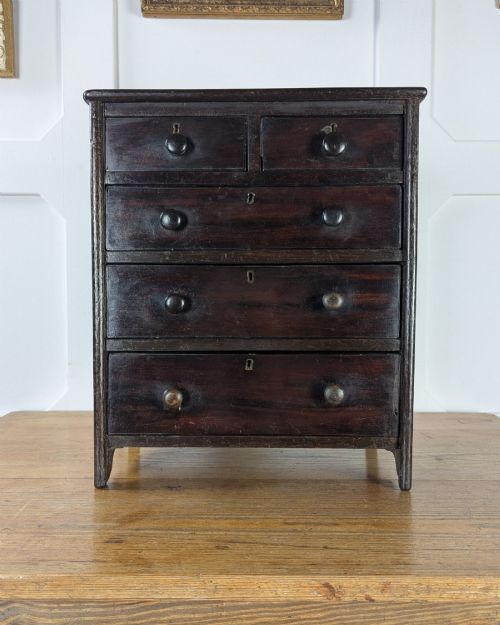
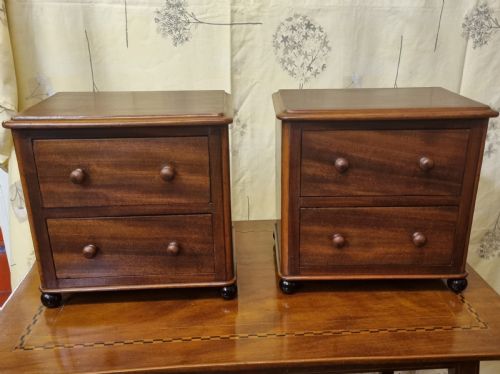
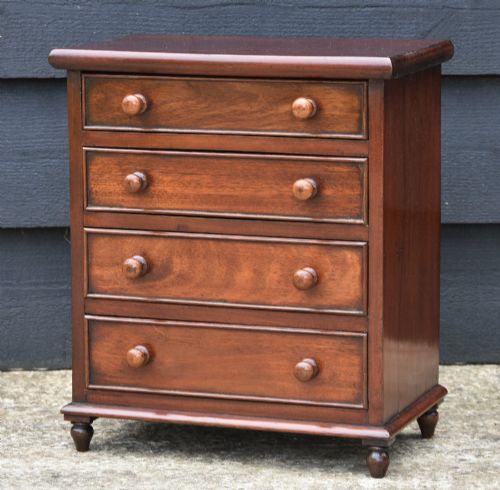

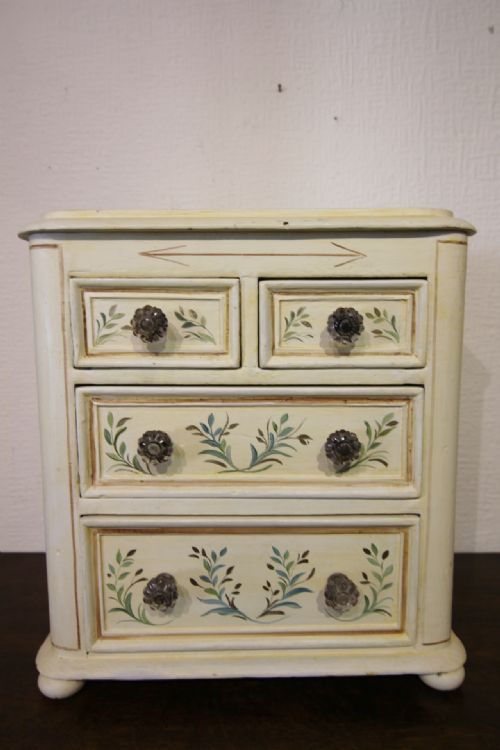
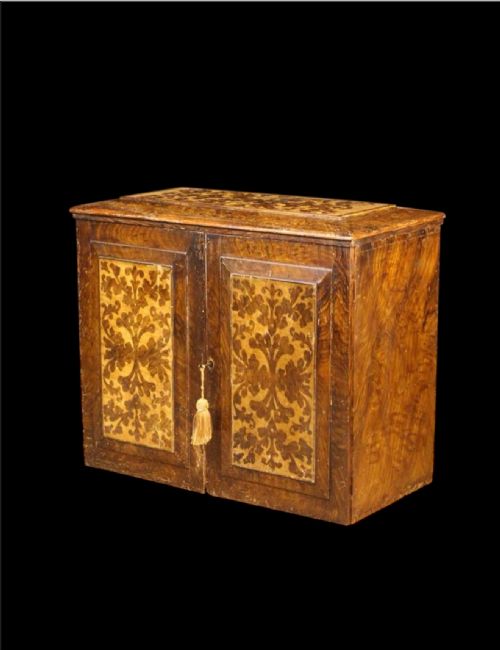


Victorian Tabletop Jewellery Chest
These Victorian tabletop jewellery chest pieces are miniature cabinets and drawer sets designed for trinkets, rooted primarily in the nineteenth century.
Victorian Tabletop Jewellery Chest
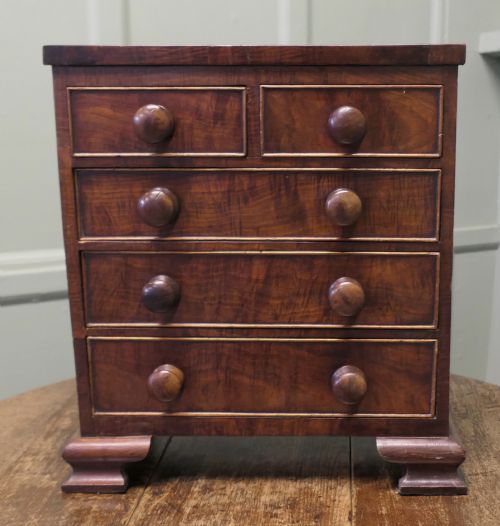
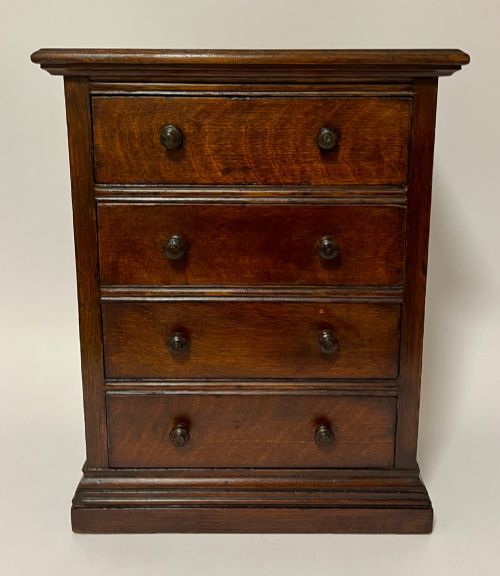
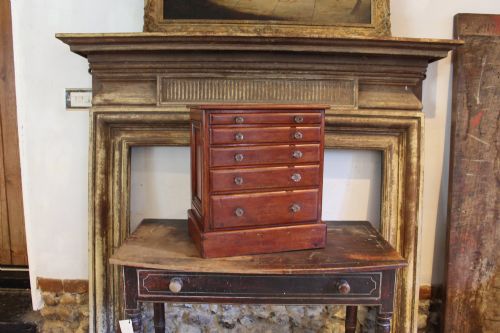
A victorian tabletop jewellery chest is a scaled-down piece of furniture designed to sit on a desk, dressing table, or surface to hold small valuables and trinkets. Most examples originate from the nineteenth century, encompassing Victorian, Edwardian, and earlier nineteenth-century periods.
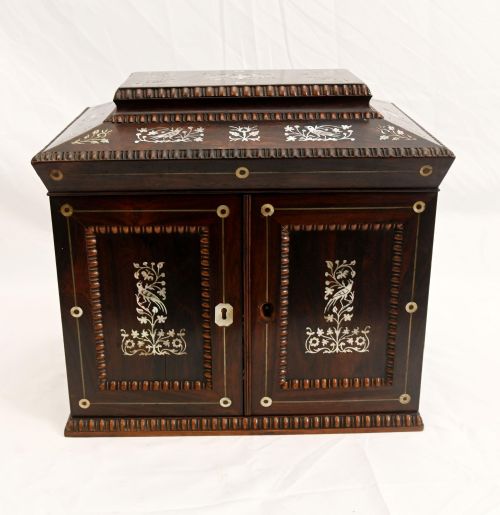
The standard version met on this page is the miniature chest of drawers or apprentice piece, constructed in formats ranging from straight-fronted to bow-fronted designs. Alongside these standard drawer configurations, buyers encounter specialised collectors cabinets, table cabinets, and boxes fitted with internal compartments.
Makers drew on various aesthetic movements, producing pieces in styles such as Regency, Folk Art, Arts and Crafts, and French-influenced designs. These objects served practical storage functions while mimicking full-scale furniture proportions.
Materials and Construction
Cabinet makers utilised dense hardwoods such as mahogany, rosewood, oak, walnut, burr walnut, amboyna, and kingwood for the primary carcases and drawer structures. Secondary timbers often included painted pine or softwoods, whilst decorative surfaces incorporated mother of pearl inlay, brass fittings, and tortoiseshell veneers.
Construction techniques mirrored those of full-size cabinetry, requiring precise dovetail joints for drawers, careful veneering, and the integration of secret compartments. Finishing involved hand-polishing and occasionally painted surfaces, resulting in the patinated timber finishes seen across the inventory.
Some miniature chests hide secret drawers specifically sized for stashing tiny nineteenth-century love letters or stray shirt studs.
Quality and Detail
The handling of surface patina and the integrity of brass hardware or tortoiseshell panels further distinguish finer items from simpler utilitarian versions. Pieces that retain unblemished cabinetwork and sophisticated interior layouts represent the upper tier of this category.
The Victorian Tabletop Jewellery Chest Glossary
- Apprentice piece
- A miniature furniture item traditionally made to demonstrate a woodworker's skill to a guild or master. These pieces duplicate full-sized chests with functional drawers and miniature proportions.
- Bowfront
- A cabinet or chest front that curves outward in a convex shape. This stylistic choice appears on nineteenth-century miniature mahogany chests.
- Collectors cabinet
- A tabletop cabinet containing multiple small drawers intended for storing specimens, coins, or trinkets. These units often feature locking doors or solid panel fronts.
- Mother of pearl
- An iridescent inner layer of mollusc shell used for decorative inlay. Artisans cut this material into geometric or floral motifs set into timber surfaces.
- Secret drawer
- A concealed compartment built into a cabinet structure behind removable panels or false drawer bottoms. Such spaces were designed to secure valuables.
Victorian Tabletop Jewellery Chest: Frequently Asked Questions
What were miniature chests used for?
These small cabinets served as desktop storage for jewellery, trinkets, coins, or small personal items. Their compartmentalised drawers kept valuable objects organised and secure within domestic spaces.
They also functioned as salesman samples or apprentice demonstrations, allowing woodworkers to showcase fine cabinetry skills in a portable format.
How do I identify a Victorian piece?
Victorian pieces typically display characteristics of nineteenth-century timber construction, such as hand-cut dovetails and traditional wax finishes. Examining the secondary woods inside the drawers helps confirm the period.
Stylistic cues like heavy brass handles, mahogany veneers, and specific inlay patterns point directly to the Victorian era and adjacent nineteenth-century decades.
Are all miniature chests apprentice pieces?
Not every small chest qualifies as an apprentice piece, although the term is frequently applied to nineteenth-century miniatures. Many were manufactured commercially as jewellery chests and tabletop cabinets for domestic use.
Distinguishing between trade tests and commercial products involves looking at the precision of the construction and the presence of dedicated velvet linings or jewellery compartments.
Where should I place a tabletop chest?
These chests fit well on dressing tables, sideboards, or desks where their compact footprint allows them to function as usable storage. Placing them out of direct sunlight protects delicate veneers like burr walnut, rosewood, and tortoiseshell.
Ensure the supporting surface is stable and level to prevent warping of the antique timber carcase over time.