




Decorative Hand Painted Box
A decorative hand painted box brings colour and intricate artistry to a desk or dressing table, offering a small, historic container for trinkets and letters.
Decorative Hand Painted Box
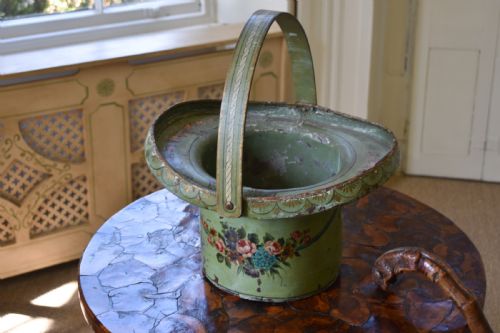
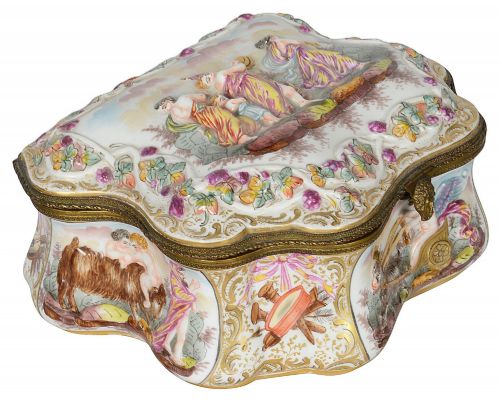
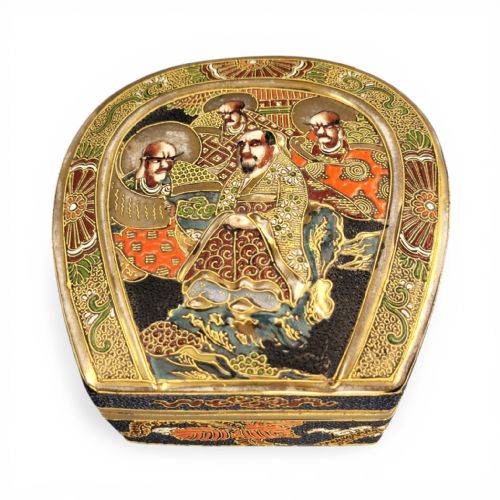
A decorative hand painted box spans several centuries of domestic storage, including Georgian leather hat boxes, Victorian porcelain jewellery caskets, and lacquered tabletop cases. These small containers served practical purposes for keeping snuff, patches, letters, or trinkets while displaying miniature artwork on their lids and sides.
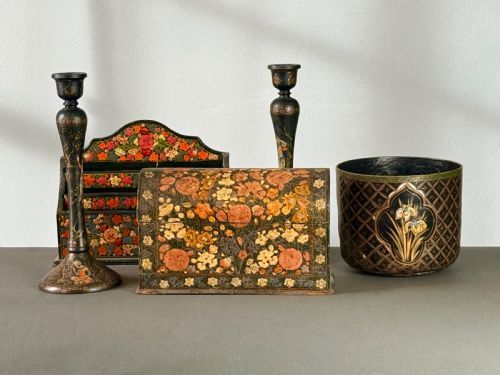
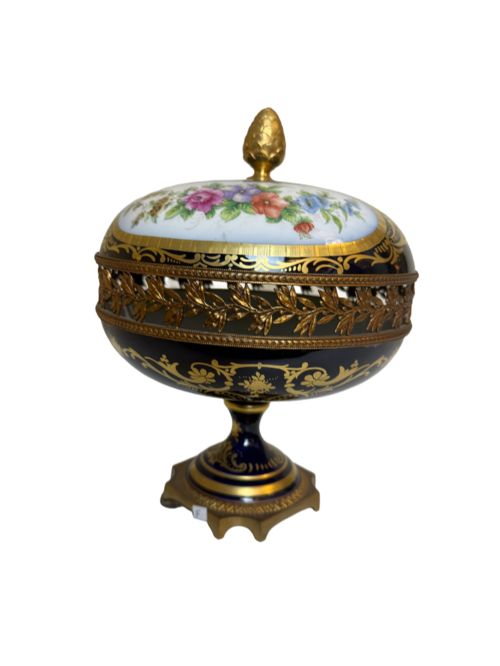
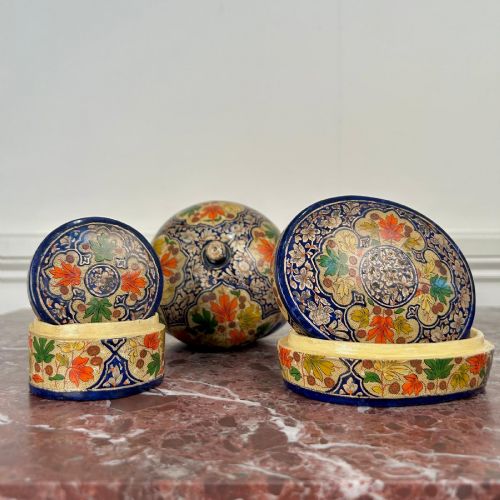
The pieces on this page originate from diverse workshops across Europe and Asia, featuring English toleware, French porcelain, Italian Capodimonte, and Kashmiri papier-mâché. Buyers frequently encounter nineteenth-century examples alongside eighteenth-century enamel patch boxes and early twentieth-century Russian lacquer work.
Materials and Construction
Craftsmen shaped these containers from organic and mineral substances, utilising wood, papier-mâché, leather, copper, and porcelain as foundations for pigment. Lacquered wood and hardened paper received multiple layers of varnish beneath or above delicate brushwork, whilst metal boxes employed copper bases coated in white enamel.
Painters applied fine details using oil-based paints, ceramic enamels, or gold leaf, often sealing the pictorial surfaces with clear protective glazes. Metal mounts in brass or silver plate frequently reinforced the edges and hinged lids of ceramic and lacquer vessels.
Geographic origins span across England, France, Italy, Russia, China, Japan, and India.
Distinctions in Quality
The skill of the miniaturist dictates the distinction between standard and superior pieces, visible in the precision of brushstrokes, facial expressions in portraits, and the symmetry of floral or Chinoiserie motifs. Superior examples maintain crisp outlines and vibrant mineral pigments that resist fading over centuries.
Structural integrity also separates grades, where properly seasoned woods, stable papier-mâché, and tightly fitted brass hinges ensure the lid closes flush with the base. Enamel works of higher standard display minimal crazing or firing distortion across their curved copper surfaces.
Toshozan·Meissen
The Decorative Hand Painted Box Glossary
- Enamel
- A glassy substance fused to a metal base through high-temperature firing. South Staffordshire and Bilston workshops specialised in this technique for small trinket containers.
- Papier-mâché
- Pulverised paper mixed with glue and resin, pressed into moulds and dried to form a lightweight, rigid body. Russian and Kashmiri makers utilised this material for painted boxes.
- Toleware
- Painted or lacquered sheet metal items produced in England and Europe. These storage containers and tobacco boxes mimic the decorative lacquer traditions of Asia.
- Patch box
- A small pocket-sized container designed to hold cosmetic fabric patches worn on the face. Eighteenth-century examples frequently incorporate mirrors inside the lid.
- Chinoiserie
- European artistic interpretations of Chinese decorative motifs and landscapes. This style appears frequently on eighteenth-century and nineteenth-century lacquered storage pieces.
Decorative Hand Painted Box: Frequently Asked Questions
What were small painted boxes used for?
These containers held personal items such as snuff, cosmetic patches, sewing pins, and letters. Their miniature scale kept valuable commodities secure on desks and dressing tables.
Over time, owners transitioned these items from utilitarian storage to display pieces, preserving delicate painted surfaces away from heavy daily handling.
How do I identify an eighteenth-century enamel box?
Eighteenth-century pieces, particularly from Bilston and South Staffordshire, feature hand-painted scenes on fused enamel over copper bases. They often include inscriptions or floral borders inside the lid.
Examine the weight and the metal mounts; genuine examples show copper edges beneath worn gilding and subtle irregularities from hand-firing.
How should I clean a lacquered wooden box?
Dust the exterior gently with a dry, soft microfiber cloth to prevent scratching the delicate varnish layers. Avoid water, alcohol, or commercial solvent-based cleaners entirely.
Keep the piece away from direct sunlight and steady heat sources to prevent the lacquer from cracking or warping the underlying wood.
Are Kashmiri papier-mâché boxes fragile?
Kashmiri boxes constructed from layered paper pulp and wood require careful handling to preserve the painted exterior. The surface lacquer protects the pigment, but sharp impacts can chip the material.
Place them on stable surfaces away from damp environments, as excess moisture softens the historical papier-mâché substrate.