
Painted Housekeepers Press
A painted housekeepers press offers substantial storage combined with decorative surface character, spanning periods from the seventeenth century through the Victorian era.
Painted Housekeepers Press
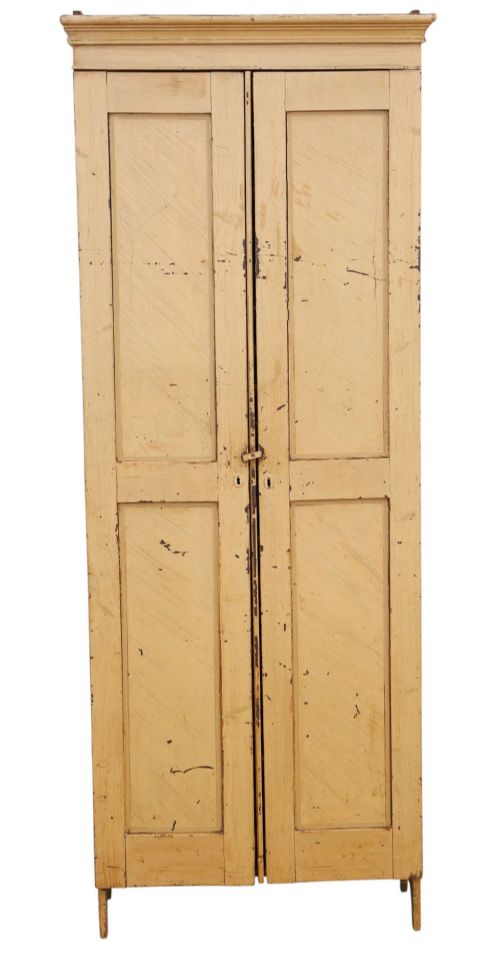
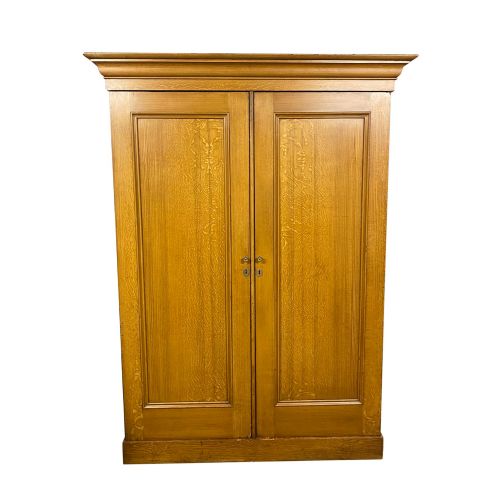
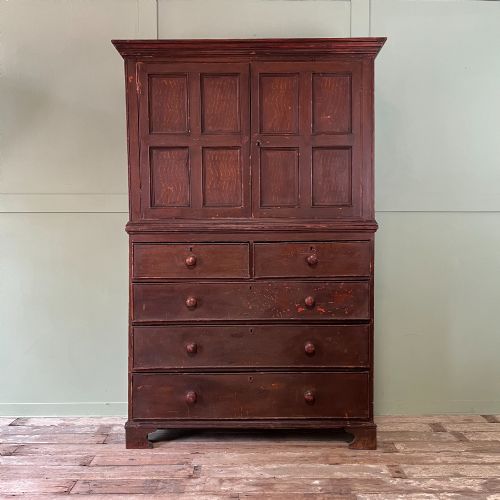
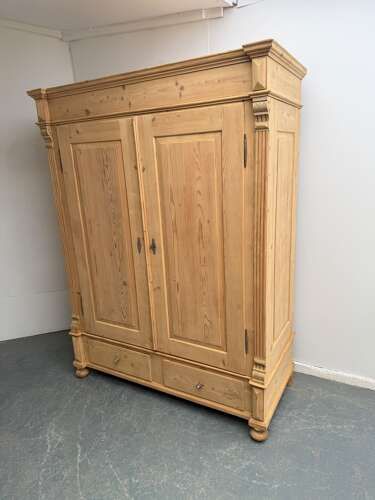
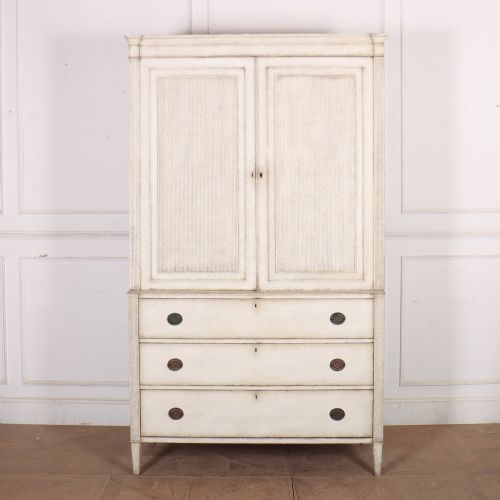
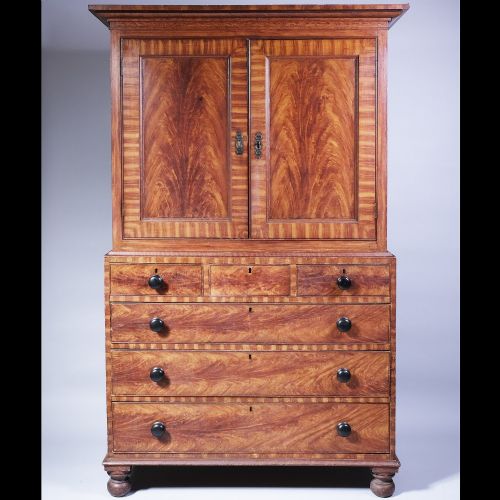
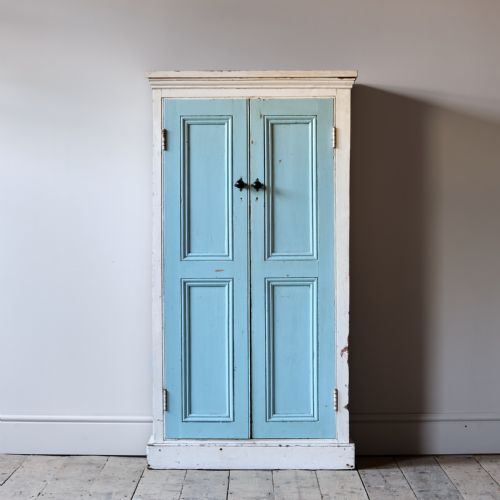
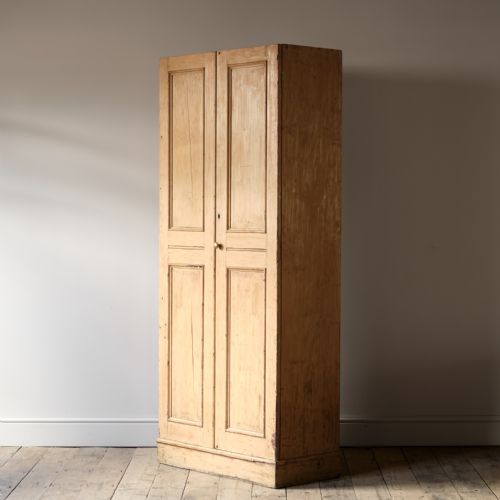
A painted housekeepers press provides large-scale storage for household textiles, with examples appearing across Georgian, Victorian, and earlier periods. These pieces take the form of tall cupboards, wardrobes, and linen presses.
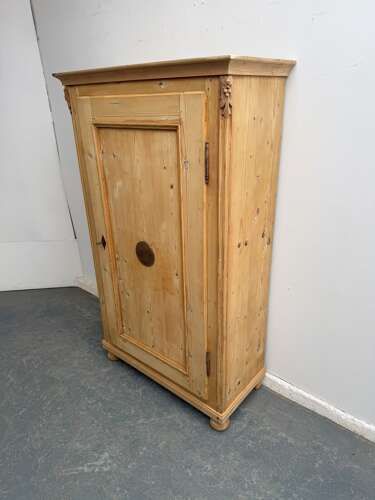
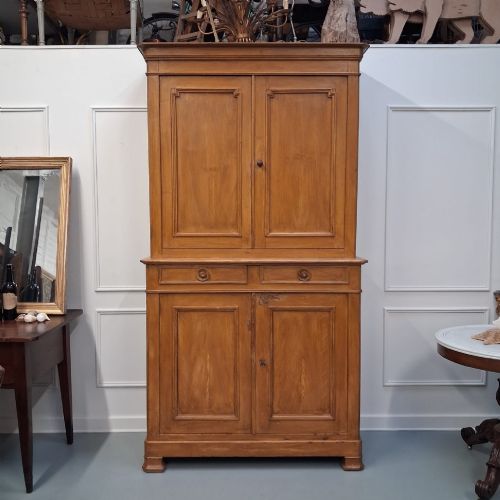
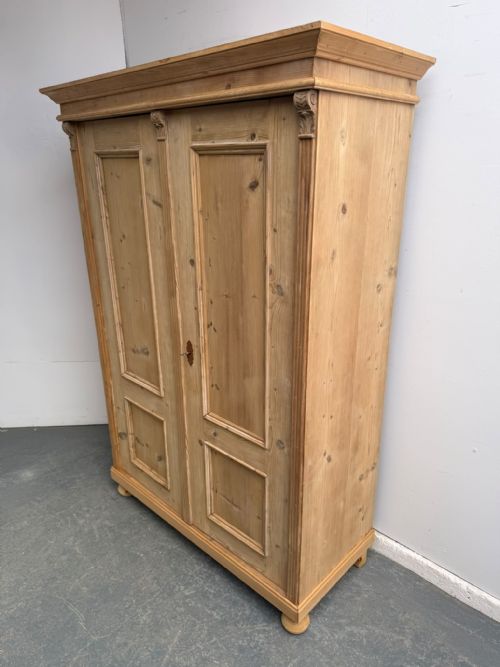
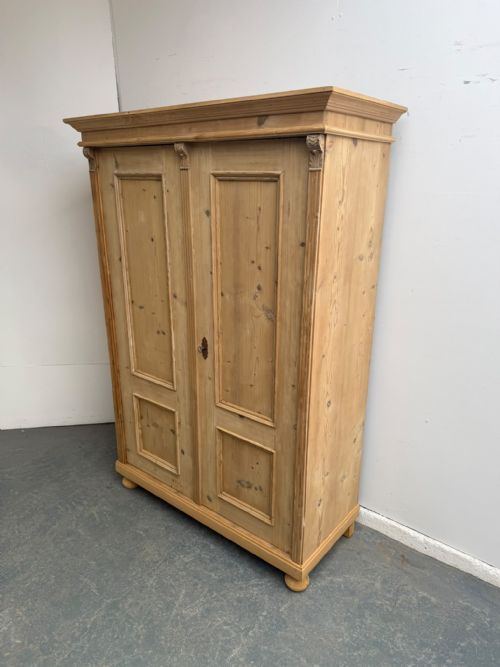
The versions met most frequently on this page combine sturdy pine construction with painted finishes. Regional variations range from English country pieces to continental European examples.
Makers constructed these presses to hold heavy domestic provisions and linens, utilising deep proportions and multiple internal shelves or hanging spaces.
Materials and Technique
Makers relied primarily on pine and oak, building robust carcases designed to withstand heavy domestic use. Iron and brass hardware, including hinges and handles, secure the heavy doors.
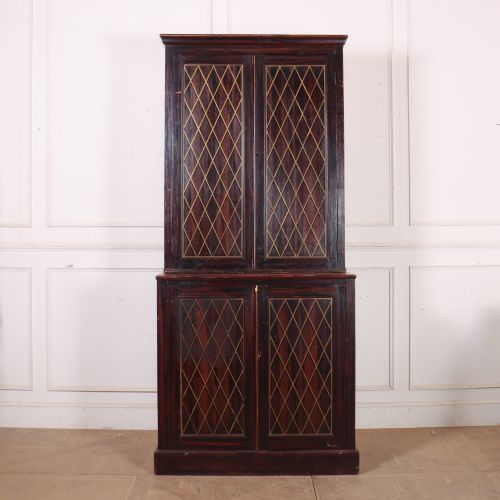
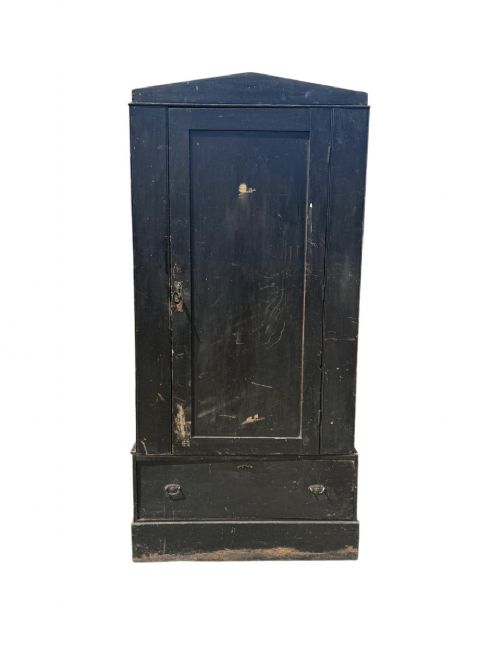
Surfaces received decorative treatments such as polychrome pigment, scumble glaze to imitate oak grain, or traditional paint layers. Many pieces retain original paint surfaces applied decades or centuries ago.
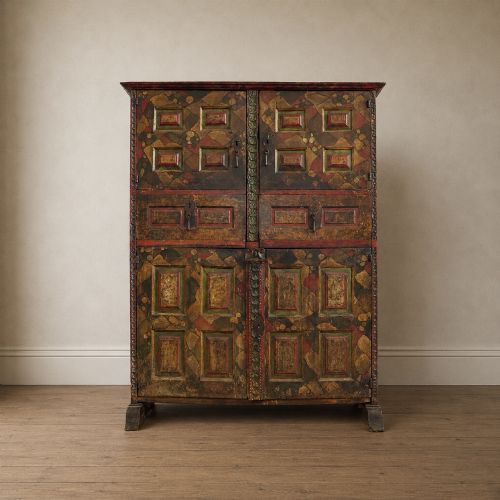
Spanish Basque workshops contributed seventeenth-century polychrome presses that have quietly outlived several dynasties of domestic linen.
Assessing Quality
Quality rests in the survival of original paint surfaces and the integrity of the timber frame. Pieces with untouched scumble or polychrome decoration command greater interest among collectors.
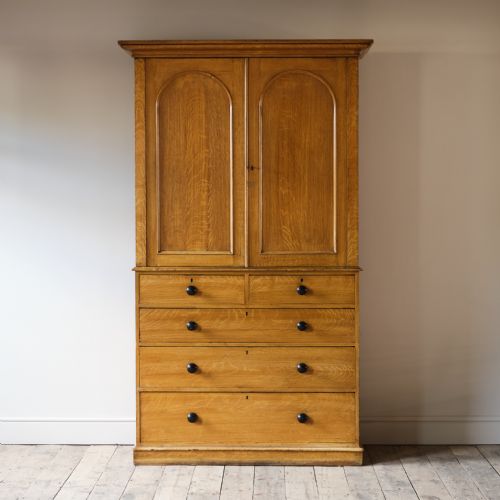
Proportion and scale distinguish superior examples, particularly where makers balanced massive storage capacity with refined architectural details like arched doors and fielded panels.
The Painted Housekeepers Press Glossary
- Scumble paint
- A decorative technique involving translucent glaze dragged or brushed over a base coat to simulate finer wood grain like oak. This finish protected the underlying pine while adding visual depth.
- Polychrome
- Decoration utilising multiple distinct colours applied to wood surfaces. It appears on continental European pieces to create pictorial or patterned facades.
- Fielded panel
- A wooden panel with bevelled edges raised toward the centre, fitted into a grooved frame. This construction accommodates wood movement in large cupboard doors.
- Linen press
- A tall storage piece designed specifically for folding and storing household textiles and garments. They typically feature upper cupboard sections and lower drawer configurations.
Painted Housekeepers Press: Frequently Asked Questions
What is a housekeepers press?
A housekeepers press is a large storage cupboard traditionally used in large homes for storing linens, garments, and household supplies. They combine robust internal shelving with substantial double or single doors.
These pieces served domestic staff in organising household provisions before built-in closets became standard in residential architecture.
How do I date an antique press?
Dating relies on construction methods, timber choice, and hardware styles visible on the piece. Earlier examples from the seventeenth and eighteenth centuries often exhibit pegged joints and hand-planed boards.
Victorian and later nineteenth-century pieces generally display machine-sawn timber and standardised iron hinges, alongside distinct regional paint treatments.
Can I use these in modern rooms?
These large presses provide significant vertical storage capacity suitable for contemporary bedrooms, kitchens, or living spaces. Their neutral or painted finishes allow them to function as freestanding wardrobes or kitchen larders.
Consider room height and access routes carefully, as many of these presses are heavy, one-piece items or large knockdown structures.
What does original paint mean?
Original paint refers to the earliest decorative coating applied to the wood surface during the period of manufacture. Surviving layers show natural wear and patination accumulated over generations of use.
Collectors prize untouched paint surfaces for their historical honesty and decorative visual texture.