

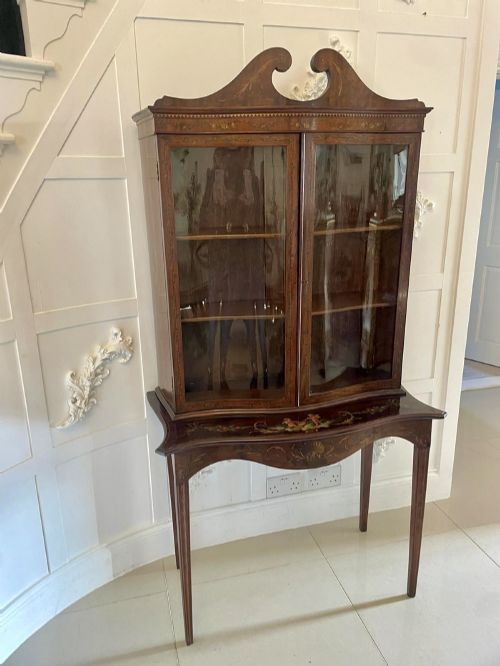
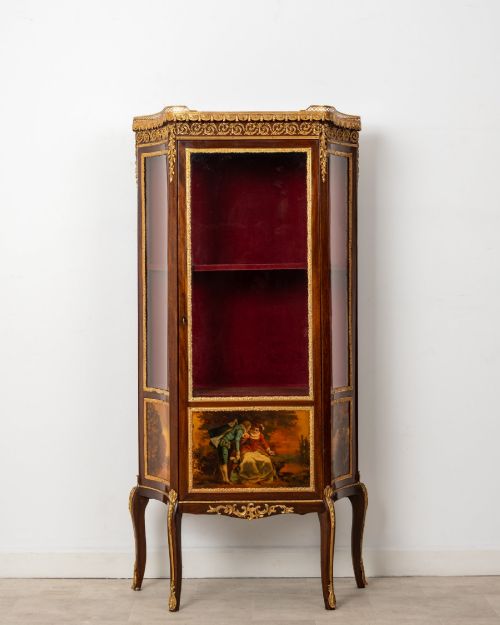
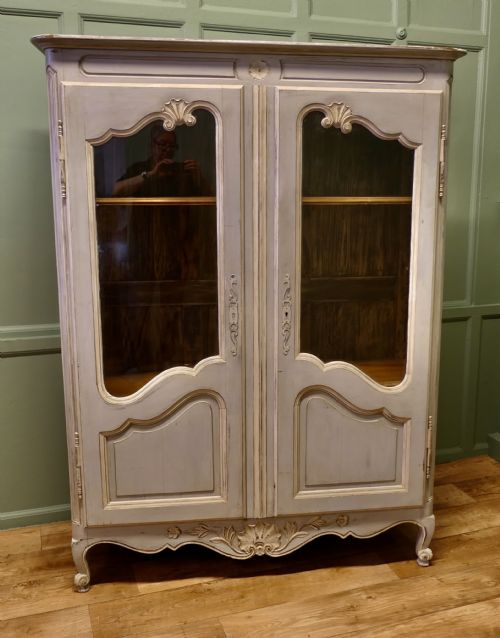
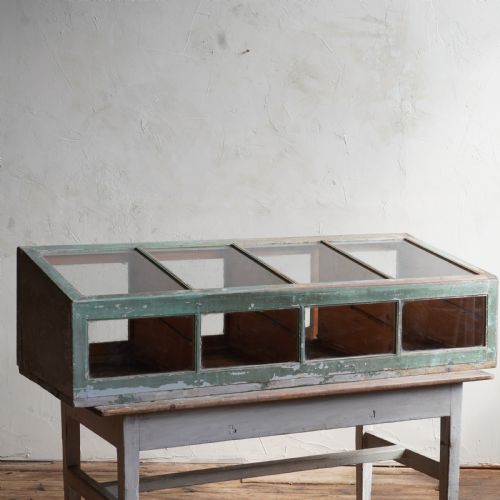
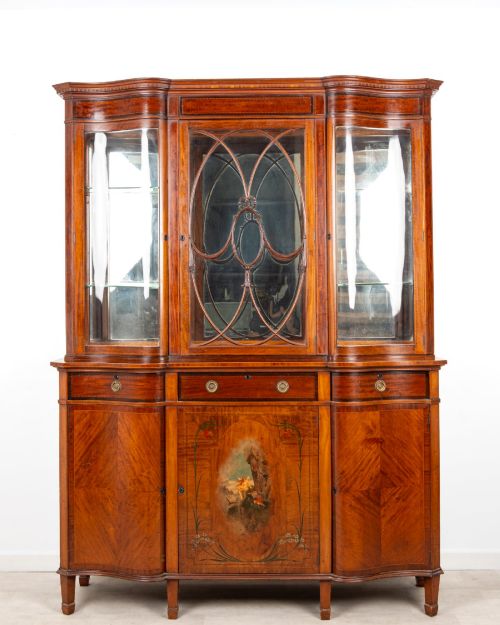
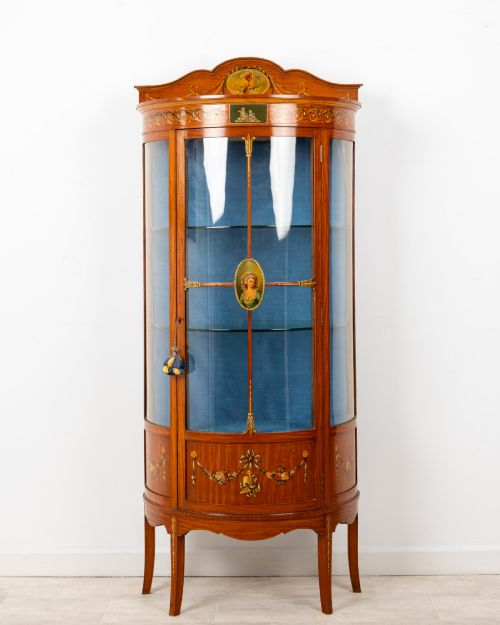
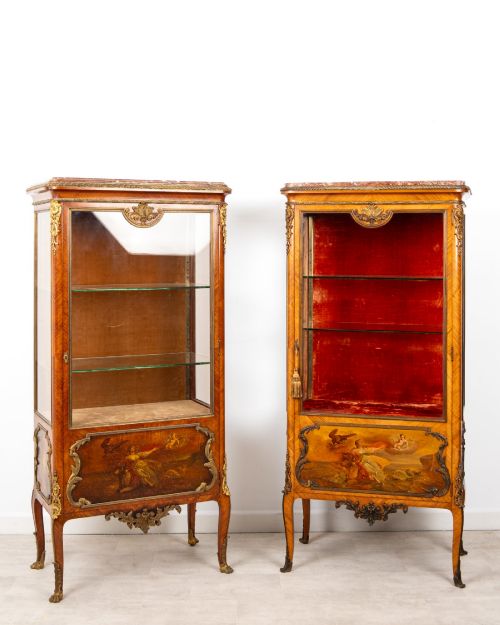
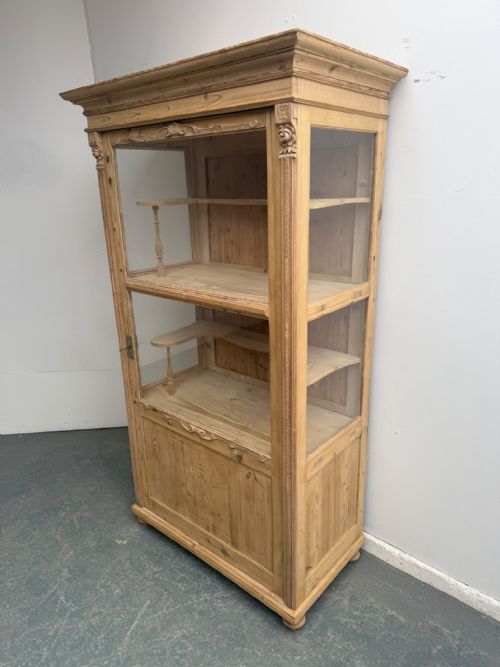
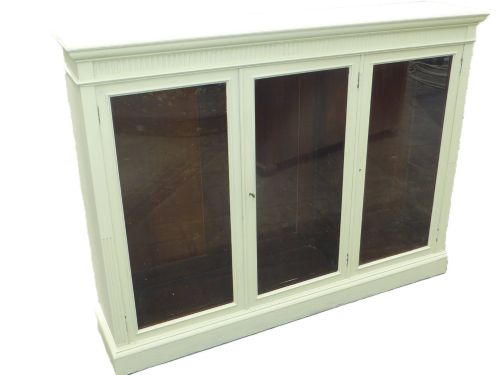
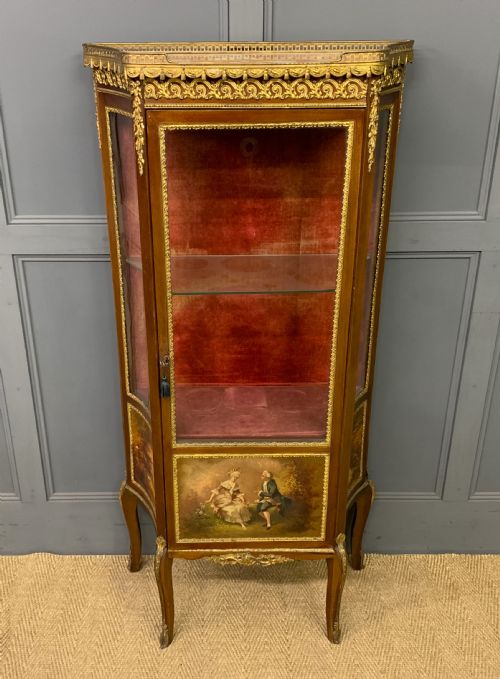
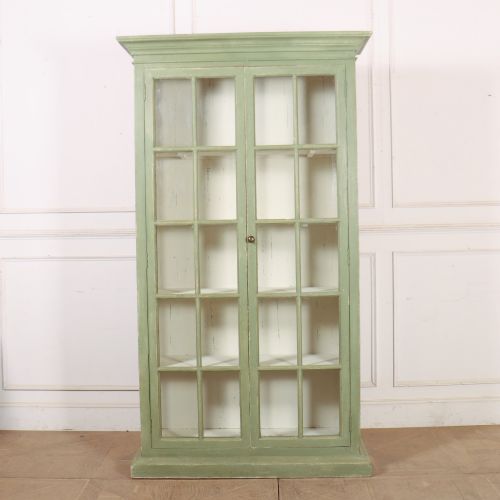
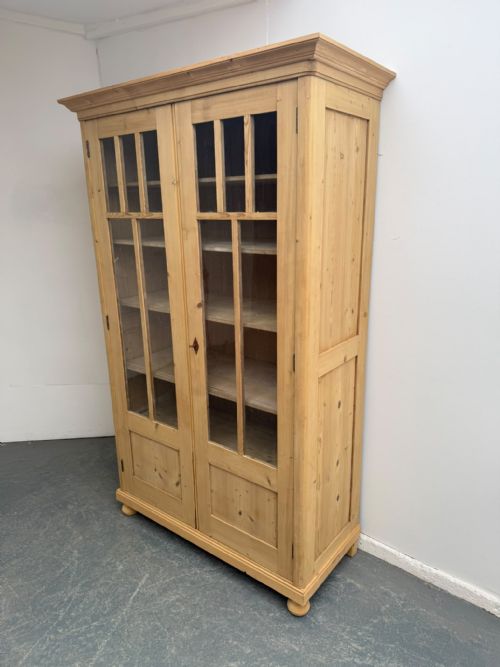
Painted Glazed Vitrine
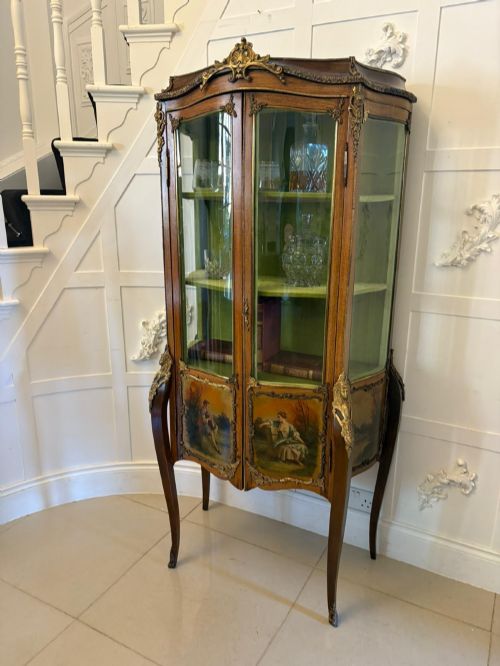
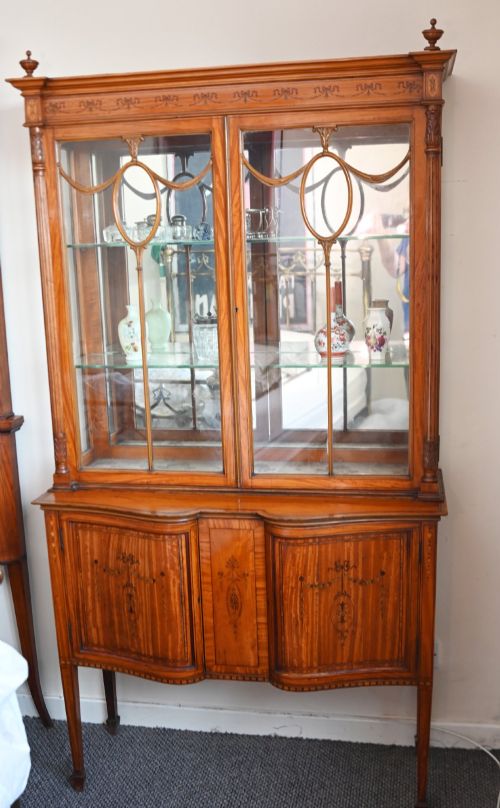
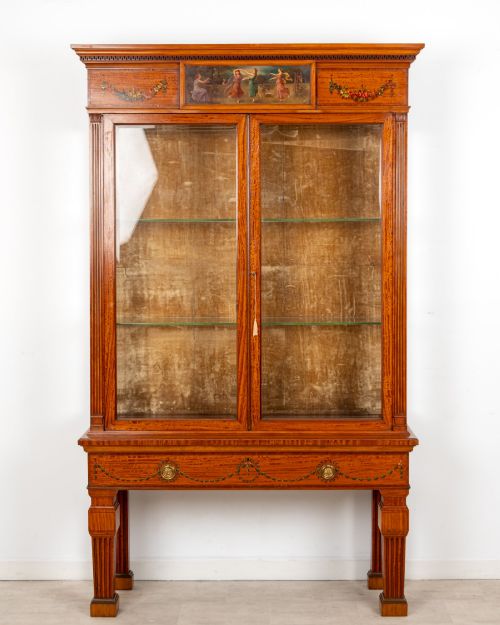
A painted glazed vitrine holds porcelain and silver behind glass panels while displaying delicate brushwork on wood.
Painted Glazed Vitrine
When you search for a painted glazed vitrine, you are looking at display cabinets designed to showcase precious objects behind transparent doors. These pieces combine timber frames with glass panels and decorative painted surfaces.
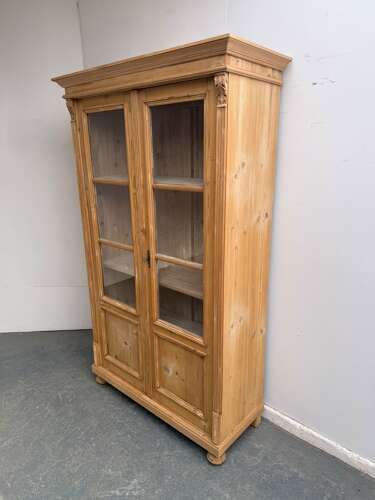
The versions you are most likely to meet on this page span the Victorian and Edwardian eras, alongside earlier continental pieces. They appear in forms ranging from tall double-door cabinets to compact countertop units and wall-hanging vitrines.
Makers drew on French Rococo Revival, Louis XV styles, and Sheraton Revival designs to shape these cabinets. Many feature specific decorative traditions such as Vernis Martin finishes or delicate floral brushwork.
How they were made
Craftsmen built the carcasses using mahogany, satinwood, kingwood, walnut, and pine as foundations for decoration. Ormolu mounts, brass fittings, and marble tops frequently completed the framing of continental examples.
Surfaces received hand-painted decoration, lacquer, or Vernis Martin finishes applied over primed wood. Glazing bars divided the glass panels into geometric or curved panes to frame the interior display space.
Painted Glazed Vitrine Retail Price Guide 2026
Typical asking prices for painted glazed vitrine among the pieces listed under this phrase on Sellingantiques today, from the lower quarter to the upper quarter. They describe what is for sale here now, not the wider market.
Materials recorded across these cabinets range from basic pine and painted wood to mahogany, satinwood, and kingwood.
What varies in quality
The refinement of the painted decoration separates standard production from exceptional examples. Skilled brushwork on Vernis Martin panels or fine floral motifs demonstrates superior workshop output.
The quality of the cabinetwork itself, visible in the choice of veneers like kingwood and the weight of the ormolu mounts, dictates the standing of the piece. Well-cast bronze mounts and properly fitted curved glass indicate high-tier manufacture.
Hampton & Sons London·Jewell of Holborn
The Painted Glazed Vitrine Glossary
- Vitrine
- A glass-fronted display cabinet used for showing porcelain, curiosities, and small valuables.
- Vernis Martin
- A simulated Japanese lacquer technique developed in eighteenth-century France and imitated in later revival pieces.
- Ormolu
- Gilded bronze used for decorative mounts and furniture trim during the eighteenth and nineteenth centuries.
- Serpentine
- A curved line of furniture fronting that bends outward at the centre and inward at the sides.
- Kingwood
- A dense, richly figured tropical timber often used as a veneer in cabinetmaking.
Painted Glazed Vitrine: Frequently Asked Questions
What fits inside a painted glazed vitrine?
These cabinets house small collections of porcelain, glassware, silver, and miniatures behind their glass doors.
Shelves inside the display area hold these items safely away from dust while keeping them visible from the front and sides.
Where should I place a vitrine?
Position your cabinet in a principal room away from direct sunlight to protect the painted decoration and wood veneers.
Ensure the floor is level so the glazed doors hang true and open smoothly on their hinges.
How do I care for the painted finish?
Dust the painted wood and glass gently with a dry, soft cloth without using liquid polishes or harsh cleaning agents.
Keep the room at a stable humidity level to prevent timber movement that could crack the painted panels or gesso.
How do I identify a French piece?
French cabinets often display ormolu mounts, kingwood veneers, and Vernis Martin painted scenes in the Louis XV style.
English equivalents tend to utilise satinwood or mahogany with Sheraton Revival or classical painted details.