

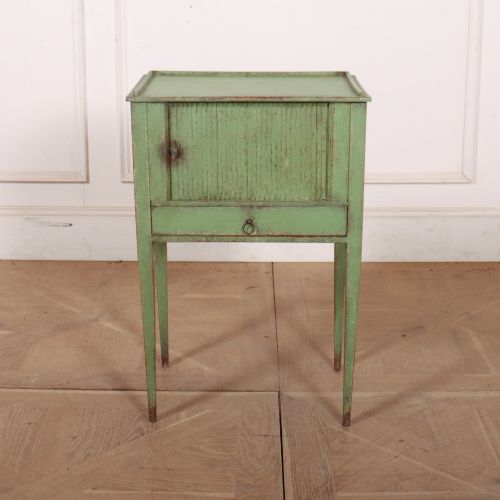
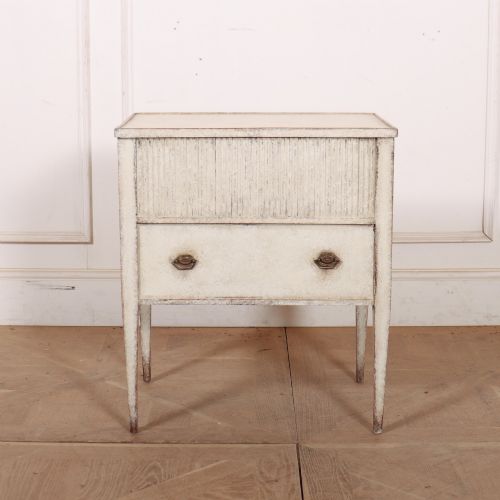
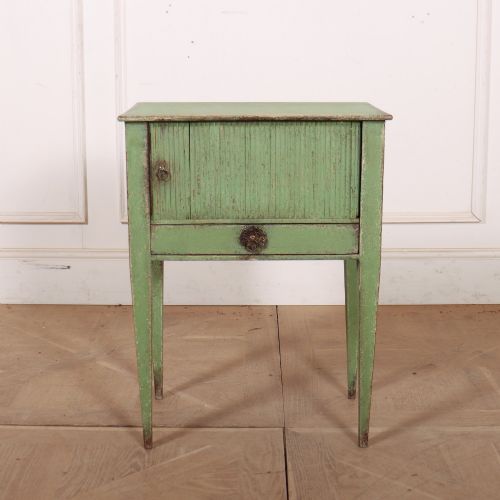


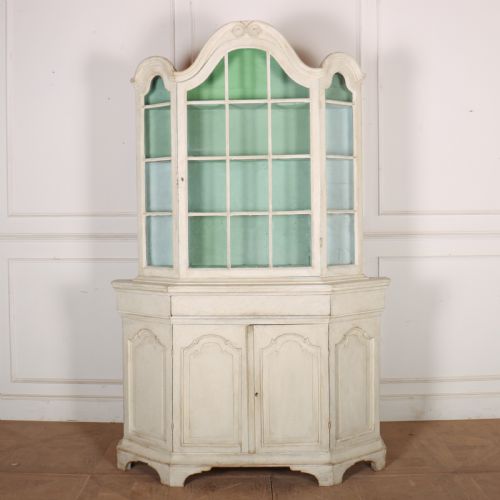


Painted Dutch Cupboard
A painted dutch cupboard brings rich colour and provincial character to a room, offering practical storage alongside centuries of European design history.
Painted Dutch Cupboard
When you search for a painted dutch cupboard, you look at storage furniture ranging from grand linen presses and corner cupboards to bedside cabinets and vitrines. These pieces originate from provincial workshops and country houses, bringing traditional European utility together with decorative surface work.
You are most likely to meet 18th century and 19th century examples on this page, reflecting periods spanning from Dutch Baroque and Rococo to Neoclassical and folk art traditions. Forms vary from monumental linen cupboards to small bedside tables and glazed display cabinets.
The construction typically relies on softwood or pine as a base for layered paint schemes, sometimes paired with glass doors and brass or iron hardware. Many retain significant traces of their original decorative schemes, which define their visual presence in a modern interior.
How they were made
Cabinet makers built these pieces primarily using softwood and pine timbers, constructing robust carcases designed to withstand domestic use in provincial settings. Joinery techniques varied according to the scale of the object, from large armoires and linen cupboards down to diminutive bedside cabinets.
Surfaces were prepared and finished with traditional paint applications, ranging from simple polychrome schemes to folk art motifs and later mottled midnight blue treatments. Glazed doors incorporate timber framing, while hardware relies on brass and iron hinges, locks, and escutcheons.
Painted Dutch Cupboard Retail Price Guide 2026
Typical asking prices for painted dutch cupboard among the pieces listed under this phrase on Sellingantiques today, from the lower quarter to the upper quarter. They describe what is for sale here now, not the wider market.
Doll furniture occasionally slips into the lineup, proving that miniature folks needed serious linen storage too.
What varies in quality
The distinction between standard provincial utility pieces and exceptional examples rests in the survival and sophistication of the surface decoration. Pieces bearing untouched polychrome schemes or distinct folk art detailing stand apart from those with simplified or later interventions.
Proportion and structural integrity also divide the range, as larger linen cupboards and bombe forms require precise carpentry to maintain their architectural balance. The integration of original brass and iron hardware further separates utilitarian workshop output from more ambitious commissions.
The Painted Dutch Cupboard Glossary
- Vitrine
- A glazed display cabinet designed for showing porcelain, glassware, or small decorative objects. These pieces often feature glass panel doors to protect their contents.
- Bombe
- A swelling, outward-curving furniture shape that bulges on the lower sections of chests and cupboards. This contour demands advanced carpentry skill.
- Polychrome
- Decorated in multiple colours across the surface of the timber. This finish defines much of the folk art and provincial output.
- Linen cupboard
- A tall storage piece traditionally utilised for household textiles and bedding. These large forms anchor the architecture of a room.
- Corner cupboard
- A specialised storage form built with angled sides to fit snugly into a room junction. Both wall-hanging and floor-standing versions appear in provincial interiors.
Painted Dutch Cupboard: Frequently Asked Questions
What is a painted dutch cupboard?
A painted dutch cupboard is a piece of storage furniture originating from the Netherlands, finished with decorative paint rather than exposed wood grain. These items range from large linen presses to small bedside cabinets.
They reflect various historical styles, including Baroque, Rococo, and folk art traditions, offering both practical storage and strong visual character.
How do I date a painted dutch cupboard?
Dating relies on construction methods, timber selection, and stylistic details associated with periods like the 18th century or 1860. The evolution of hardware and paint layers provides further clues.
Examining the interior construction and secondary woods helps confirm the era of manufacture.
Where were these cupboards used?
These cupboards served utilitarian storage needs in country houses, provincial homes, and urban domestic settings across the Netherlands. Larger pieces held household linens and clothing.
Smaller cabinets and vitrines functioned as bedside storage or display furniture for valued possessions in sitting rooms.
How do I care for historic painted wood?
Historic painted surfaces require stable environmental conditions away from direct sunlight and extreme humidity fluctuations. Gentle dusting with a dry cloth protects the delicate pigment layers.
Avoid harsh chemical cleaners that can lift or dissolve historic paint schemes.