

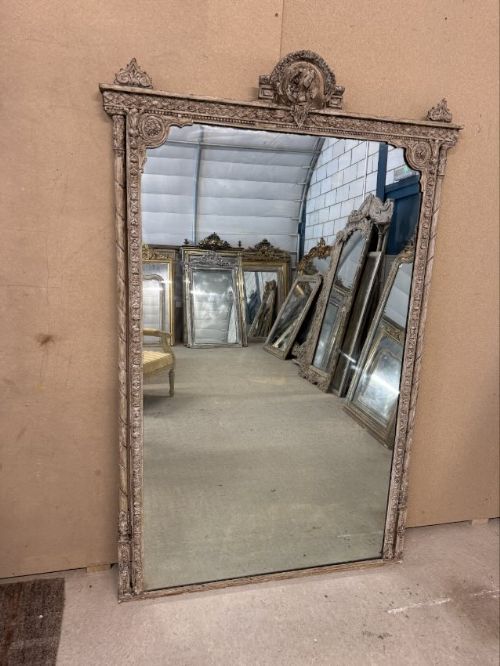
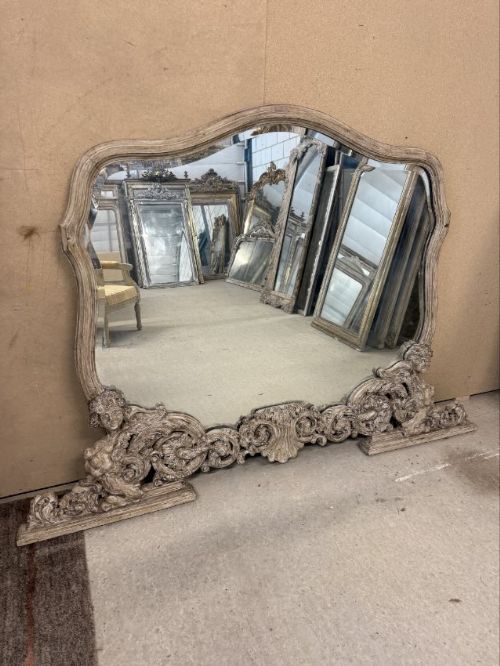
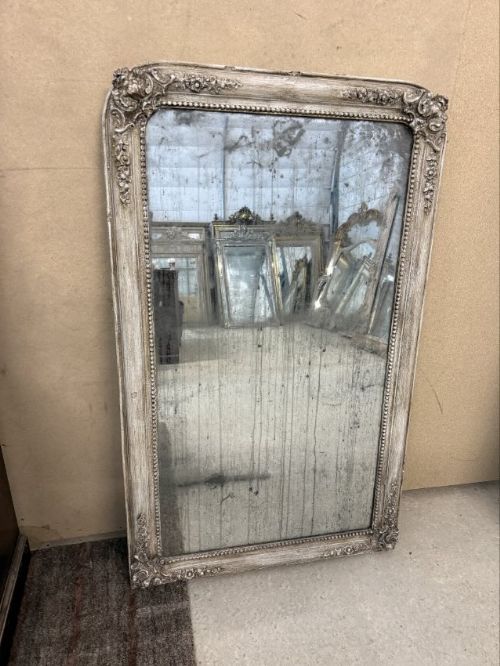
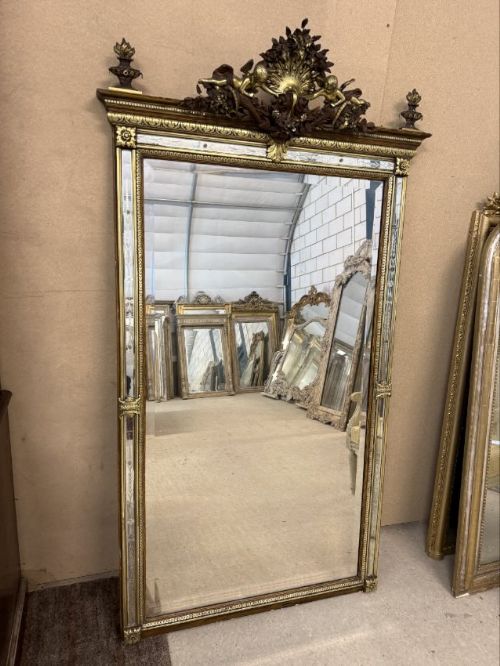


Painted Gesso Mirror
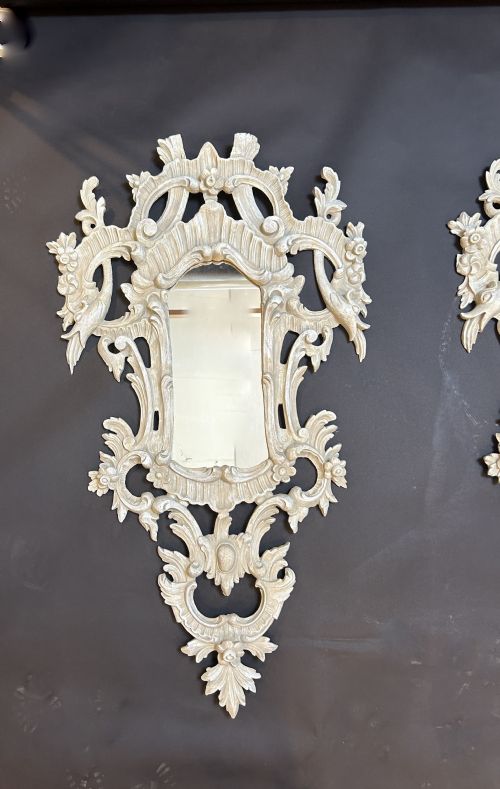
These painted gesso mirror designs bring nineteenth-century French and English presence into a room through carved wooden frames coated in plaster and pigment.
Painted Gesso Mirror
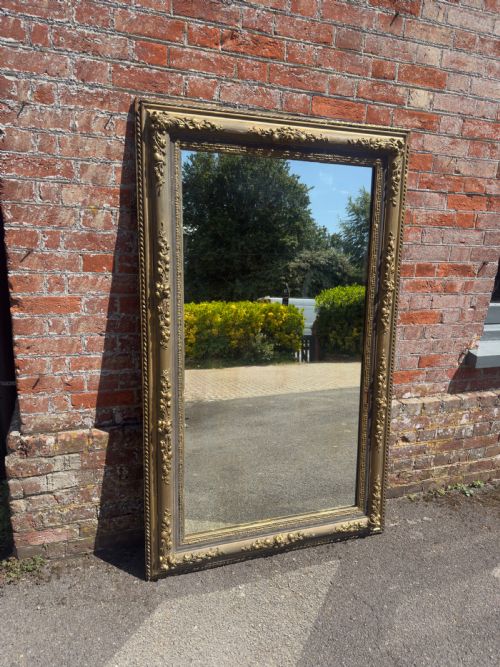
A painted gesso mirror is typically found in large formats such as overmantle and wall mirrors originating from nineteenth-century English and French workshops. These pieces frequently display arched, shaped, or ribbed tops designed to dominate a mantelpiece or wall space.
Surviving examples span from the eighteenth century into the early twentieth century, encompassing styles from Rococo Revival and Neoclassical to Louis Philippe. The inventory demonstrates a strong representation of nineteenth-century craftsmanship tailored for substantial domestic interiors.
How They Were Made
Craftsmen built the foundational structure from carved wood, applying layers of gesso plaster to build up the decorative relief before painting or gilding the surface. This plaster layer allowed intricate floral decorations, columns, and leaf motifs to be sculpted sharply onto the frame.
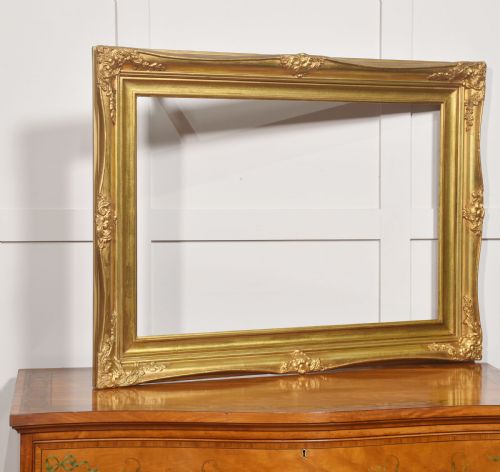
Many frames combine paint with gold leaf accents or exhibit over-painted finishes that have aged into a distressed aesthetic over decades of exposure.
Painted Gesso Mirror Retail Price Guide 2026
Typical asking prices for painted gesso mirror among the pieces listed under this phrase on Sellingantiques today, from the lower quarter to the upper quarter. They describe what is for sale here now, not the wider market.
What Varies in Quality
The sophistication of the wood carving and the depth of the gesso relief distinguish standard production from exceptional examples. Finer pieces retain crisp moulding lines and complex framing details like laurel leaves or ribbed columns.
Originality of surface finish dictates the desirability of a piece, separating items with intact historical paint schemes from those with later overpainting.
The Painted Gesso Mirror Glossary
- Gesso
- A plaster mixture applied to carved wooden frames to create a smooth surface for painting or gilding. This material takes fine detail exceptionally well.
- Overmantle Mirror
- A large mirror specifically proportioned to hang directly above a fireplace mantel. These pieces often feature wide horizontal or arched formats.
- Giltwood
- Wood that has been coated with gold leaf or gold paint. It frequently appears alongside painted finishes on nineteenth-century frames.
- Louis Philippe
- A French nineteenth-century style characterised by clean, restrained curves and often rounded upper corners. It offers a softer alternative to heavily ornate rococo designs.
Painted Gesso Mirror: Frequently Asked Questions
Where should I hang an overmantle mirror?
These large mirrors sit naturally above a fireplace mantel to reflect light and anchor the room's proportions.
They also function effectively on principal living room walls where their substantial frames can command the space.
How do I identify a French nineteenth-century mirror?
French pieces from this period often display Louis Philippe or provincial styling with refined curves and subtle paint finishes.
English equivalents tend toward robust architectural elements like columns and heavy arched tops.
What is gesso made of?
Gesso consists of a binder mixed with chalk, gypsum, or pigment applied directly to carved wood.
This mixture forms a durable base that carvers shape into intricate reliefs before applying paint.
Are these mirrors heavy?
The combination of solid wood construction and dense gesso plaster creates substantial weight across most pieces.
Proper wall anchoring is essential to support the load safely in a domestic setting.