
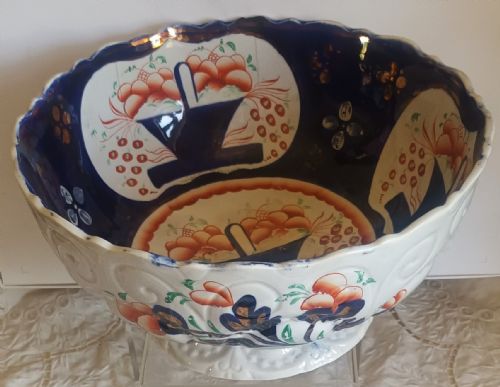
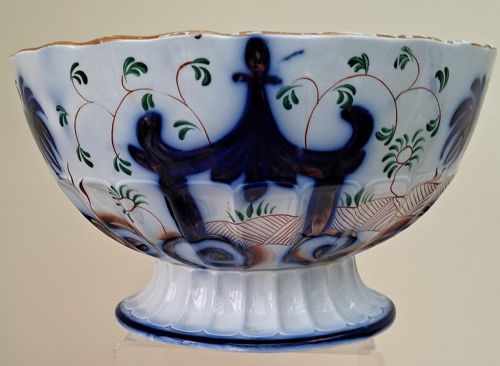
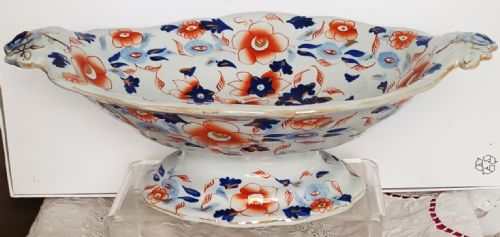
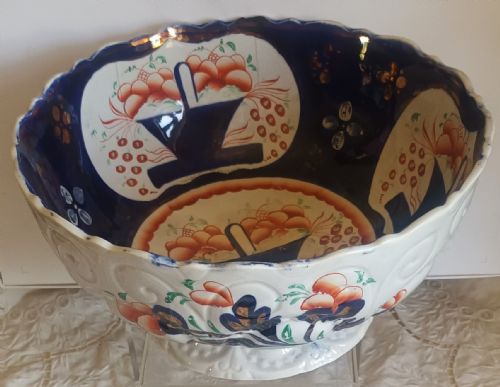
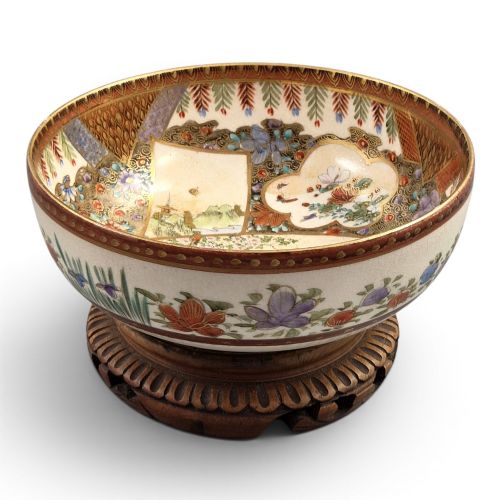


Painted Fruit Centrepiece Bowl
A painted fruit centrepiece bowl anchors a dining table, bringing hand-painted colour and porcelain substance to a room.
Painted Fruit Centrepiece Bowl
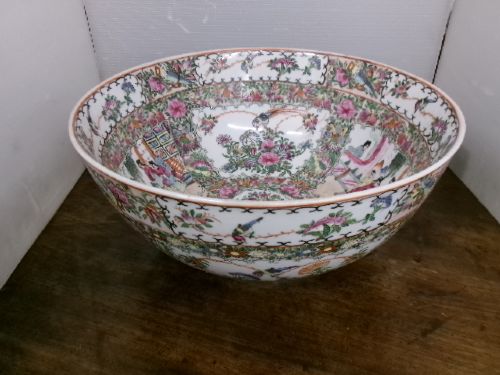
A painted fruit centrepiece bowl serves as a grand table vessel, designed to hold displays or stand alone as a focal point. You will encounter footed comports, deep punch bowls, and pedestal dishes spanning from the eighteenth century through to the mid-twentieth century.
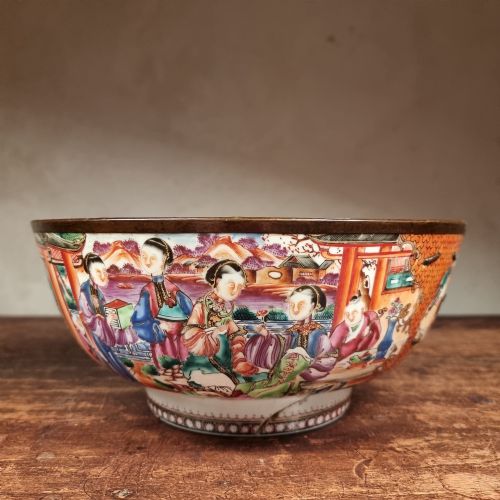
The selection includes English ironstone and pottery alongside continental porcelain from factories such as Sèvres and Royal Worcester. Eastern traditions are strongly represented through Chinese export porcelain and Japanese Imari and Satsuma wares.
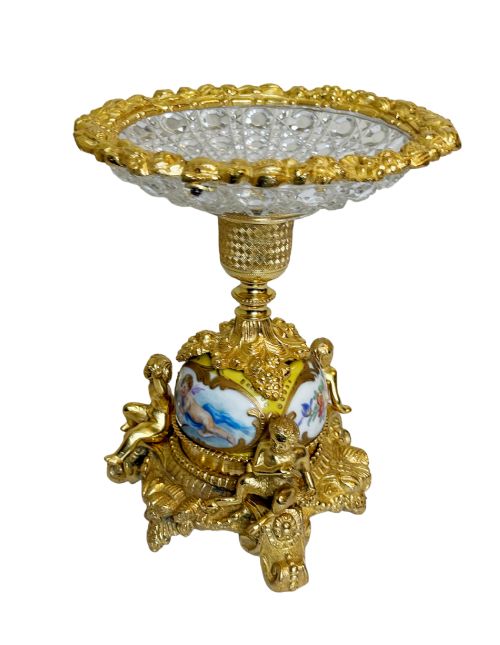
Many examples arrive with specific decorative schemes, from Gaudy Welsh floral patterns to delicate bird and fruit motifs painted by known studio artists. Their forms range from simple round basins to elaborately mounted dishes supported by gilt bronze cherubs.
How they were made
Potters shaped these vessels from ceramic, earthenware, ironstone, and hard-paste porcelain before applying complex underglaze and overglaze colours. Artisans utilised gold leaf and gilt highlights to accentuate moulded rims and decorative handles.
Makers added enamel pigments by hand, sometimes firing the pieces multiple times to fix detailed botanical, heraldic, or landscape scenes. Certain grander centrepieces combined fired porcelain bowls with cast gilt bronze and cut crystal mounts.
Listings feature porcelain, ironstone, and earthenware pieces spanning from the eighteenth century to the mid-twentieth century.
What varies in quality
The distinction between standard production wares and superior examples rests in the crispness of the hand painting and the depth of the porcelain body. Master painters executed fruit and floral studies with precise brushwork and subtle tonal shading that elevated a functional bowl into a fine art object.
Structural complexity also dictates standing, particularly in pieces featuring pierced galleries, applied cherubs, or cast ormolu mounts. Finer nineteenth-century and earlier pieces show careful control during high-temperature kiln firings, resulting in stable glazes and balanced forms.
Royal Worcester·Royal Crown Derby·Samson Of Paris·Mason·Maling
The Painted Fruit Centrepiece Bowl Glossary
- Comport
- A raised dish or bowl on a foot, traditionally used for serving fruit or sweetmeats at the table. These pedestal vessels sit higher than standard bowls to create varied levels in a table display.
- Imari
- A style of Japanese export porcelain decorated in underglaze blue, iron red, and gold. This distinct palette was widely imitated by European potteries during the nineteenth century.
- Ironstone
- A heavy, durable type of ceramic patented in the nineteenth century to rival true porcelain. It provides a robust body for heavily decorated utilitarian and decorative bowls.
- Tazza
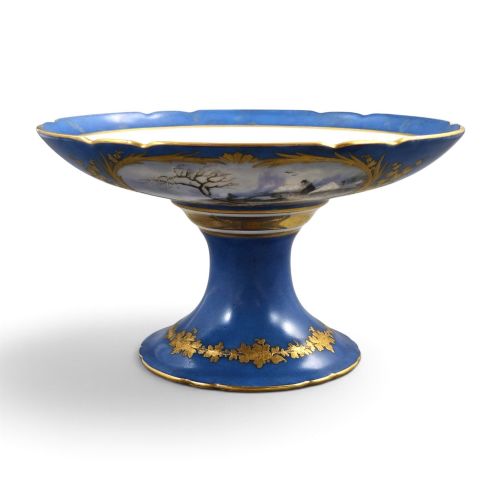
- An ornamental pedestal bowl or shallow cup set upon a foot. The form originates from classical tableware and often appears in nineteenth-century continental porcelain.
- Famille Rose
- A palette of Chinese porcelain enamels dominated by opaque pink or rose colours introduced in the eighteenth century. These bowls typically feature detailed floral and figural compositions.
Painted Fruit Centrepiece Bowl: Frequently Asked Questions
What is a centrepiece bowl used for?
These vessels were historically placed in the middle of dining tables to hold displays of fruit, flowers, or sweetmeats during formal meals. They functioned as grand decorative centrepieces that demonstrated the host's taste and means.
Today, they serve equally well as standalone decorative objects on sideboards or coffee tables, or as functional bowls for holding fruit in a modern kitchen or dining room.
How do I identify a Sèvres style bowl?
Sèvres style pieces typically feature rich coloured grounds such as deep blue or turquoise, combined with heavy gilt scrolling and hand-painted pastoral or exotic bird scenes. They often mimic the distinctive eighteenth-century French royal factory aesthetics.
Many nineteenth-century continental potteries produced wares in this manner, sometimes bearing pseudo-marks that pay homage to the original French establishment rather than indicating direct manufacture there.
Are Japanese Imari bowls antique?
Many Japanese Imari bowls found in the West date from the Meiji period in the late nineteenth and early twentieth centuries, when export trade flourished. These pieces are characterised by their iron red, dark blue, and gilt coloration.
Earlier eighteenth-century examples exist, but the majority of decorative market pieces stem from this later Victorian and Edwardian era of increased international exchange.