




Painted French Salon Chairs
Painted French salon chairs are decorative seating options from various centuries, offering elegance and historic charm for modern interiors.
Painted French Salon Chairs
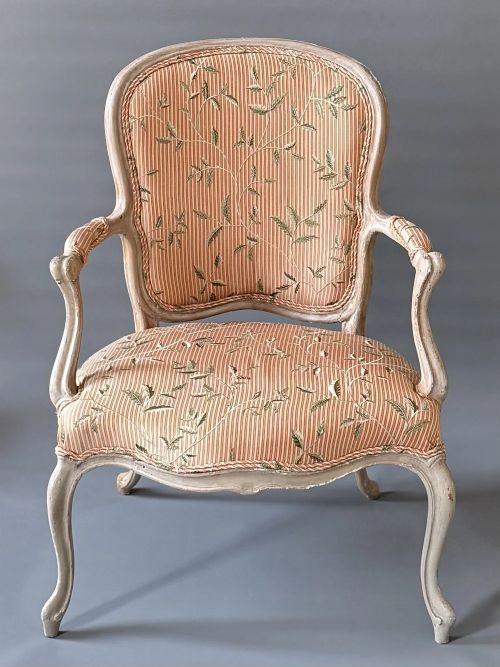
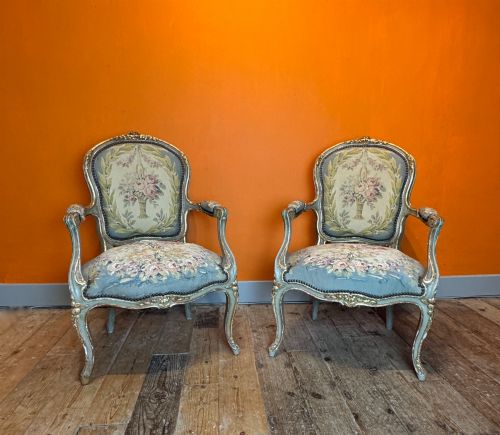
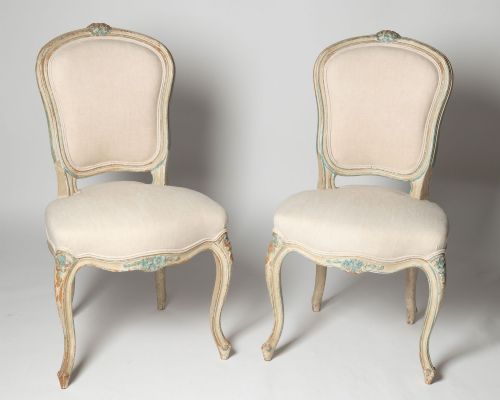
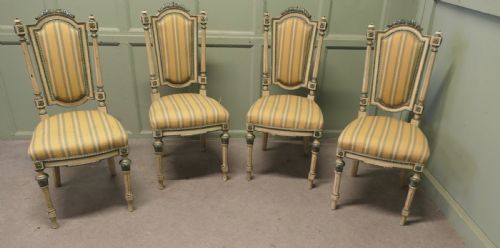
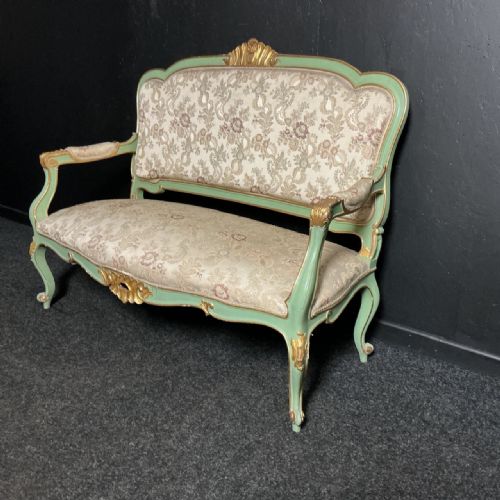
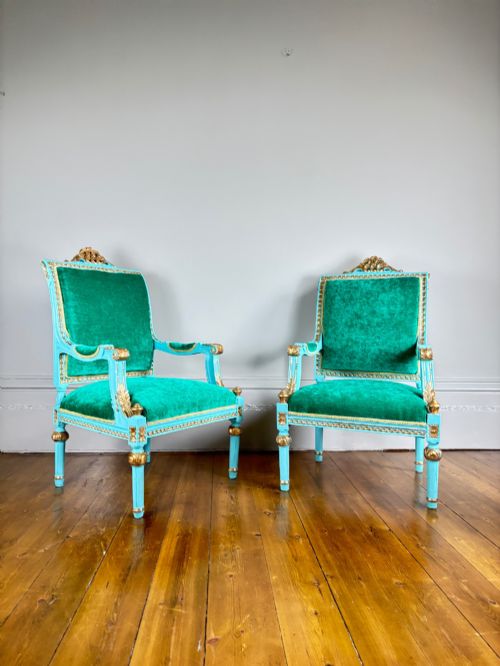
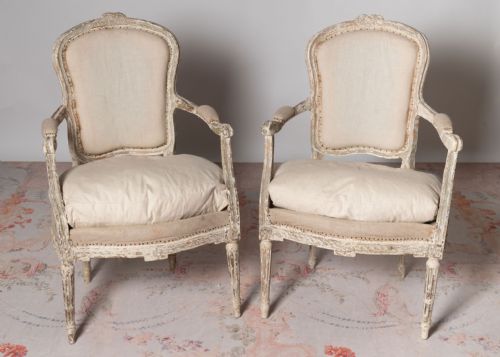
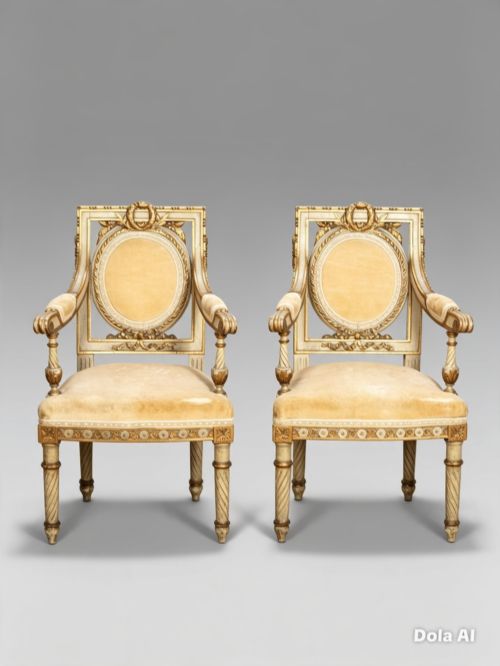
When you search for painted french salon chairs, you encounter seating designed for formal rooms, originating from centuries ranging from the eighteenth to the twentieth. The examples here include armchairs, side chairs, and open armchairs shaped by regional tastes and courtly revivals.
You are most likely to meet nineteenth-century pairs influenced by Louis styles, often featuring upholstered elements and decorative woodwork. These seating forms served receiving spaces and boudoirs, balancing ornamental carving with functional comfort.
Materials and construction
Wood serves as the primary structural material, with beech commonly utilised alongside walnut and other timber for frames. Craftspeople shaped these wooden supports through carving before applying paint, gold leaf, or parcel gilt highlights.
Upholstery completes the construction, incorporating materials such as fabric, velvet, linen, tapestry, and needlepoint panels. Caning also appears on specific models, providing texture alongside the painted wooden framework.
Miniature salon chairs designed for children survive to remind us that miniature aristocracy needed proper posture too.
Evaluating the standard
The degree of detail in the carved woodwork distinguishes different examples, with crisp floral and scroll motifs marking superior craftsmanship. Smoother surface preparation and refined paint application likewise elevate a piece above simpler alternatives.
The integrity of the frame and the quality of the textile upholstery contribute to the overall standard. Original surface treatments and period-appropriate coverings hold distinct appeal for those studying historical seating.
The Painted French Salon Chairs Glossary
- Fauteuil
- An open-arm armchair with upholstered back and seat, typically featuring exposed wooden framing. These chairs originated in formal French interiors.
- Bergere
- A closed armchair with upholstered sides and a built-in upholstered cushion. This form provides a deeper, more enclosed seat than an open armchair.
- Parcel Gilt
- A decorative treatment where specific carved details receive a thin application of gold leaf while the rest of the frame remains painted. This technique highlights particular ornamental motifs.
- Louis XVI Style
- A neoclassical design aesthetic characterised by straight tapered legs, geometric symmetry, and classical carvings. It contrasts with the more flowing curves of earlier revival periods.
- Rococo Revival
- A nineteenth-century style drawing on eighteenth-century motifs with an emphasis on asymmetry, C-scrolls, and naturalistic plant forms. Frames from this movement display pronounced curves and elaborate ornamentation.
Painted French Salon Chairs: Frequently Asked Questions
What rooms suit these chairs?
These chairs fit well in sitting rooms, bedrooms, and hallways as occasional seating or accent pieces.
Their decorative frames and upholstered backs allow them to complement both traditional and eclectic interior schemes.
How do I identify a revival piece?
Revival pieces emulate earlier royal aesthetics, such as the reigns of Louis XV or Louis XVI, but date from later nineteenth or twentieth-century manufacturing periods.
Examination of the timber, paint layering, and construction methods helps distinguish these later interpretations from eighteenth-century originals.
Were these chairs used for dining?
While most salon examples served reception spaces and sitting rooms, specific variations functioned as dining chairs.
Armchairs and side chairs on this page catered to different social contexts within period homes.
How should I care for painted wood?
Painted wooden frames require gentle dusting with a soft, dry cloth to protect the decorative surface.
Avoiding direct sunlight and moisture preserves both the paint finish and the integrity of the underlying timber.