


Painted Face Longcase Clock
A painted face longcase clock tells time with a decorated dial set inside a tall wooden case, offering traditional movement and domestic heritage.
Painted Face Longcase Clock
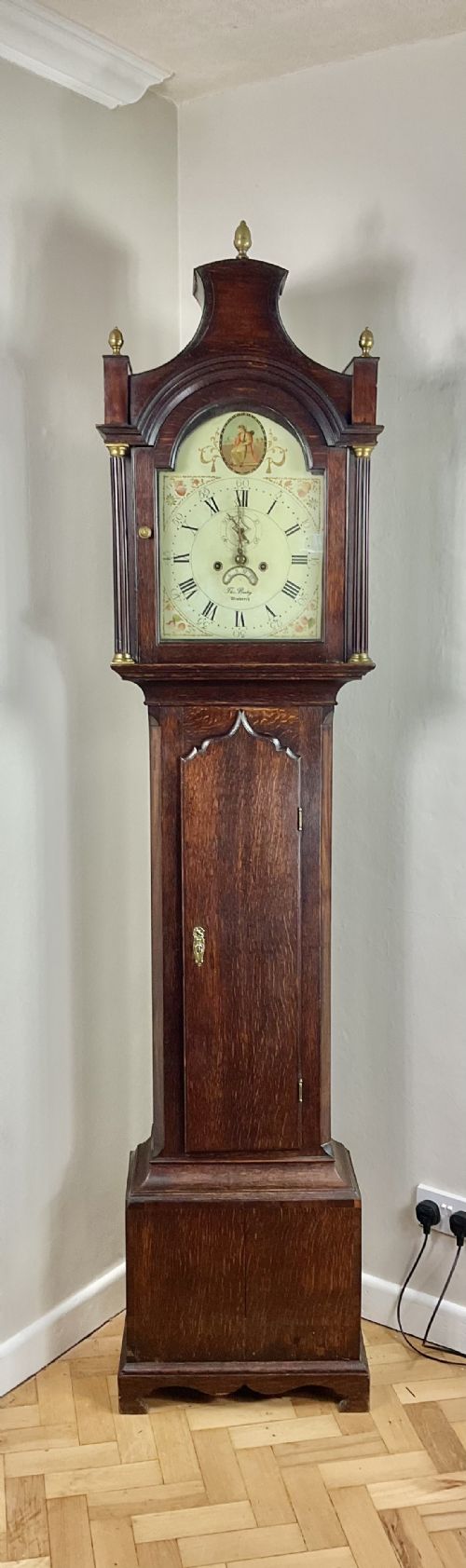
A painted face longcase clock combines timber cabinetry with an illustrated dial, bringing traditional horology into a room. These tall timepieces stand upright against a wall, enclosing weights and a pendulum that drive the movement.
The pieces listed here span the eighteenth and nineteenth centuries, including Georgian, George III, and Regency periods. Oak and mahogany serve as the primary woods for the tall cases that protect the internal mechanics.
Most examples feature either thirty-hour or eight-day movements, housed within straightforward country oak cases or more refined flame mahogany designs. Dials range from simple decorated iron surfaces to themed depictions involving literary or patriotic figures.
Materials and construction
Cabinetmakers constructed the tall housing using native timbers such as oak and mahogany, often pairing woods within a single piece. Grain patterns were carefully chosen for the trunk and door to create visual depth.
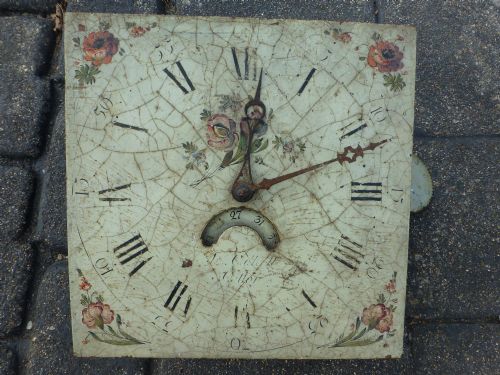
Dials were formed from iron and finished with applied paint, providing a smooth surface for numerals and illustrative scenes. Glass protected the dial face within a hinged door at the head of the clock.
Listings feature oak and mahogany woods alongside painted iron dials across Georgian, Regency, and nineteenth-century periods.
Distinctions in quality
The sophistication of the timber veneer and the cabinet proportions dictate the visual impact of the case. Flame mahogany surfaces with well-matched grain sit at the upper end of the scale, alongside simpler constructed oak country examples.
The artistry on the painted dial distinguishes simpler utility clocks from more ambitious works. Detailed figurative artwork, such as literary or national themes, reflects greater time and skill invested by the dial painter.
Richard Northen·Yaxley West, Docking
The Painted Face Longcase Clock Glossary
- Longcase clock
- A tall pendulum clock housed in a wooden case that rests on the floor. These pieces are often referred to colloquially as grandfather clocks.
- Painted iron
- A metal dial plate coated with a painted finish to receive numerals and decoration. This material superseded brass dials during the Georgian period.
- Flame mahogany
- A tropical hardwood veneer featuring undulating, flame-like grain patterns. It was utilised on high-status nineteenth-century clock cases.
- Eight day
- A clock movement requiring winding once a week. This system uses two weights suspended by lines or chains.
Painted Face Longcase Clock: Frequently Asked Questions
How often do I wind an eight day clock?
An eight day movement requires winding once a week to keep the weights suspended properly.
Most owners choose a specific day of the week to maintain the routine and ensure consistent timekeeping.
Where should I place a longcase clock?
These tall clocks need a stable, level floor and solid wall attachment to keep the pendulum swinging evenly.
Avoid placing them in areas subject to dampness or extreme temperature swings that could affect the wood and movement.
How do I date a painted dial?
The style of the painted scenes, numerals, and hand shapes often point to specific decades in the eighteenth and nineteenth centuries.
Changes from brass to painted iron dials gained momentum around the turn of the nineteenth century.
What is the difference between oak and mahogany cases?
Oak cases typically appeared on earlier or more regional country clocks, displaying visible grain and robust construction.
Mahogany cases, particularly those featuring flame veneers, generally represent more urban or higher-status commissions.