



Painted Face Clock
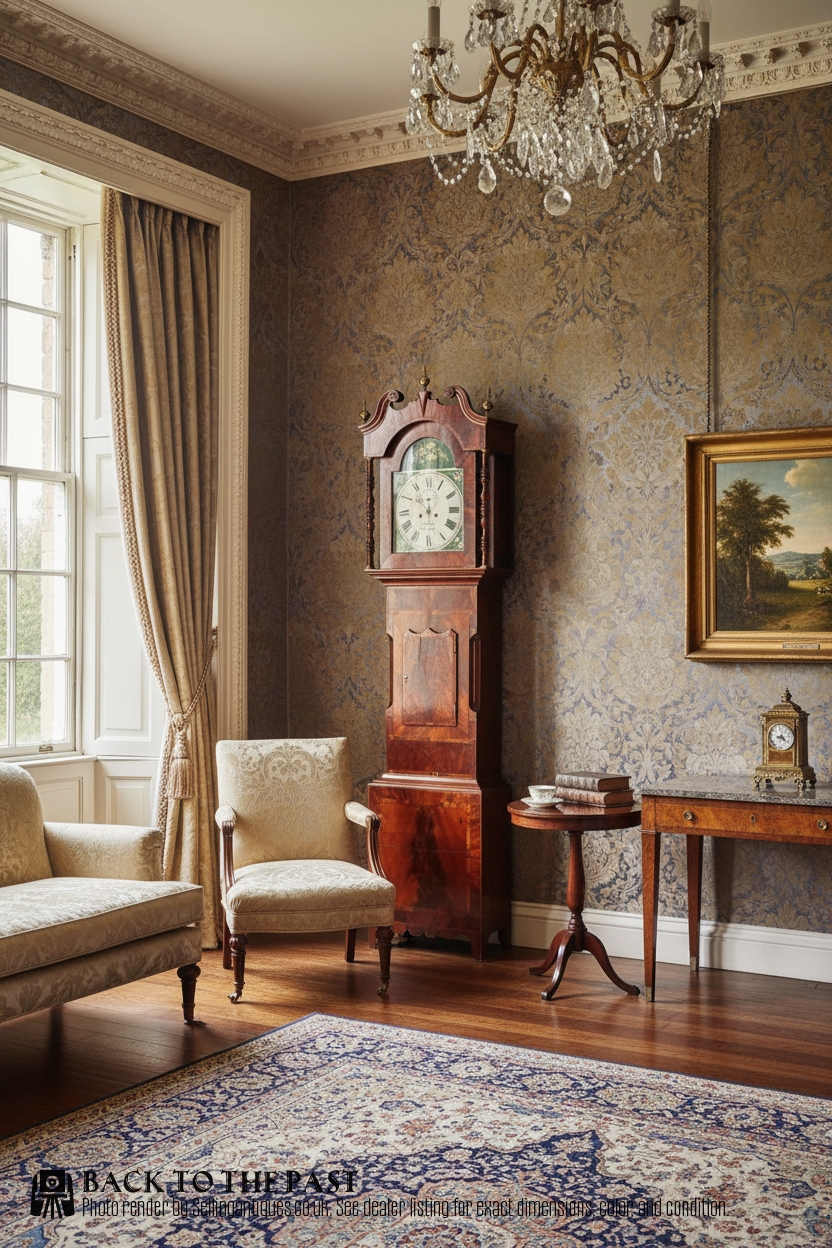
A painted face clock brings historical timekeeping directly into a room through decorative dials housed within grand, architectural wooden cases.
Painted Face Clock
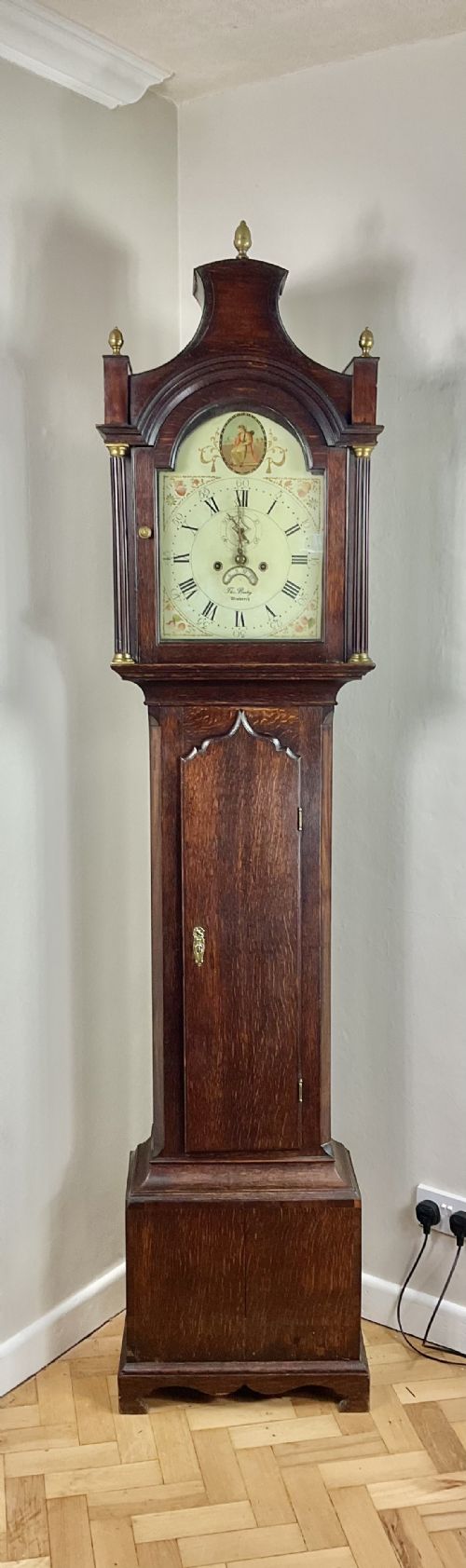
A painted face clock is primarily represented on this page by tall longcase clocks, also known as grandfather clocks, alongside standalone clock dials and tower clock faces. These timepieces span the eighteenth and nineteenth centuries, featuring periods such as the Georgian, Regency, and early twentieth century.
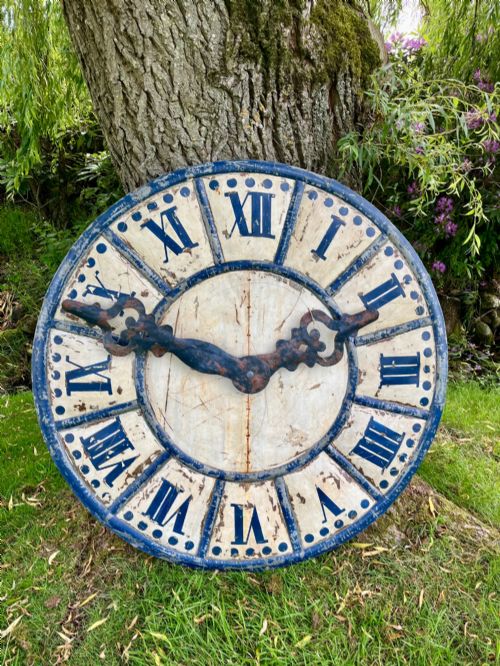
The objects appear in various forms, from complete mahogany and oak longcase clocks to architectural salvage clock faces originating from French towers and Swedish palaces. Smaller mantel clocks and decorative wall displays also feature within the selection.
Makers and regional origins recorded in the evidence include pieces associated with Richard Northen, Yaxley West, Docking, Bristol, and Scottish examples with themed artwork.
Materials and construction
Cases utilise solid timbers including mahogany, flame mahogany, and oak, providing the structural housing for the internal movements.
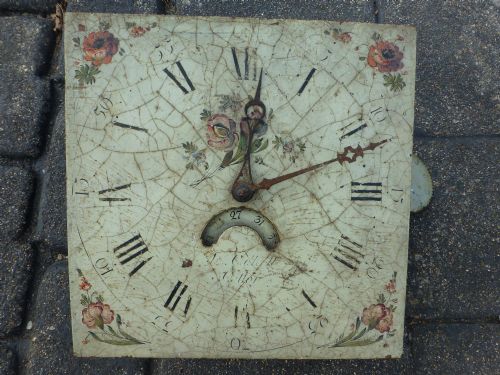
Dials incorporate painted iron, brass, and glass elements, often decorated with intricate artwork, themed scenes, or traditional numerical markings.
Listings combine eighteenth century Georgian oak longcase clocks with twentieth century industrial tower clock faces.
Evaluating quality
Quality separates through the execution of the painted dial and the richness of the timber used in the case construction, such as flame mahogany versus plain oak.
The sophistication of the internal movement, whether an eight day mechanism or a simpler setup, dictates the mechanical standard of the piece.
Richard Northen·Yaxley West Docking·Rosendal Palace
The Painted Face Clock Glossary
- Longcase clock
- A tall, freestanding pendulum clock enclosed in a wooden case, commonly called a grandfather clock. These instruments typically stand over six feet tall and house weight-driven movements.
- Dial
- The visible face of the clock where the hours and minutes are displayed. On these pieces, the dial is often painted iron or brass.
- Movement
- The internal mechanical workings of the clock that drive the hands and strike the hours. Eight day movements require winding once a week.
- Chinoiserie
- A decorative style reflecting European artistic interpretations of Chinese and East Asian motifs. This style appears on specific mantel clock finishes within the selection.
- Architectural salvage
- Building elements or fixtures rescued from demolition or restructuring, such as large tower clock faces from French or Swedish palaces.
Painted Face Clock: Frequently Asked Questions
How do I wind a painted face clock?
Most traditional longcase clocks utilise hanging weights suspended on cords or chains inside the trunk. Winding involves inserting a key into the dial holes to draw the weights back up.
Care must be taken not to overwind the movement, as this can strain the internal springs or chains. Consulting the specific mechanism type ensures the clock maintains accurate time.
What wood was used for grandfather clocks?
Cabinetmakers primarily constructed longcase clock cases using native and imported hardwoods like oak and mahogany. Flame mahogany veneer frequently appeared on higher tier examples for decorative effect.
Secondary timbers might include softer woods for internal framing. The choice of wood generally reflects the period and region of manufacture.
Why do some dials have painted scenes?
Regional clockmakers often commissioned painted dials featuring maritime subjects, literary themes, or allegorical figures like Britannia. These artistic additions personalised the timekeeper and reflected contemporary popular culture.
Scottish examples occasionally featured specific regional figures such as Robbie Burns. Such artwork adds considerable character to the dial face.
How are tower clock faces displayed?
Large tower clock faces are typically mounted directly onto interior walls as statement decorative pieces. Their substantial scale makes them effective focal points in large rooms.
Some examples retain portions of their original iron and steel movement machinery. Proper wall anchoring is essential due to the heavy materials involved.