



Painted Entryway Console Table
A painted entryway console table brings architectural presence to a hallway, offering a surface for daily essentials and a strong decorative focus.
Painted Entryway Console Table
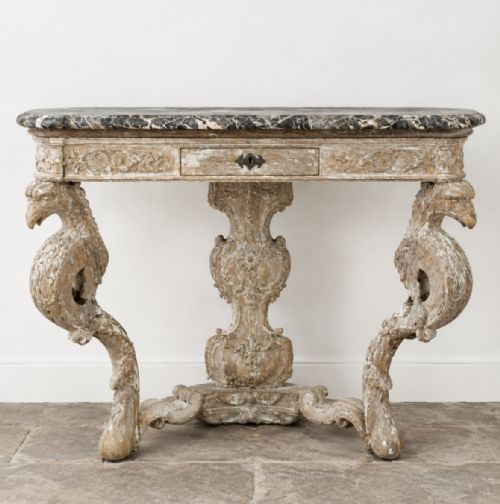
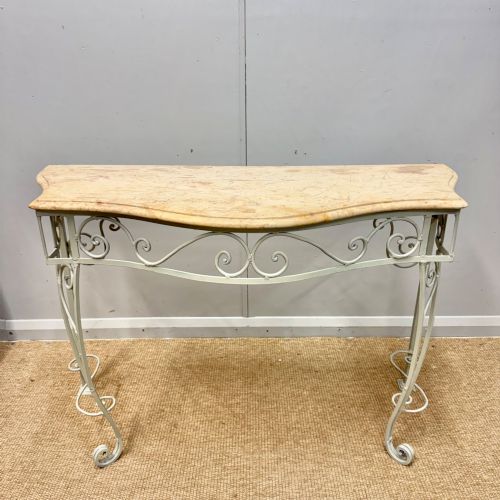
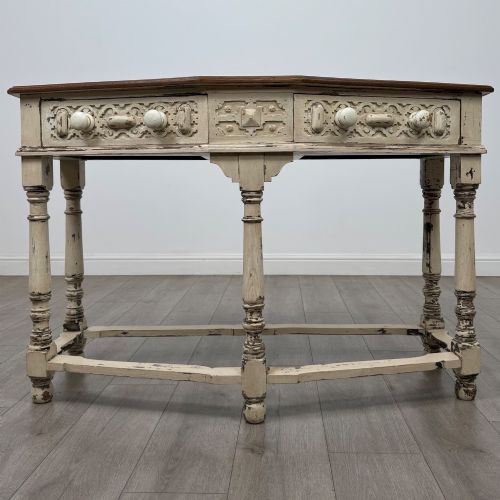
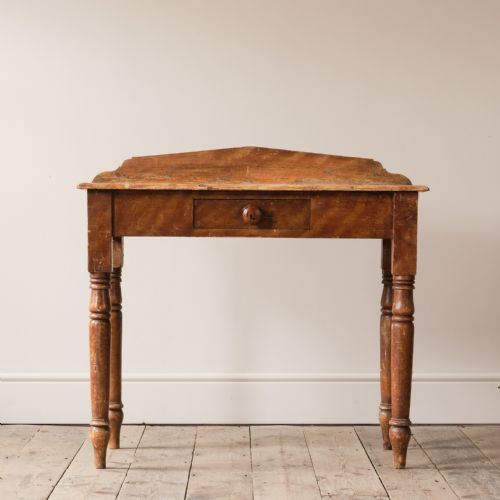
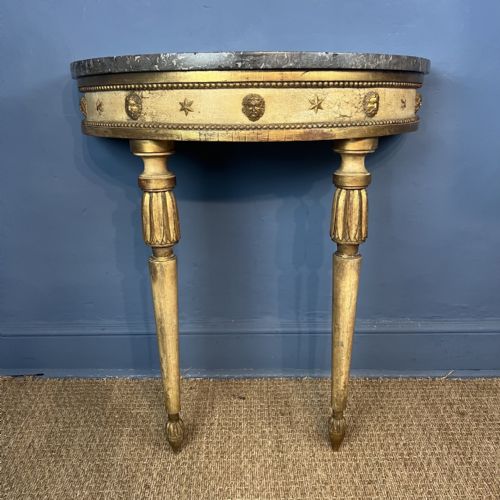
When searching for a painted entryway console table, buyers encounter formats spanning the eighteenth, nineteenth, and early twentieth centuries. These tables include half-moon, demi-lune, serpentine, and straight-front configurations designed to sit flush against a wall in narrow spaces.
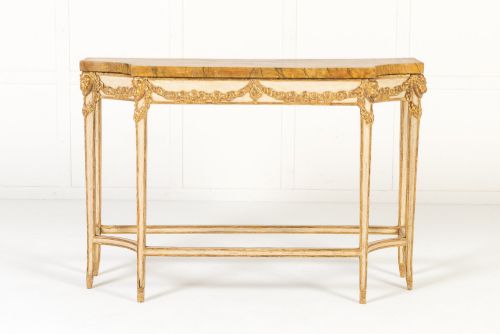
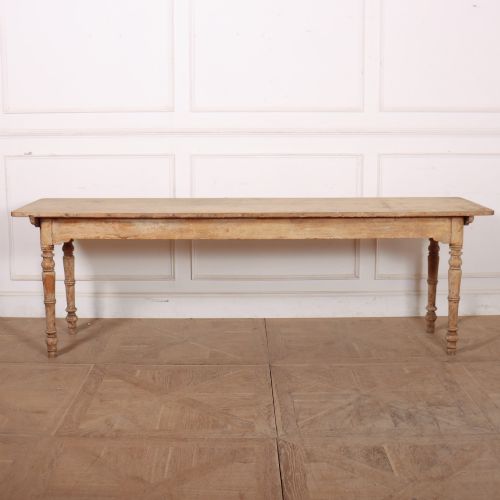
Origin points visible in the inventory range from Italian and French workshops to English country houses and Scandinavian rural interiors. Pieces appear with marble tops, wooden surfaces, and iron frames finished in original paint, cream pigments, and parcel gilt.
The selection encompasses both grand French Neoclassical and Rococo Revival designs alongside simpler country house and Scandinavian styles. Side tables and hall tables frequently overlap with console forms to serve the same architectural function in a corridor.
Materials and construction methods
Makers utilised pine, oak, and satinwood as primary timber bases, often applying gesso to smooth surfaces before laying down paint and gold leaf. Marble tops feature heavily on French and Italian pieces, resting upon heavy timber or wrought iron bases.
Surface decoration relies on layered paint applications, with many examples retaining original cream, green, black lacquer, or distressed polychrome finishes. Hand-carved wooden details, brass mounts, and parcel gilding complement the painted structures across various regional traditions.
The current selection spans the 18th, 19th, and early 20th centuries, featuring materials such as marble, pine, gesso, and gold leaf.
Assessing quality in painted tables
Quality rests significantly on the integrity of the surface finish, distinguishing pieces with original patinated paint from later repainted examples. The depth of hand-carving in the timber or the quality of the wrought iron work dictates the overall standard of craftsmanship.
The choice of top material also defines the tier of the piece, with heavy inset marble slabs or finely figured satinwood marking out more ambitious commissions. Regional distinctiveness, such as Genoese parcel gilt or Swedish country proportions, separates standard items from exceptional survivals.
The Painted Entryway Console Table Glossary
- Demi-lune
- A half-moon shape characteristic of console tables designed to sit flat against a wall. This format became particularly popular during the eighteenth century for narrow hallways.
- Gesso
- A plaster-like mixture applied to wood surfaces to prepare them for painting and gilding. It provides a smooth base that takes fine decorative carving well.
- Parcel gilt
- A technique where portions of a painted object are highlighted with gold leaf. This method draws attention to specific carved details on the frame.
- Serpentine front
- A furniture front characterised by a wavy line with a convex centre flanked by concave sides. This undulating profile demands high skill from the carpenter.
- Giltwood
- Timber that has been coated with a thin layer of gold leaf. It appears frequently on formal continental console tables.
Painted Entryway Console Table: Frequently Asked Questions
Where should I place a console table?
These tables find their natural home in hallways, corridors, and entrance spaces where a shallow footprint is required. Their narrow proportions allow them to sit against walls without obstructing pathways.
They provide a practical surface for post, keys, and lamps while establishing an immediate decorative impression upon entering a home.
Are marble tops original?
Many nineteenth-century French and Italian console tables feature heavy marble tops integrated into the original design. These stone surfaces provided durability for heavy everyday use in entrance halls.
Buyers should examine how the marble rests upon the wooden or iron base to ensure it corresponds with the period of the frame.
How do I care for original painted surfaces?
Original painted and gilt surfaces require gentle maintenance using a dry or barely damp microfiber cloth. Avoid modern chemical polishes that can lift historic pigments or damage fragile gesso layers.
Keeping the table away from direct heat sources and strong sunlight preserves the stability of the wood and the underlying paintwork.
What is the difference between a console and a side table?
Console tables are historically designed to be fixed to a wall or supported at the front by legs, relying on wall brackets for total stability. Side tables are free-standing items with four independent legs.
In modern usage, antique dealers often categorise narrow hall tables interchangeably depending on their proportions and intended placement.