




Dark Wood Bowfront Table
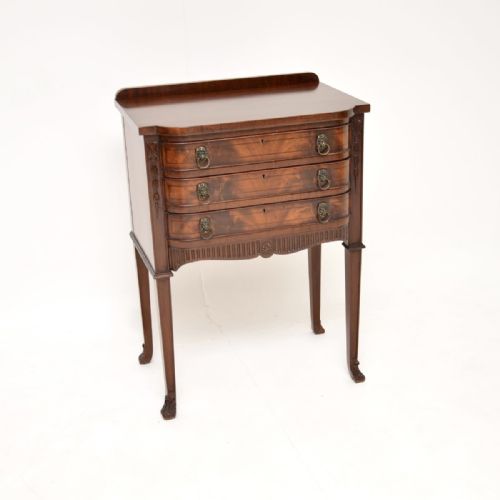
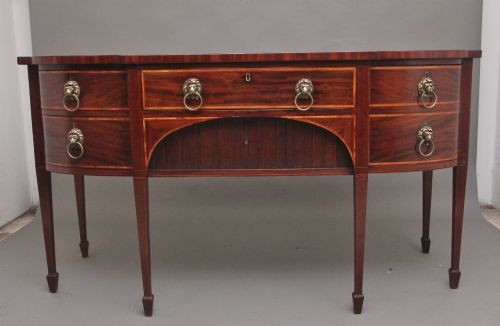
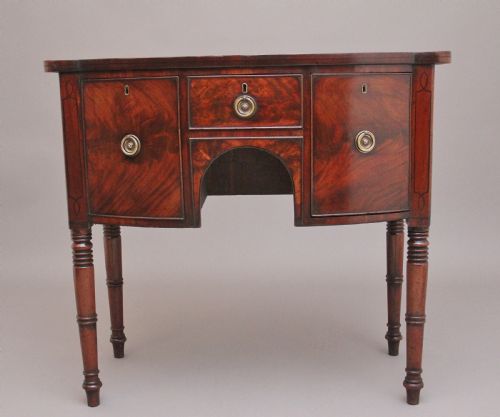
A dark wood bowfront table brings the convex grace of the Georgian and Regency periods directly into a hallway or dining room.
Dark Wood Bowfront Table
A dark wood bowfront table encompasses a variety of forms designed to bring functional elegance to domestic spaces. Buyers looking for a dark wood bowfront table will find that large sideboards and servers dominate the selection, alongside smaller bedside tables, lamp tables, and dressing table mirrors.
The majority of these pieces originate from the Georgian, Regency, and Edwardian eras, utilising rich timbers to create the characteristic curved front. Sideboards and side tables provide substantial storage and surface area, while smaller mirror frames and bedside cupboards offer compact utility.
Craftsmen shaped these items to soften room corners and catch the light across polished surfaces. Whether seeking a grand server for a dining room or a delicate side table for a hallway, the selection reflects enduring domestic requirements.
What varies in quality
The standard of timber selection and the intensity of the flame mahogany figure set the finest examples apart from simpler pieces. Superior craftsmanship is visible in the precision of the boxwood inlay and the seamless alignment of the curved drawer fronts.
Original brass hardware and well-preserved drawer linings indicate a higher grade of historical manufacture. Lesser examples may exhibit simpler secondary woods and less pronounced figuring in the mahogany veneers.
The harmony of proportions across the convex curve dictates the visual success of the piece. Refined edge detailing and well-executed joinery separate standard utility items from top-tier cabinet work.
Listings feature mahogany, boxwood, and mirror glass across pieces originating from Georgian, Regency, and Edwardian periods.
The Dark Wood Bowfront Table Glossary
- Bowfront
- A convex, curved front profile popular on tables, sideboards, and chests during the Georgian and Regency periods. This shape softens room geometry.
- Flame mahogany
- A veneer cut from the fork of the mahogany tree, yielding a distinctive, flickering grain pattern. It was favoured for principal drawer fronts.
- Boxwood stringing
- Thin inlaid lines of pale boxwood set into darker mahogany surfaces to create linear borders. This technique highlights structural contours.
- Toilet mirror
- A smaller table mirror designed to sit atop a dressing chest or table, often featuring a small bowfront base with drawers. These date largely from the Georgian era.
Dark Wood Bowfront Table: Frequently Asked Questions
Where should I place a bowfront sideboard?
A bowfront sideboard suits dining rooms, hallways, and larger living spaces where its curved profile can be appreciated without obstructing traffic. The convex front allows the piece to project into a room while softening the visual impact of corners.
Ensure adequate clearance for opening drawers and cabinet doors, as the curved fronts require sufficient space to operate fully.
How do I care for antique mahogany?
Maintain antique mahogany surfaces by dusting regularly with a soft, dry cloth and avoiding placement near direct heat sources or strong sunlight. These precautions prevent the timber from drying out or fading over time.
Occasional application of appropriate wax polish helps nourish the grain and preserve the deep lustre of the wood.
What is the difference between George III and Regency pieces?
George III furniture typically reflects classical proportions with restrained mahogany veneers and subtle stringing. Regency pieces often incorporate bolder contrasts, more pronounced brass mounts, and architectural influences.
Both periods share a commitment to curved bowfront designs, though Regency items frequently display a heavier, more dramatic use of timber.
Are these tables suitable for daily use?
Most of these tables and sideboards were built for practical domestic storage and display, making them entirely viable for everyday use. Solid mahogany and sturdy joinery ensure structural durability across the centuries.
Care should be taken with moisture and heat on antique polished surfaces, utilising coasters and mats where appropriate.