





Painted Earthenware Plaque
A painted earthenware plaque brings vibrant pigment and hand-shaped clay together into a wall hanging that commands attention in any room.
Painted Earthenware Plaque
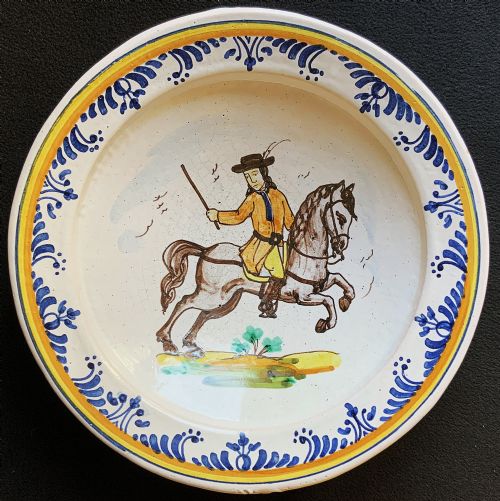
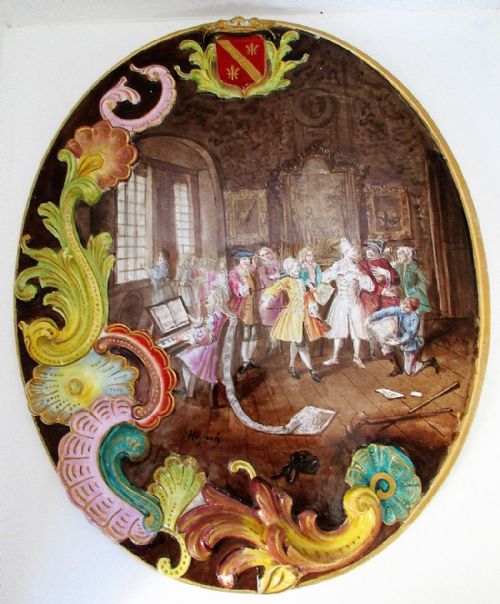
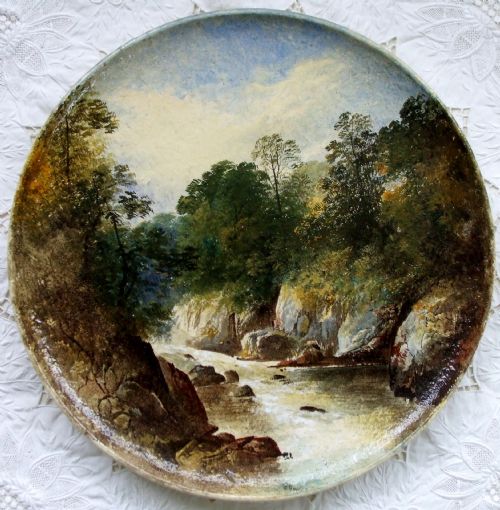
When you search for a painted earthenware plaque, you enter a diverse field of wall art and decorative chargers spanning several centuries. The pieces on this page range from modest nineteenth-century English landscapes to large continental chargers executed in tin-glazed earthenware and faience.
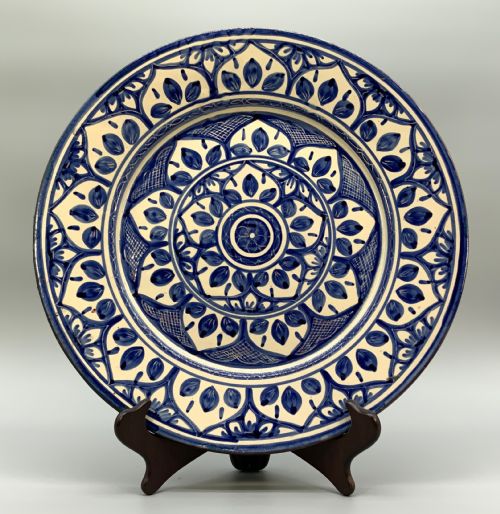
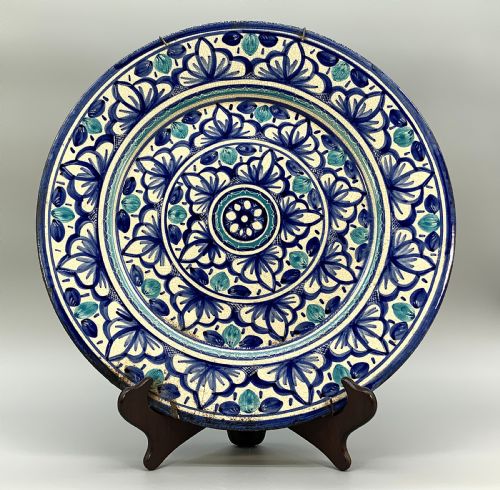
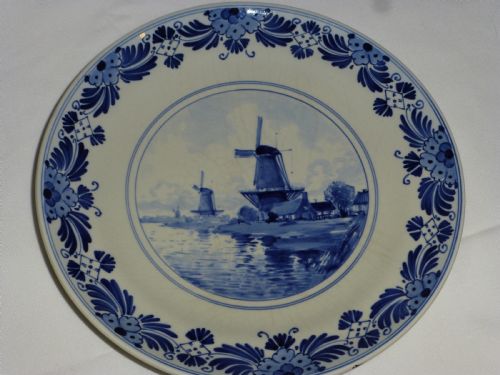
You are most likely to meet circular chargers and rectangular wall plaques displaying elaborate polychrome or blue and white designs. These items function primarily as visual centerpieces, shifting easily from devotional scenes to decorative landscapes.
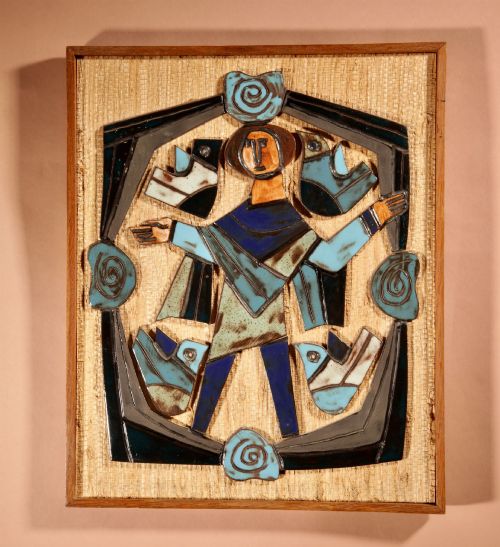
The material forms vary considerably in age and origin, encompassing eighteenth-century Spanish production, Victorian factory items, and mid-century Dutch wall reliefs. Each example preserves a distinct chapter of ceramic painting traditions across Europe.
Materials and methods
Makers shaped ordinary clay into earthenware bodies, preparing surfaces to receive liquid tin glaze or opaque white grounds. Artisans then applied mineral pigments directly onto the absorbent base before subjecting the piece to kiln firing.
Colours were locked beneath a transparent gloss finish in many instances, while other items relied on matte pigments for specific surface textures. The combination of porous earthenware and tin glaze created a stable canvas for detailed brushwork.
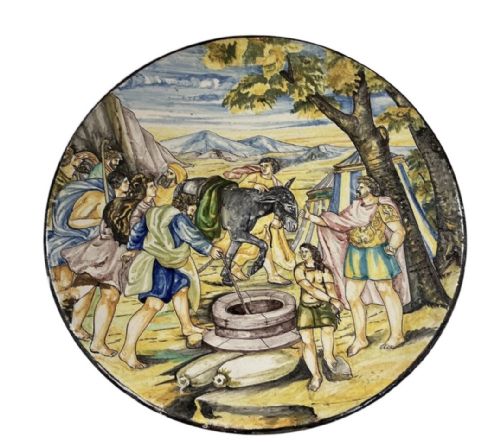
Painters utilised fine strokes for narrative scenes such as classical historical subjects or Welsh landscape views. Kiln temperatures varied according to the specific pigments used, allowing cobalt blues and rich polychrome palettes to fuse with the glaze.
Painted Earthenware Plaque Retail Price Guide 2026
Typical asking prices for painted earthenware plaque among the pieces listed under this phrase on Sellingantiques today, from the lower quarter to the upper quarter. They describe what is for sale here now, not the wider market.
Listings span from the eighteenth century through to the mid-twentieth century, featuring earthenware, tin-glaze, and ceramic pigments.
Judging quality in painted ceramics
The distinction between standard commercial output and exceptional work lies entirely in the ambition and execution of the brushwork. Master painters achieved depth and clarity in narrative scenes, while lesser items relied on repetitive motifs and hurried pigment application.
Pottery bodies and glazing uniformity also mark the boundaries of quality across different periods. A well-poured tin glaze provides an even, creamy background that enhances the painted details rather than obscuring them beneath surface pooling or crazing.
Henk Potters·Copeland Pottery·William Yale·Minton·C. Ravier
The Painted Earthenware Plaque Glossary
- Earthenware
- Porous pottery fired at lower temperatures than stoneware or porcelain. It requires a glaze to become impermeable to liquids.
- Faience
- Tin-glazed earthenware produced in Europe, particularly associated with French, Dutch, and Spanish traditions. The opaque white glaze allows for painted decoration on the surface.
- Charger
- A large decorative plate intended for display on a wall or dresser rather than for dining use. These pieces often feature prominent pictorial subjects.
- Istoriato
- A style of ceramic decoration featuring narrative scenes derived from history, mythology, or religion. It transforms plates and plaques into pictorial compositions.
Painted Earthenware Plaque: Frequently Asked Questions
How were these wall plaques displayed?
Many large chargers and plaques were manufactured with pierced footrings or built-in suspension holes designed for hanging on interior walls. Owners placed them in principal rooms to showcase their painted decoration.
Smaller rectangular plaques often sat within dedicated frames or directly against wood-panelled surfaces to highlight detailed landscape views and portraits.
Are these items waterproof?
Tin-glazed earthenware and standard glazed pottery possess sealed exterior surfaces due to the fired glass layer. However, the underlying porous clay body means they remain vulnerable to moisture if chips expose the raw material.
These pieces belong strictly on walls and display stands rather than in damp environments or everyday kitchen utility.
How do I date a painted plaque?
Dating relies on stylistic clues, factory marks, and the specific characteristics of the glaze and pigment. Nineteenth-century examples often bear specific artist signatures or registered pattern numbers on the reverse.
Earlier eighteenth-century pieces display looser brushwork and distinct tin-glaze formulations characteristic of regional workshops in Spain, France, and the Netherlands.
Can I clean a ceramic wall plaque?
Routine maintenance requires nothing more than gentle dusting with a soft, dry cloth to remove surface particles. Avoid liquid cleaners or submersion, as moisture can penetrate hairline cracks in the old glaze.
Keeping pieces away from direct sunlight protects vulnerable pigments from fading over extended periods.