


Painted Decorative Mirror
A painted decorative mirror brings lightness and period character into a room through hand-applied colour and carved wooden ornament.
Painted Decorative Mirror
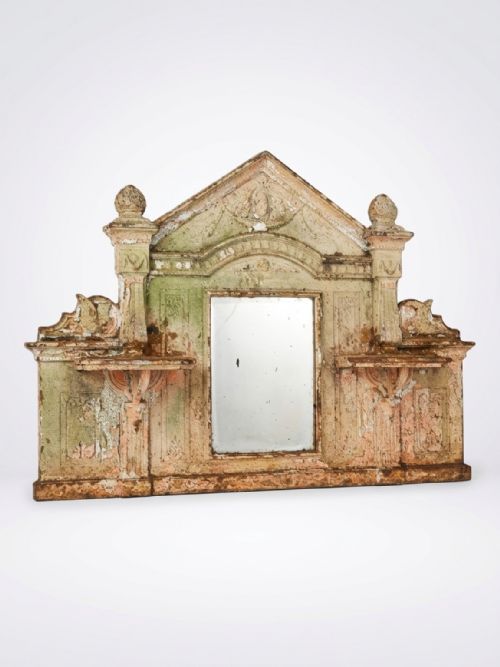
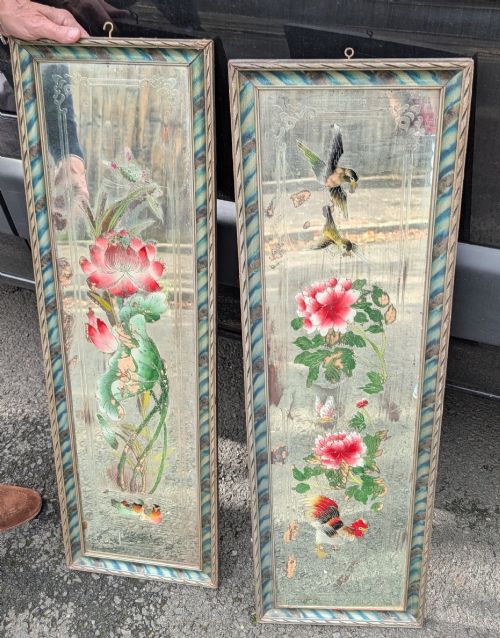
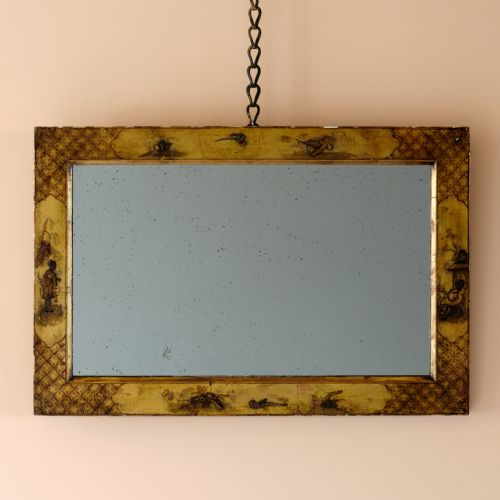
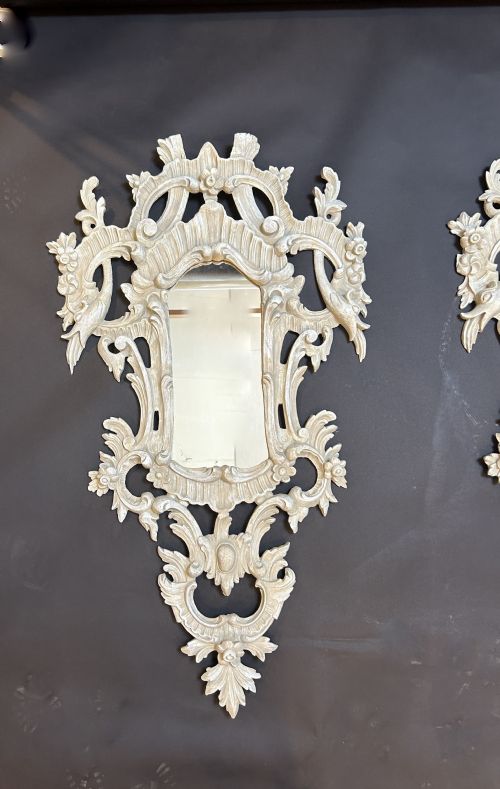
When searching for a painted decorative mirror, buyers encounter a wide variety of wall-hanging and overmantel pieces originating from the nineteenth and early twentieth centuries. These encompass French trumeau and pier mirrors, Italian Rococo designs, and Chinoiserie wall hangings.
Continental workshops, particularly French and Italian makers, produced many of the surviving examples found here. These range from formal Louis XVI style panels to provincial floral decorated frames.
How they were made
Carved wooden frames form the structural foundation for these pieces, utilising timber shaped by hand before receiving surface decoration. Artisans applied layers of gesso to build up intricate relief mouldings, scrollwork, and floral motifs.
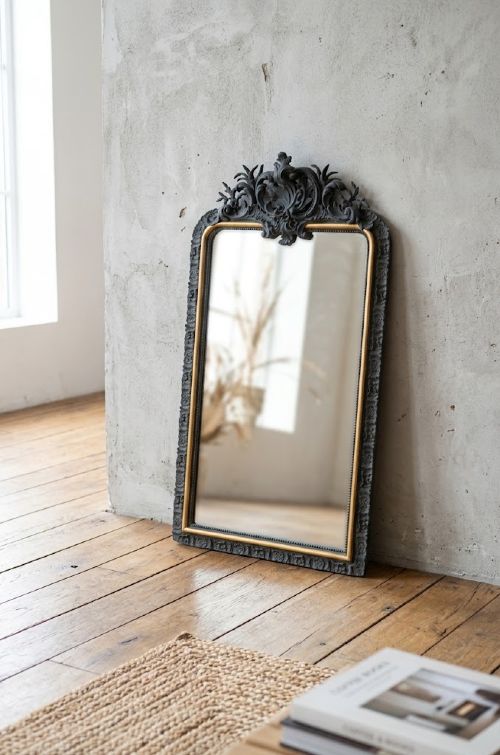
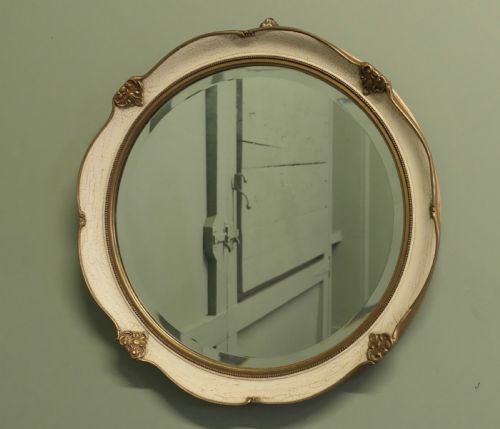
Paint finishes, including cream, black ebonisation, and polychrome schemes, were layered alongside gold leaf and parcel gilt highlights. Mirror glass was set within these rebated wooden frames, sometimes taking the form of convex plates or segmented panels.
Listings span the nineteenth and early twentieth centuries, featuring French Empire, Rococo Revival, and Chinoiserie styles.
What varies in quality
Quality in a painted decorative mirror rests upon the crispness of the original carved wood and the depth of the gesso relief modelling. Finer pieces display hand-carved botanical or architectural details that retain their definition beneath layers of historic paint.
The harmony between the painted surface and the gilt highlights separates standard production from exceptional examples. Original distressed paintwork and cohesive colour palettes indicate superior workshop execution from the period.
The Painted Decorative Mirror Glossary
- Trumeau
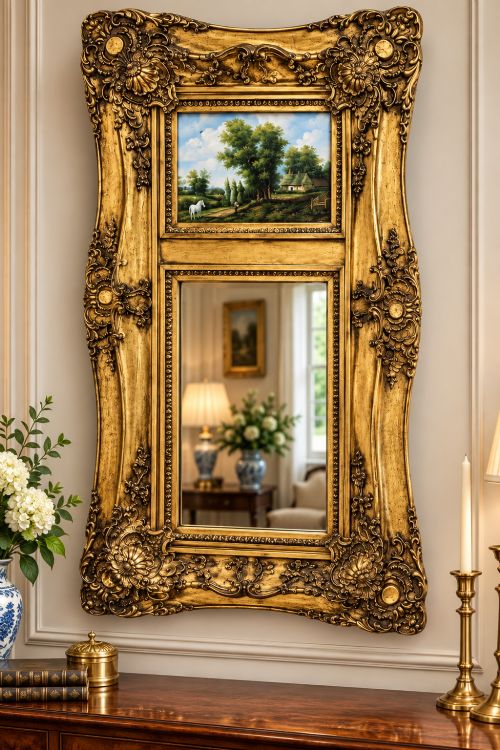
- A decorative wall mirror combined with an upper painted panel or relief carving, designed to hang between windows or above a fireplace. These architectural pieces originated in eighteenth-century France and remained popular through the nineteenth century.
- Gesso
- A dense plaster mixture applied to wood frames to create a smooth surface for gilding and painting. Artisans carved and moulded this material to achieve elaborate floral and scroll decorations.
- Pier mirror
- A tall mirror specifically proportioned to hang on the wall space between two windows. They frequently feature lower console tables or elongated frames to maximise reflected light.
- Convex glass
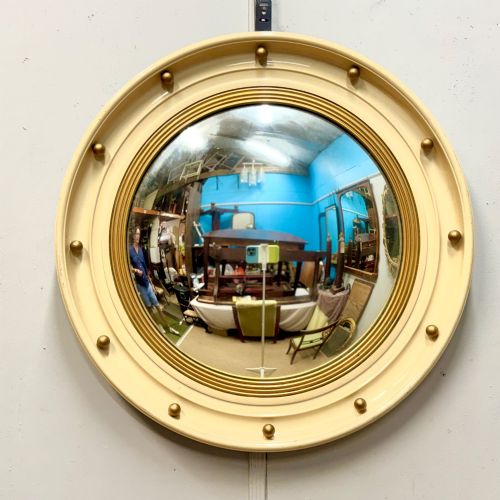
- A curved mirror glass plate that projects outward, capturing a wide panoramic reflection of the interior space. It is commonly found in round butler's mirrors framed by painted and gilt wood.
- Chinoiserie
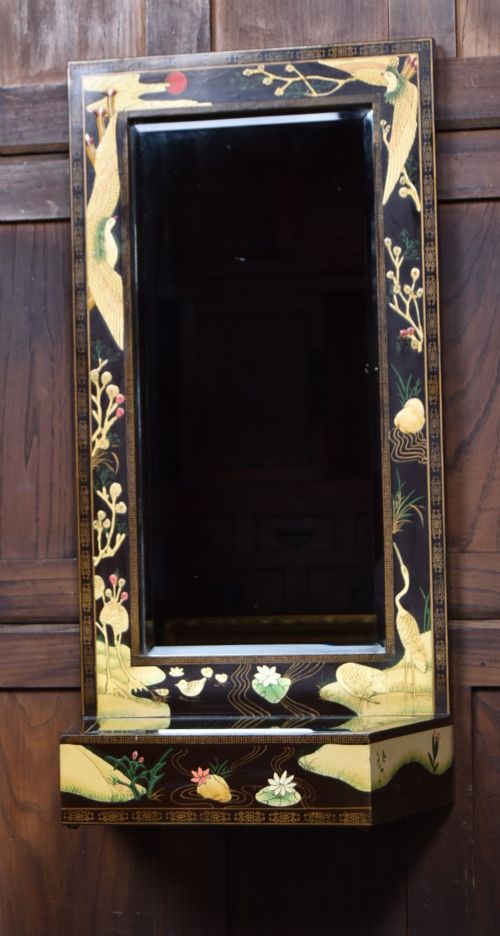
- A European decorative style reflecting Chinese artistic influences, characterised by hand-painted motifs of figures, landscapes, and pavilions. It appeared frequently on eighteenth and nineteenth-century furniture and mirror frames.
Painted Decorative Mirror: Frequently Asked Questions
Where should I hang an overmantel mirror?
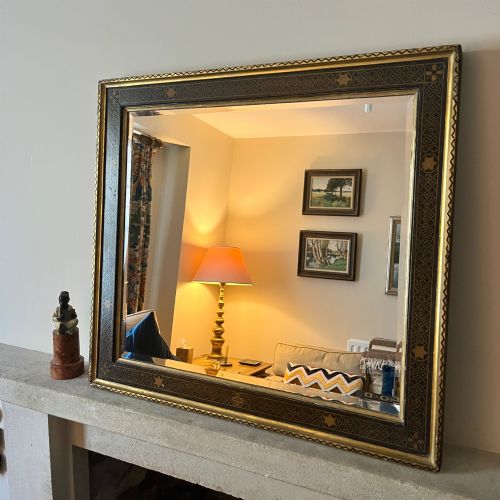
These large horizontal mirrors fit naturally above a fireplace mantelpiece to anchor the focal point of a reception room. Their proportions reflect surrounding space and draw light downwards into the seating area.
Ensure the wall fixings are secured directly into studs or masonry to support the considerable weight of nineteenth-century wooden frames and glass.
How do I identify a French trumeau mirror?
A trumeau incorporates a vertical mirror plate surmounted by a decorative oil painting or carved wooden relief panel within a single unified frame. They were originally built to integrate into the architectural wood panelling of Parisian townhouses.
Look for original painted surfaces, parcel gilt details, and classical motifs such as urns, ribbons, or pastoral scenes.
What is a barbola mirror?
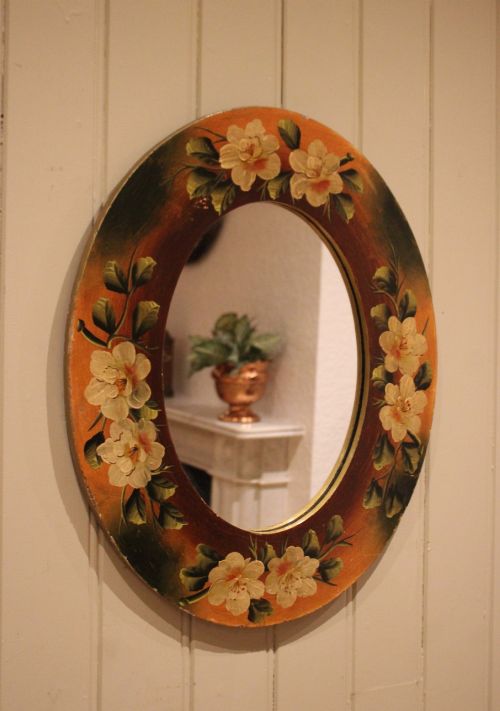
Barbola mirrors feature three-dimensional gesso floral decorations applied in high relief around the wooden frame. This technique gained popularity during the early twentieth century, producing tactile, colourful botanical borders.
The moulded flowers and leaves are typically hand-painted in soft pastel or cream tones, giving each frame a distinct artisanal finish.
Are painted mirrors fragile?
While the underlying timber and gesso construction is robust, historic painted surfaces require gentle handling to preserve their finish. Avoid placing them in rooms with high humidity or direct sunlight to protect the old paint and gilding.
Dust them lightly with a dry, soft cloth rather than using liquid cleaning products that might damage the aged pigments.