


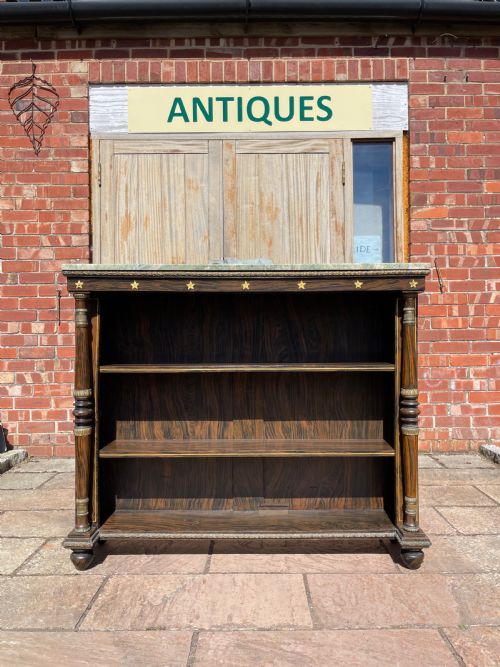

Painted Dark Bookcase
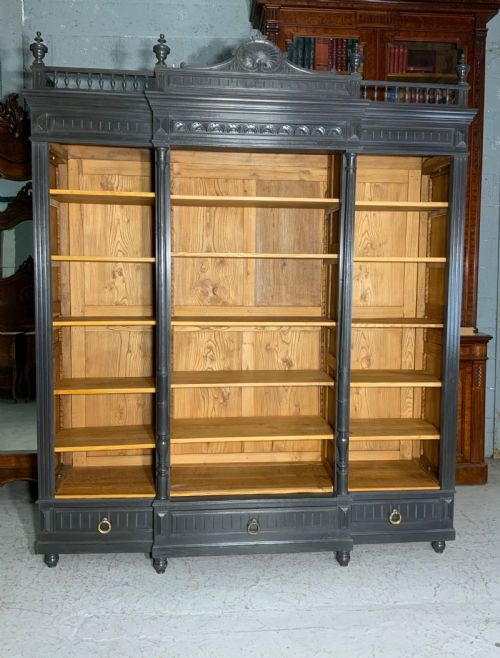
A painted dark bookcase brings architectural presence and rich colour to a room, offering practical storage disguised in period character.
Painted Dark Bookcase
When you search for a painted dark bookcase, you encounter a varied selection of antique cabinetry spanning the eighteenth, nineteenth, and early twentieth centuries. These pieces encompass regional British and Irish library pieces, French vitrines, Dutch display cabinets, and institutional fittings.
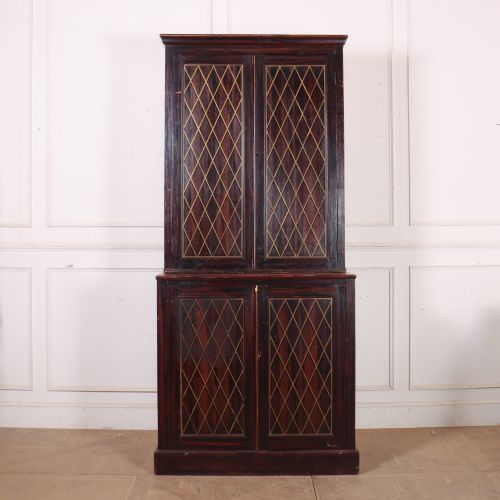
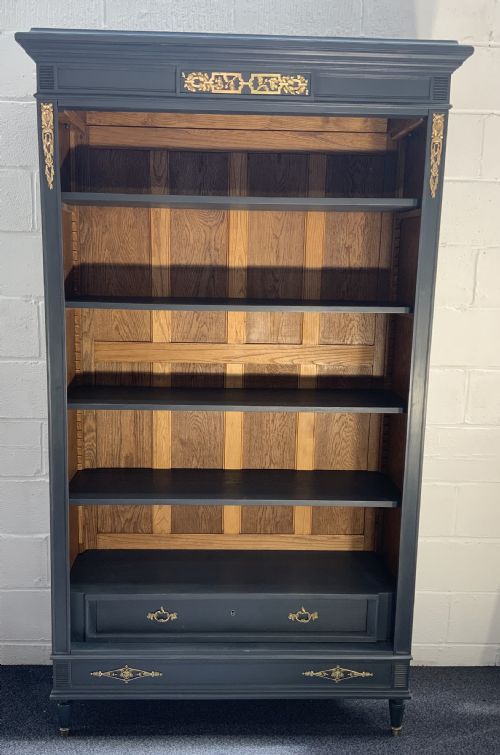
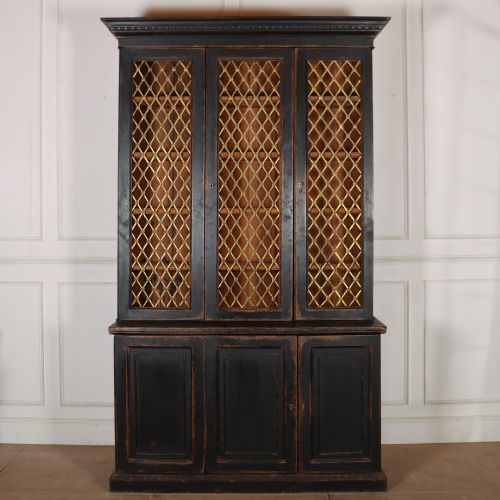
The forms on this page range from grand bureau bookcases and dwarf open shelves to tall glazed vitrines, pier cabinets, and simulated rosewood side cabinets. Construction utilises woods such as pine and timber, finished with dark paint, ebonised surfaces, or grained and simulated paint effects.
Stylistic influences vary widely across the inventory, touching upon Regency, Victorian, Edwardian, Adam revival, Dutch Rococo, and French provincial designs. You are most likely to meet nineteenth-century painted bookcases and side cabinets bearing brass embellishments or glass doors.
Materials and construction methods
Makers built these pieces primarily using timber such as pine and other painted woods, applying dark paint, ebonised finishes, or simulated graining to imitate costly hardwoods like rosewood. Surfaces were frequently embellished with brass fixtures, gilt details, and glass panels.
Construction techniques combined traditional cabinet-making carpentry with decorative paint applications, ranging from flat dark tones to complex layered simulation. Glazing bars, brass hardware, and fitted interior shelving define the structural integrity of these storage forms.
Several pieces embrace the art of deception, wearing coats of simulated rosewood paint so convincing they fooled generations of dusters.
Assessing quality in dark painted furniture
Quality rests upon the proportion of the piece, the execution of the timber construction, and the depth of the painted surface. Pieces retaining original grained finishes, simulated rosewood, or period paint demonstrate superior craftsmanship compared to later alterations.
The refinement of brass embellishments, the clarity of glass panes in glazed cabinet doors, and the integrity of internal shelving distinguish standard utilitarian storage from finer display furniture.
Jewell of Holborn
The Painted Dark Bookcase Glossary
- Vitrine
- A glass-fronted display cabinet used for showing books, porcelain, or curiosities. These pieces often feature delicate timber framing and painted or gilded surfaces.
- Bureau bookcase
- A combination form featuring a sloping desk flap above lower drawers or cupboards, surmounted by upper bookshelf housing behind doors. They are principally found in eighteenth and nineteenth-century English traditions.
- Pier cabinet
- A narrow cabinet designed to fit wall spaces between windows, commonly utilised for display and storage in nineteenth-century interiors.
- Grained finish
- A painted surface treatment designed to imitate the natural grain and rich colour of expensive exotic timbers such as rosewood or mahogany.
- Ebonised
- Wood finished with a dark stain or paint to replicate the heavy, black appearance of genuine ebony.
Painted Dark Bookcase: Frequently Asked Questions
Where should I place a dark bookcase?
These cabinets suit studies, drawing rooms, and libraries where deep tones anchor the interior scheme.
Ensure adequate clearance for doors and keep the wood away from direct heat sources to protect the painted finish.
How do I clean a painted antique bookcase?
Dust regularly with a soft, dry cloth to prevent grit accumulation on the dark painted or ebonised surfaces.
Avoid chemical polishes or abrasive cloths that can damage historic paint layers or simulated graining.
Are these bookcases suitable for heavy books?
Many period bookcases feature adjustable or fixed timber shelving designed to support substantial libraries.
Check the thickness of the shelves and the stability of the supports before loading heavy volumes.
How do I date a painted dark bookcase?
Examine the construction methods, timber types, and style markers such as Regency curves or Victorian proportions.
Original paint analysis and hardware styles also provide clear indications of the manufacturing period.