


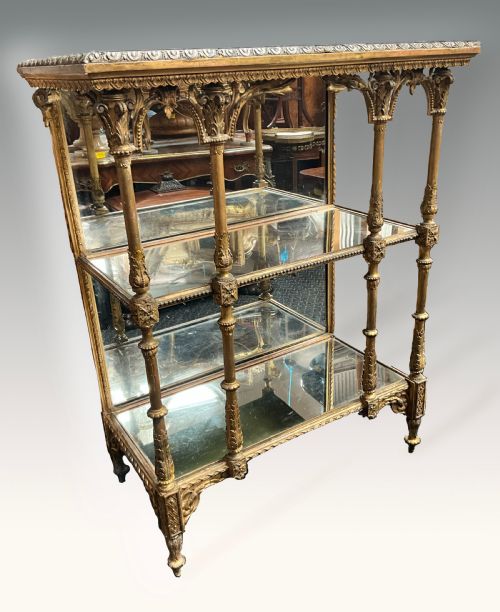


French Style Shelving Unit
A french style shelving unit brings ornate continental flair and practical display space into a room.
French Style Shelving Unit
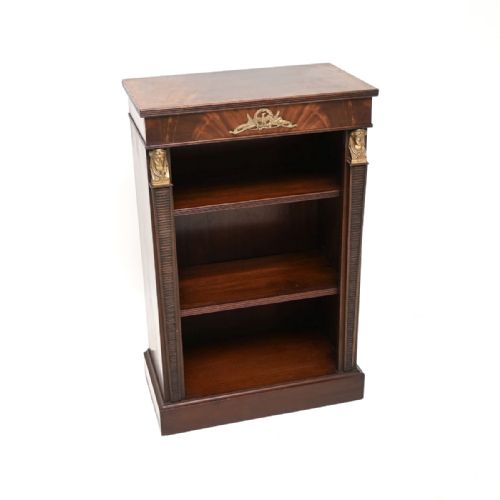
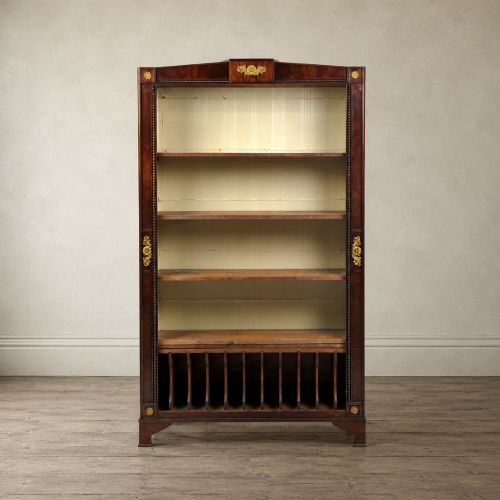
A french style shelving unit encompasses open bookcases, etageres, plant stands, and tiered display cabinets originating from various periods including the nineteenth century and the early twentieth century. Buyers encounter forms ranging from diminutive walnut etageres to large empire style open bookcases and giltwood display shelves.
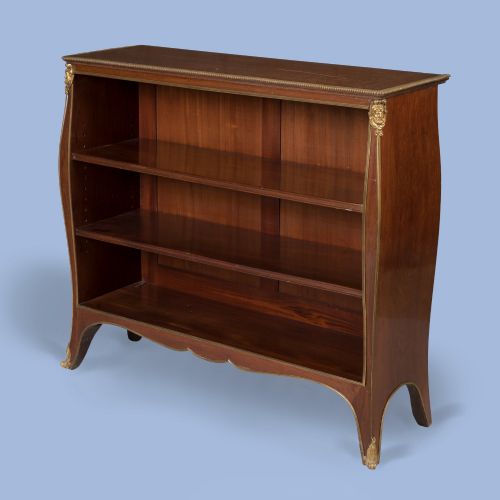
The styles represented on this page draw heavily from rococo revival, empire, louis xv manner, and french neoclassical traditions. Pieces span from Georgian floor-standing shelves up to art deco and nineteen-twenties storage racks.
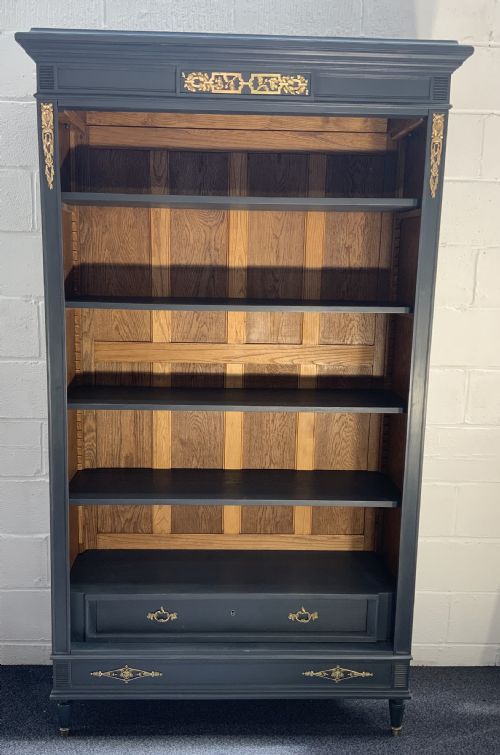
These items function primarily for the display of books, decorative objects, and porcelain while serving as striking architectural focal points within a room. The variety includes painted wood, mahogany, rosewood, and kingwood constructions suited to diverse interior schemes.
How they were made
Cabinet makers utilised fine timber foundations such as mahogany, walnut, rosewood, amboyna, and kingwood, often embellished with applied paint or giltwood and gesso. Carved wooden elements define pieces like the nineteenth-century giltwood shelves and Victorian mirrored display units.
Metal mounts in brass and ormolu provide structural highlights and decorative framing around doors, cornices, and uprights. These cast and chased bronze fittings characterise pieces executed in the french empire and louis xv manner.
Materials represented across these items include brass, mahogany, ormolu, glass, painted wood, giltwood, gesso, and various fine timbers.
What varies in quality
The refinement of the timber selection and the crispness of the carving separate standard items from exceptional examples. Dense grain patterns in woods like amboyna and kingwood indicate superior material choice.
The execution and weight of ormolu and brass embellishments dictate the overall sophistication of a piece. Hand-chased mounts and intricate giltwood and gesso work demonstrate a higher level of workshop competence.
The French Style Shelving Unit Glossary
- Etagere
- A piece of furniture consisting of a set of open shelves for displaying small objects or ornaments. These tiered stands frequently appear in walnut and amboyna from the nineteenth century.
- Ormolu
- Gilded bronze used extensively for decorative mounts on fine furniture. This technique involves applying a mercury and gold amalgam to cast bronze.
- Bibliotheque
- A large bookcase or cabinet designed specifically for housing libraries. French examples often feature glazed doors and elaborate timber veneers.
- Giltwood
- Wood that has been coated with gold leaf or gold paint to simulate solid gold. It appears frequently on nineteenth-century decorative shelves and mirrors.
- Louis XV Manner
- A design style characterised by asymmetrical curves, naturalistic scrolling foliage, and exuberant rococo flourishes. This aesthetic influences many nineteenth-century etageres and open bookcases.
French Style Shelving Unit: Frequently Asked Questions
Where should I place a French style shelving unit?
These pieces suit drawing rooms, studies, or bedrooms where they provide open storage for books and decorative objects. Their decorative fronts and mirrored backs demand a prominent wall position.
Ensure the scale matches the room height, as many nineteenth-century examples offer substantial vertical presence.
How do I distinguish an etagere from a bookcase?
An etagere consists entirely of open tiers designed specifically for display rather than the storage of large volumes. Bookcases typically feature deeper enclosed shelving or glazed doors.
Etageres prioritize slender vertical columns and multi-tiered platforms over heavy timber housing.
What woods were commonly used in these units?
Cabinet makers employed exotic hardwoods including mahogany, rosewood, kingwood, and amboyna for fine decorative effect. Painted finishes and giltwood also appear frequently across various stylistic periods.
Selection depends on the specific design movement, with empire pieces favouring dark timbers and rococo examples often carrying gilt or paint.
Are these units suitable for heavy book storage?
Open bookcases and bibliotheques with robust mahogany or walnut shelves accommodate substantial libraries safely. Lighter etageres and display shelves suit porcelain and decorative items rather than heavy folios.
Check the shelf thickness and support brackets before loading any antique shelving unit.