

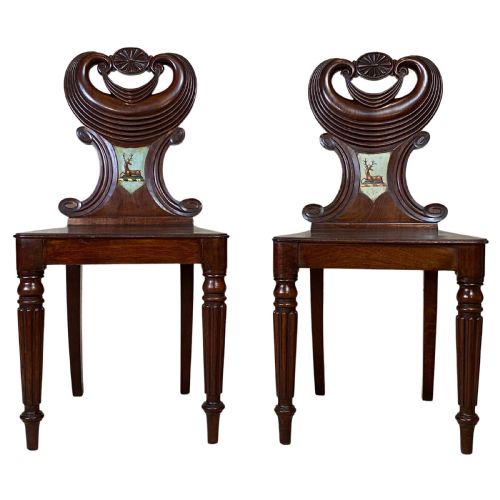


Painted Crest Hall Chairs
These painted crest hall chairs bring bold heraldry and striking timber to an entrance, offering both historic presence and practical seating.
Painted Crest Hall Chairs
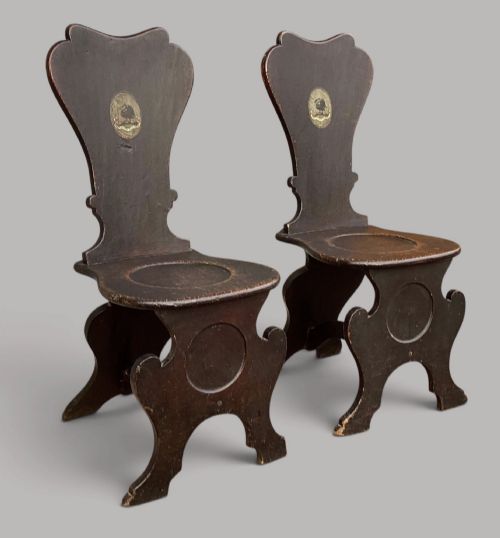
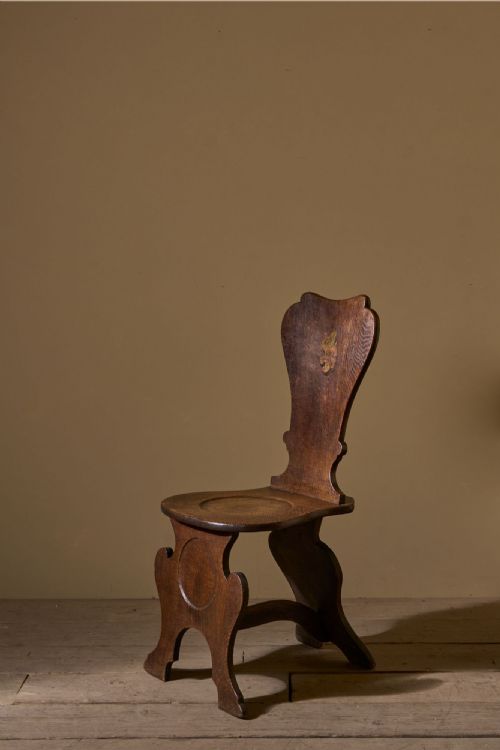
Painted crest hall chairs are striking entrance seating designed to display family heraldry and lineage to visitors upon arrival. When you search for painted crest hall chairs, you encounter robust wooden seats intended primarily for hallways and grand corridors rather than long hours of lounging.
The examples on this page span the eighteenth and nineteenth centuries, taking forms from Georgian restraint to Regency elegance and Victorian revivalism. Mahogany and oak dominate the construction, providing the structural integrity needed for daily use in a busy country house.
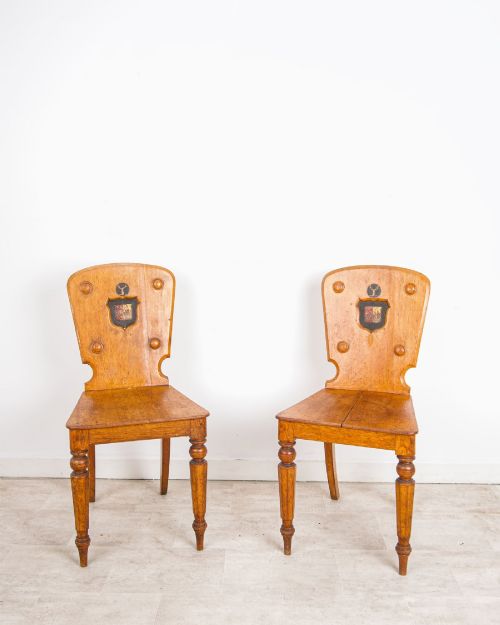
Most pieces feature carved shield or shell backs centred with hand-painted armorial bearings or crests. You are most likely to meet mahogany versions from the Regency period or sturdy oak variants from the Victorian era as you browse these listings.
How they were made
Cabinetmakers utilised dense hardwoods like mahogany and oak to shape solid timber seats and upright backs that could withstand heavy use. Skilled artisans carved intricate shield and shell motifs directly into the wood before applying detailed hand-painted heraldry.
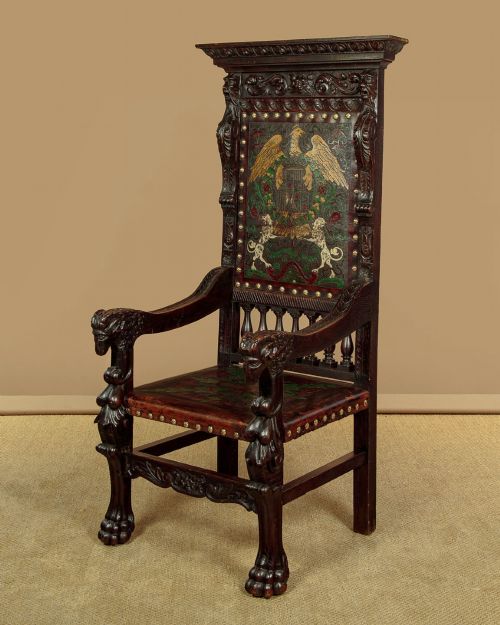
Metal components such as brass occasionally appeared for structural reinforcement or decorative accents, while some later revival pieces incorporated painted leather upholstery. Traditional joinery methods ensured the upright frames remained rigid without relying on excessive padding or springs.
Listings feature woods such as mahogany and oak alongside painted details, spanning Georgian, Regency, and Victorian periods.
What varies in quality
The distinction between ordinary seating and exceptional pieces lies in the crispness of the timber carving and the artistic execution of the painted crest. Superior examples display finely rendered heraldic detail that remains sharp and vibrant across the shield or shell back.
Proportion and timber selection further separate standard workshop output from prestigious cabinetmakers such as Gillows. Heavier stock, well-figured mahogany or oak, and harmonious lines elevate the visual impact within a hallway.
Gillows
The Painted Crest Hall Chairs Glossary
- Armorial
- Relating to heraldry or bearing a coat of arms. Painted crest hall chairs often display these heraldic symbols prominently on the backrest.
- Regency
- A British design period spanning the early nineteenth century. Furniture from this era typically exhibits classical restraint and bold mahogany grain.
- Shield back
- A chair back shaped like a heraldic shield. This form provides a flat surface ideally suited for displaying painted family crests.
- Gothic Revival
- An architectural and decorative style popular during the nineteenth century. Pieces in this style draw inspiration from medieval ecclesiastical design.
Painted Crest Hall Chairs: Frequently Asked Questions
Where should I place these in my home?
These chairs suit grand entrance halls, corridors, or landings where their upright posture and decorative backs can be viewed properly without crowding.
Because they were built for hallways rather than parlours, their compact wooden seats make them practical for quick use while adding historic character to neglected spaces.
Are these chairs comfortable for daily sitting?
They were designed for brief repose rather than long lounging, featuring solid wooden seats and rigid backs without upholstery.
Their primary purpose was visual impact and the proclamation of lineage, meaning comfort was secondary to architectural presence.
How do I identify a Regency period piece?
Regency pieces often utilise rich mahogany timber and display classical architectural motifs influenced by ancient Greek and Roman design.
Proportions tend to be clean and balanced, sometimes incorporating brass inlay or bold armorial painting on shield-shaped backs.
What does an armorial crest signify?
An armorial crest represents a specific family lineage, recording heritage and social standing through distinct heraldic symbols and colours.
On these chairs, the painted crest served as a statement of identity and status to anyone entering the home.