




Painted Country House Table
A painted country house table brings honest domestic character to a room through centuries of utility and surface history.
Painted Country House Table
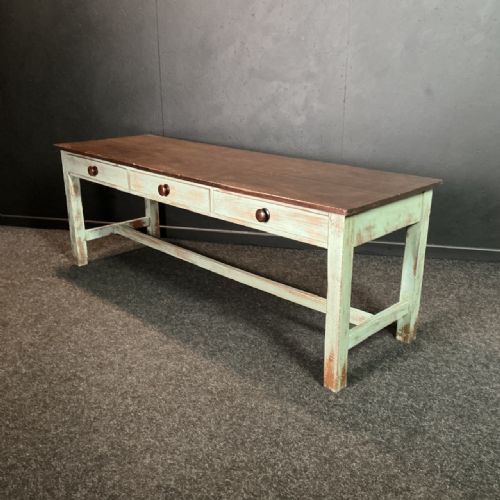
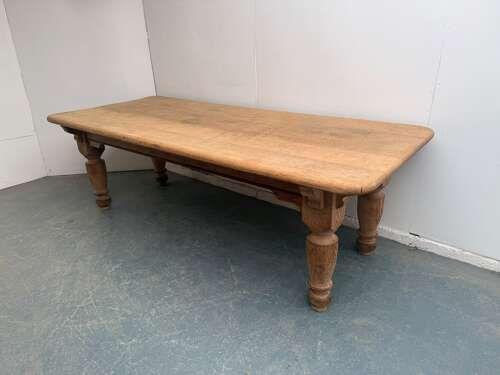
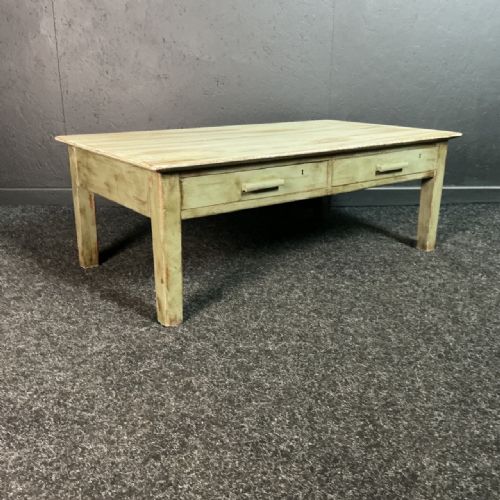
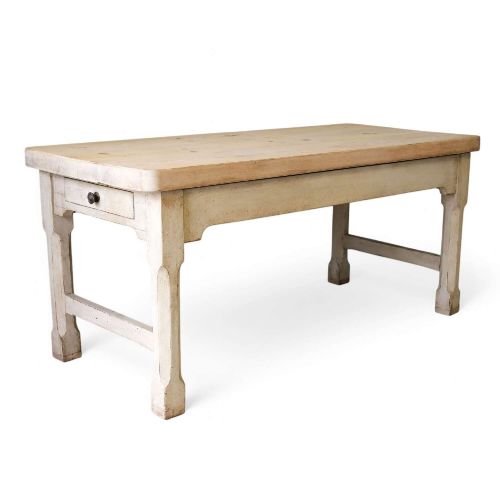
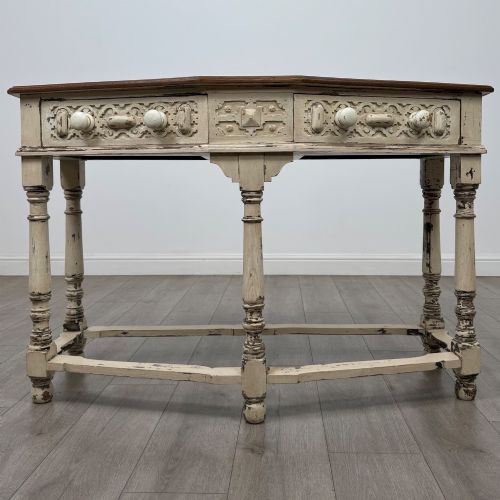
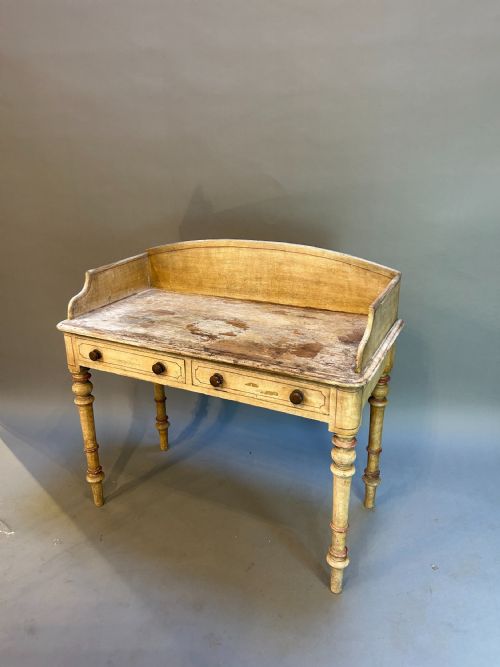
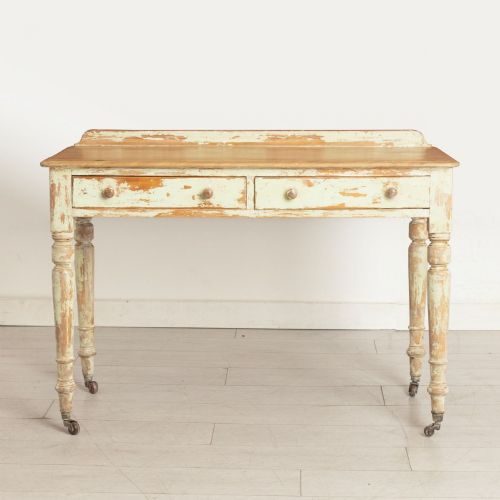
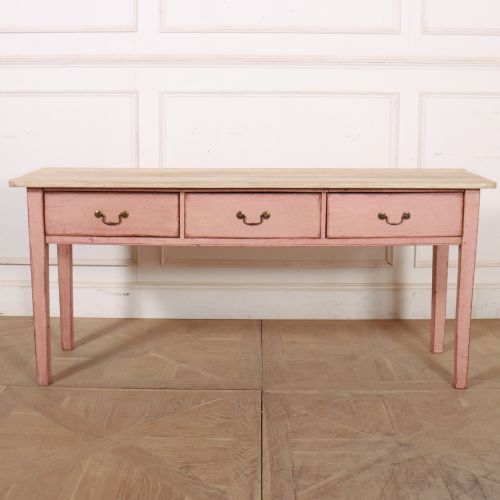
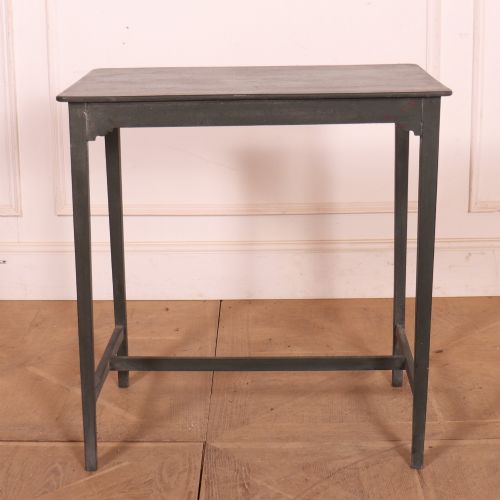
A painted country house table encompasses a diverse range of domestic furniture, from grand kitchen dining tables and prep surfaces to modest lamp tables and dresser bases. These pieces originate primarily from the eighteenth and nineteenth centuries, carrying the marks of prolonged daily use in English, Welsh, Scottish, French, and Swedish homes.
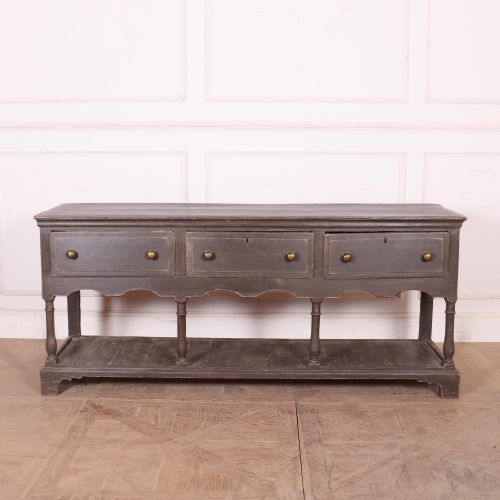
The version most commonly encountered on this page is the sturdy pine or oak side table, prep table, or dresser base finished in either original or later paint. These practical forms range from narrow console tables and coffee tables to large serving tables with potboards, reflecting the varied needs of historic domestic spaces.
Stylistically, the selection bridges rustic farmhouse traditions and more formal country house aesthetics. Pieces display regional characteristics such as X-frame tavern tables or Chinoiserie decoration, demonstrating that utility and decorative ambition often existed side by side.
Markers of quality
Quality in these pieces is dictated by the integrity of the timber and the character of the surface finish. Tables retaining their original paint layers demonstrate greater historical value than those with later repainting, though the aesthetic appeal of the secondary coat still depends on its texture and depth.
Proportion and structural honesty separate finer examples from standard utility items. A well-proportioned dresser base or tavern table with sound joinery and balanced dimensions represents the peak of country house craftsmanship, where functional design meets enduring visual weight.
The inventory spans the seventeenth to the early twentieth century, encompassing Georgian, Victorian, and Edwardian periods.
The Painted Country House Table Glossary
- Potboard dresser base
- A heavy lower sideboard featuring an open lower shelf, known as a potboard, used originally for storing heavy kitchen earthenware. This form provides substantial storage beneath a wide working surface.
- Prep table
- A utilitarian wooden table designed for food preparation or domestic chores in a country house kitchen. These surfaces often exhibit heavy wear from daily use.
- Low boy
- A small eighteenth-century dressing or side table with a low frame and one or more rows of drawers. They are typically raised on slender cabriole or straight legs.
- X-frame
- A structural furniture base where intersecting diagonal members form an X shape for added support. This design appears on robust tavern tables and occasional pieces.
- Chinoiserie
- European decorative style imitating Chinese artistic motifs, often applied to cabinets and side tables through hand-painted ornamentation. It introduces an exotic decorative element to traditional forms.
Painted Country House Table: Frequently Asked Questions
How do I date a painted country house table?
Dating relies on construction methods, timber choice, and the physical wear visible across the piece. Earlier examples from the seventeenth and eighteenth centuries often feature pegged joints and hand-sawn boards.
Paint analysis further aids dating, distinguishing between original historic finishes and later decorative layers applied during subsequent nineteenth-century refurbishments.
Are these tables suitable for daily kitchen use?
Most of these pieces were originally built for hard domestic service in kitchens, taverns, or pantries. Their robust construction in pine or oak makes them well-suited for continued daily use.
Care should be taken to protect historic painted surfaces from excessive moisture and heat by using appropriate table mats.
What is the difference between a prep table and a side table?
Prep tables were historically working surfaces designed for culinary tasks, often featuring thick timber tops and simpler, sturdier frames. They prioritised utility above all else.
Side tables generally served more decorative or general storage roles in reception rooms or hallways, sometimes incorporating drawers or finer painted details.
How should I care for original paint finishes?
Historic painted surfaces require gentle treatment to preserve the remaining pigment and underlying patina. Dusting with a soft, dry cloth prevents the accumulation of abrasive particles.
Avoid chemical cleaners, modern solvents, or heavy waxes that might lift or soften nineteenth-century paint layers.