






Painted Corner Unit
These painted corner unit pieces turn neglected wall angles into striking focal points while swallowing awkward clutter with ease.
Painted Corner Unit
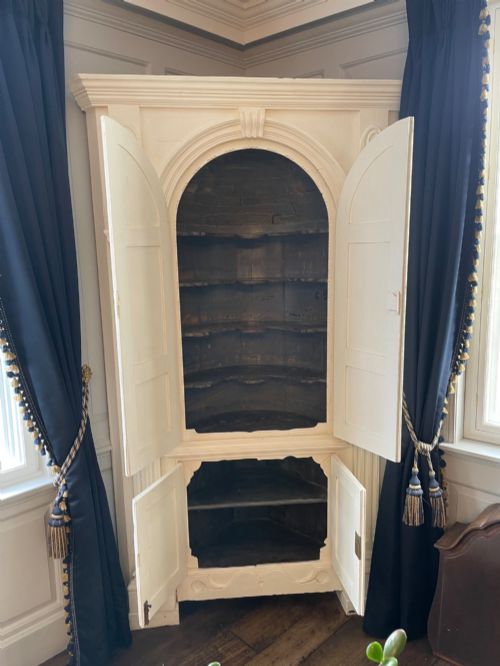
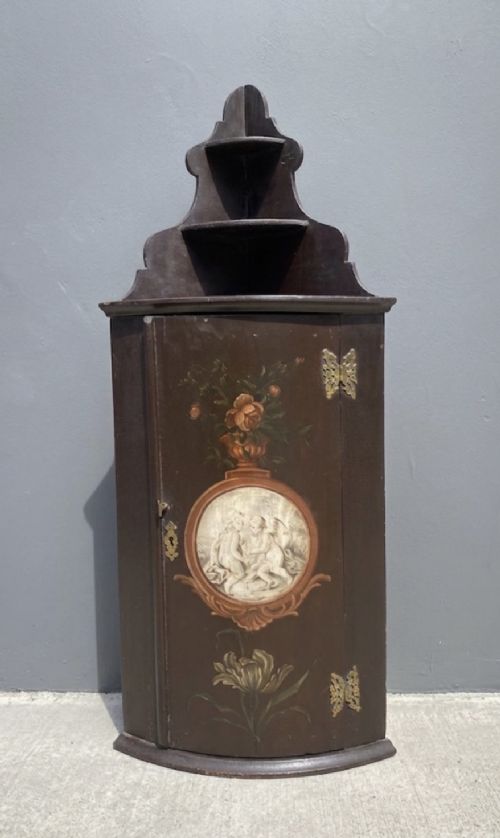
A painted corner unit serves to maximise awkward wall angles by fitting snugly into room corners while offering concealed shelving for display or storage. These items range from two-part architectural cupboards to lower standing cabinets and wall-hung glass-fronted displays.
The selections available here lean heavily towards Georgian and 19th Century forms, alongside Edwardian interpretations and provincial styles like Scandinavian Country. Buyers most frequently encounter pine carcases finished with period paint schemes, ranging from rustic Welsh pine to sophisticated Chinoiserie decoration.
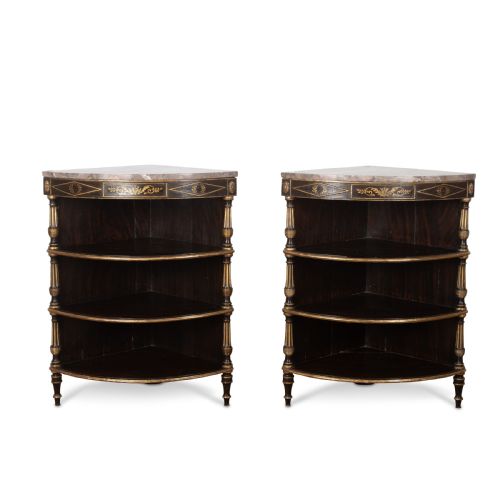
Form follows function closely in these designs, with many examples featuring bow fronts, glazed upper doors, or open shelving to showcase ceramics and glassware. They bridge the gap between utilitarian storage and decorative furniture, bringing colour and character to domestic spaces.
How they were made
Makers constructed these cabinets primarily from timber carcases, utilising pine, mahogany, and mixed woods shaped to fit ninety-degree angles. Joinery typically involved pegged or dovetailed joints designed to endure the structural tension of corner placement.
Surface decoration defined the aesthetic, employing layered paint finishes, lacquer, and gilt details. Artisans applied hand-mixed pigments directly to wooden substrates, sometimes creating elaborate Chinoiserie scenes or distressed patinas that developed naturally over generations.
Painted Corner Unit Retail Price Guide 2026
Typical asking prices for painted corner unit among the pieces listed under this phrase on Sellingantiques today, from the lower quarter to the upper quarter. They describe what is for sale here now, not the wider market.
Materials recorded across the current selection include pine, mahogany, painted wood, lacquer, glass, gilt, and brass accents.
What varies in quality
The integrity of the original paint surface dictates much of the distinction between standard examples and exceptional survivors. Pieces retaining undisturbed historic pigment without heavy modern overpainting command greater appreciation among purists.
Structural refinement also separates utilitarian workshop output from master cabinet work, particularly in the precision of the bow front curves and the delicacy of internal shelving.
The Painted Corner Unit Glossary
- Chinoiserie
- European decorative style inspired by Chinese artistic traditions, featuring motifs like figures, pagodas, and landscapes rendered in paint or lacquer. This style appeared frequently on fashionable 18th and 19th Century furniture.
- Bow front
- A convex, outwardly curved front facade that softens the rigid geometry of a corner cabinet. This shaping required advanced woodworking skill to achieve smoothly.
- Japanned
- European emulation of East Asian lacquerwork achieved through layered varnishes and metallic dusts. The technique created a glossy, durable surface often decorated with raised motifs in gold.
- Whatnot
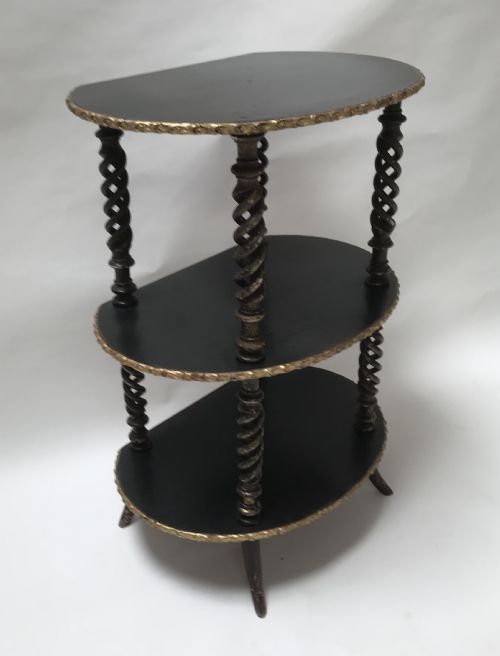
- Open tiered shelving furniture designed for displaying small ornaments and curiosities. These pieces often utilised slender upright supports.
- Standing corner cupboard
- A tall cabinet resting directly on the floor, frequently constructed in two separate upper and lower sections for ease of transport. They provide substantial enclosed storage.
Painted Corner Unit: Frequently Asked Questions
How were corner cupboards used historically?
These cabinets stored precious tableware, tea services, and household provisions in dining rooms and parlours. Their triangular footprint utilised dead space efficiently before built-in kitchen cabinetry became standard.
Over time, upper sections evolved to display decorative ceramics behind glass doors while lower compartments hid utilitarian items out of sight.
How do I spot original paint?
Original painted surfaces show micro-craquelure, natural pigment softening around high-touch areas, and compatibility between the wood substrate and the finish layers. Pigment analysis under magnification often reveals historic ground layers beneath later protective waxes.
Modern repaint work tends to feel uniform and lacks the subtle tonal variations accumulated through decades of domestic exposure and cleaning.
Will a corner unit fit modern rooms?
Most domestic rooms feature right-angled corners, making these units remarkably adaptable for filling empty wall junctions. Measure the wall clearance and cornice projection carefully before positioning.
They work particularly well in dining rooms, hallways, or living spaces where floor area is at a premium but vertical display space remains underutilised.
What is the difference between Georgian and Edwardian pieces?
Georgian examples date from the 18th to early 19th Century, featuring heavier architectural proportions, solid pine or oak carcases, and hand-mixed historic paint layers. They often include fielded panels and brass H-hinges.
Edwardian revivals from around 1900 typically exhibit lighter construction, machine-cut elements, and decorative motifs inspired by earlier periods rather than genuine functional wear.