

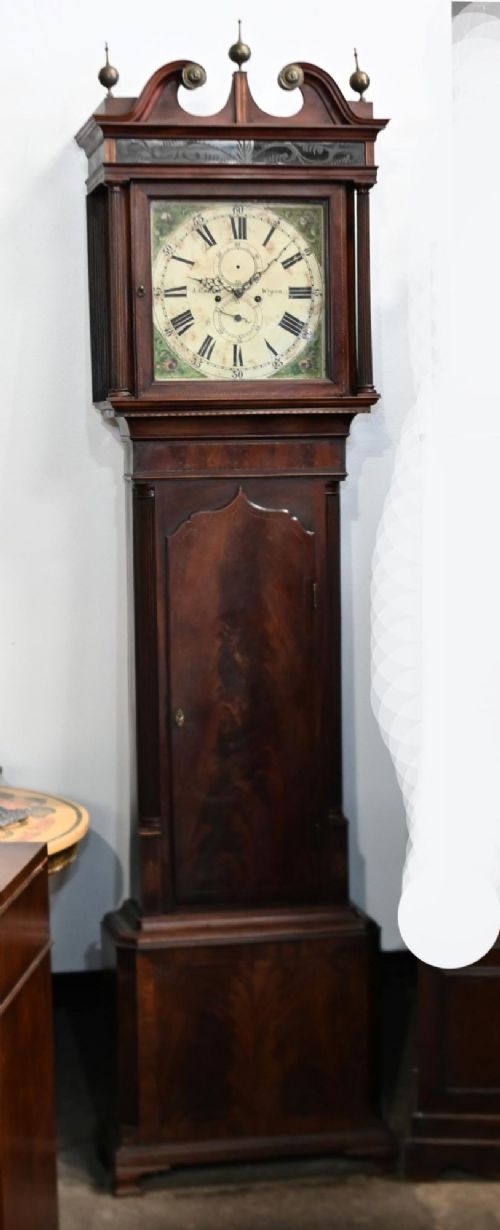
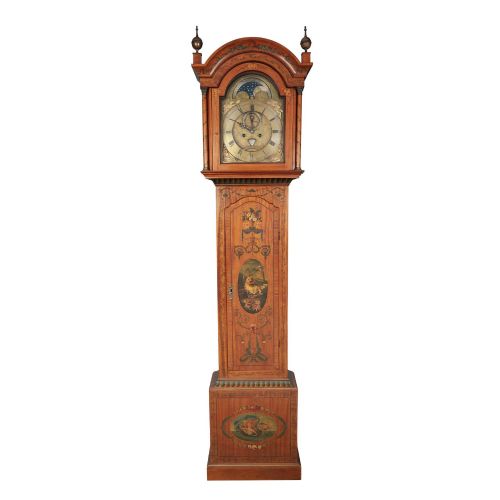
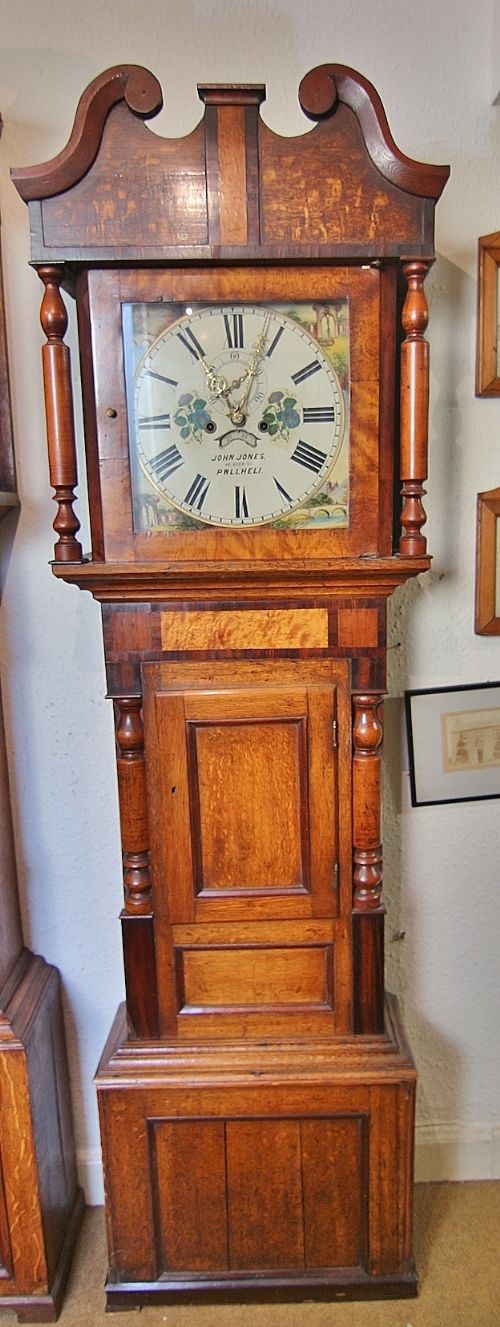
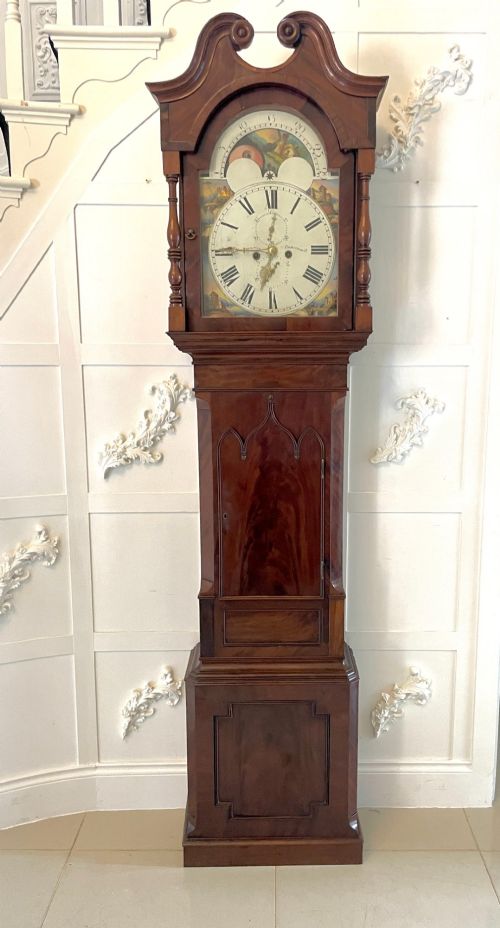

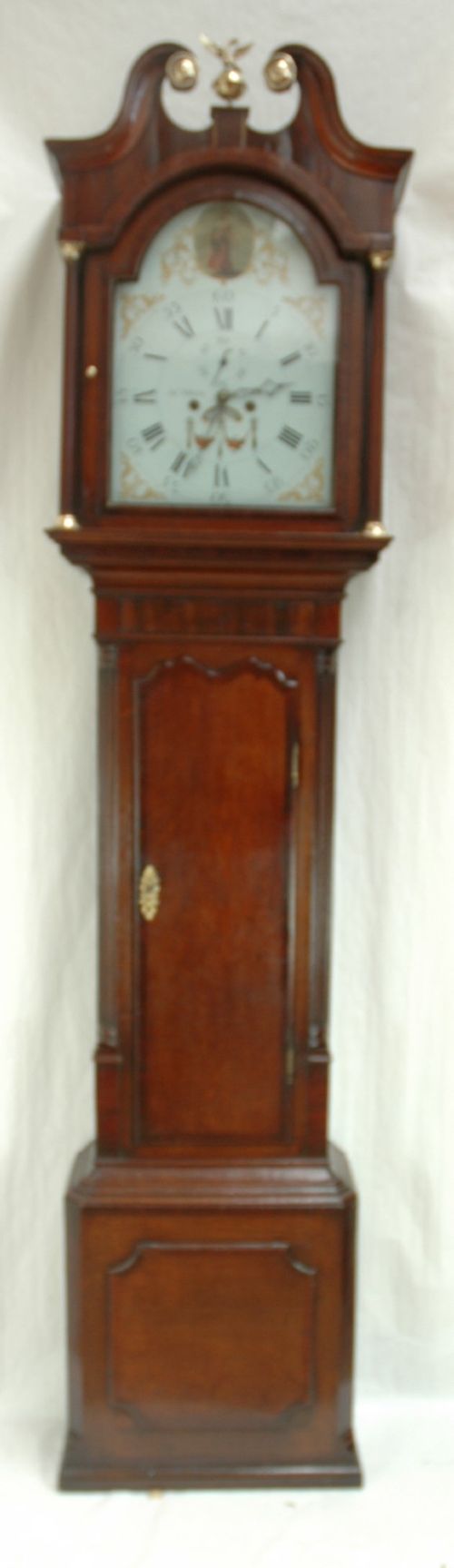
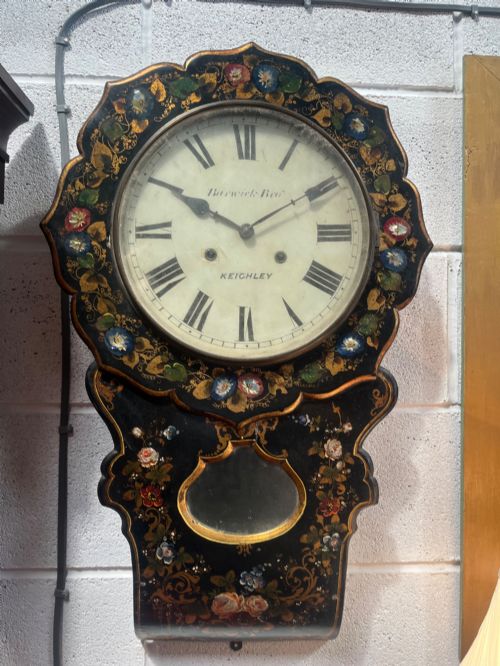
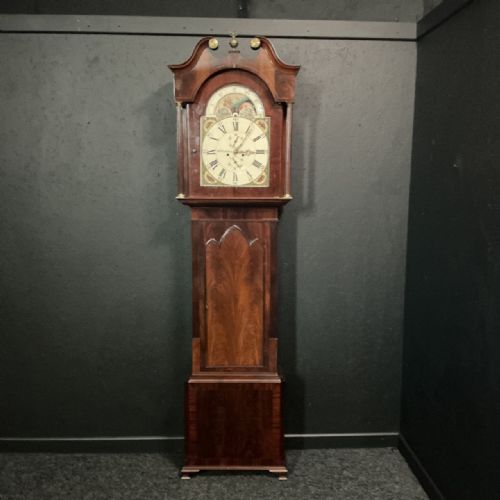
Painted Clock Case
A painted clock case houses a tall dial and movement, combining timber structure with decorative finishes from the Georgian to Victorian periods.
Painted Clock Case
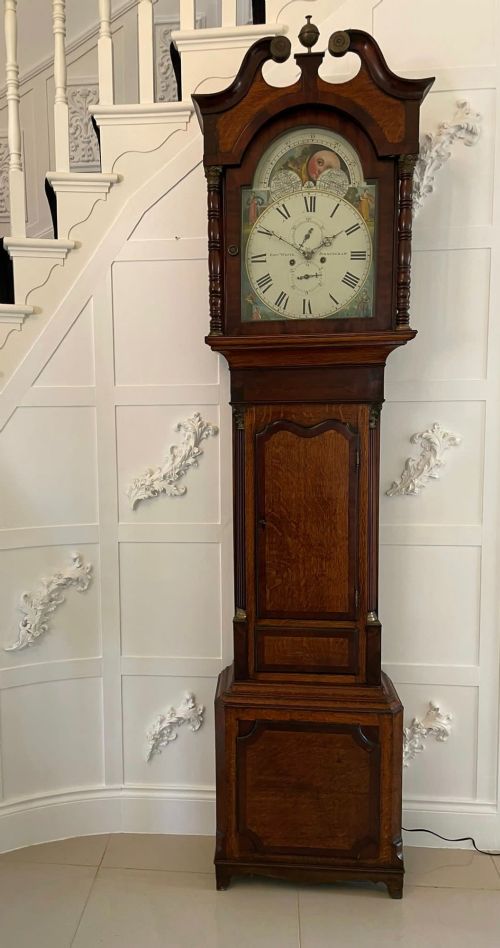
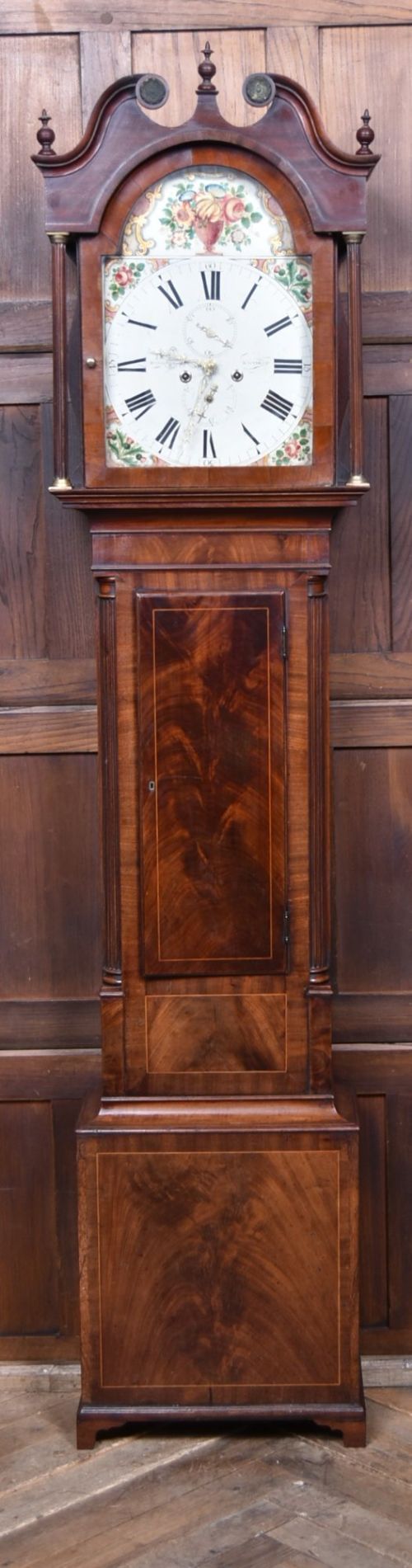
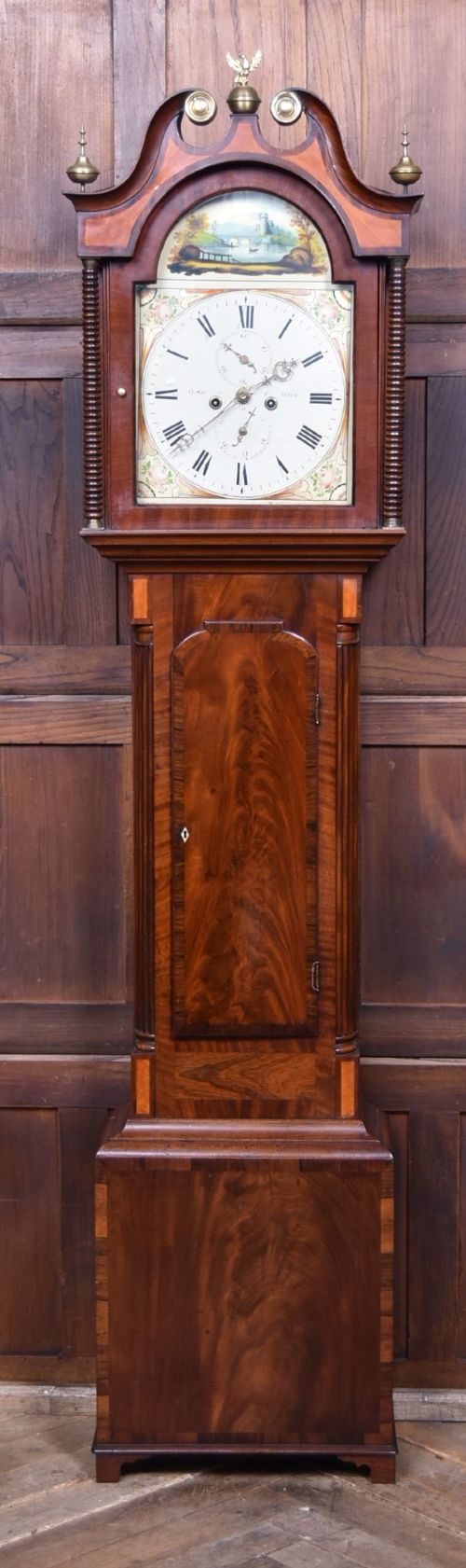
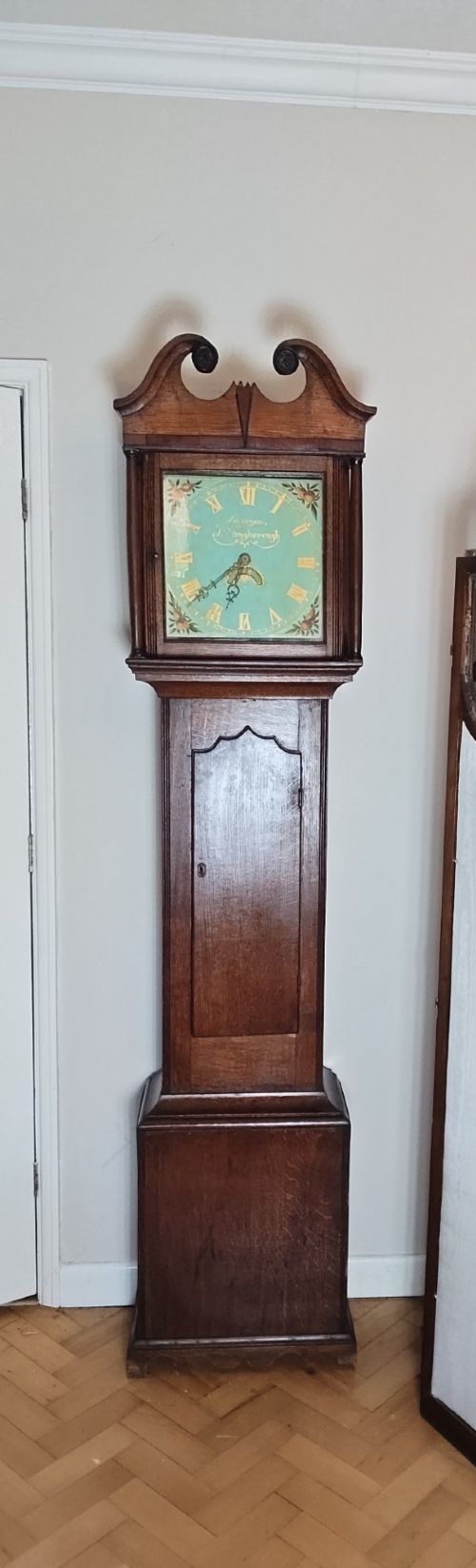
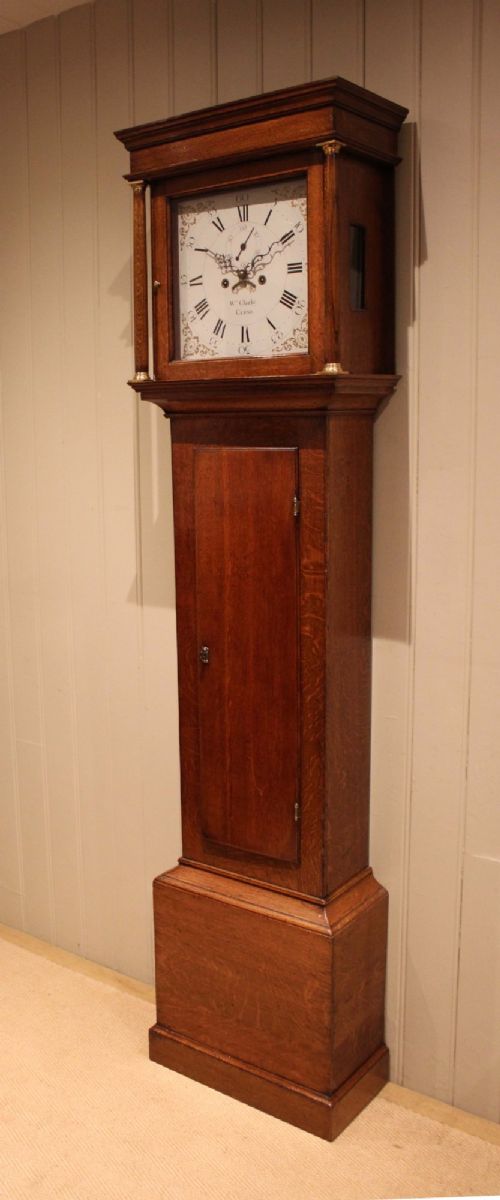
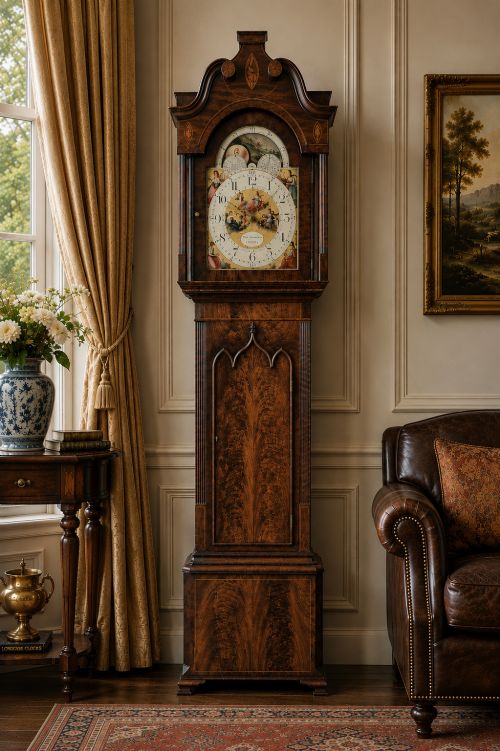
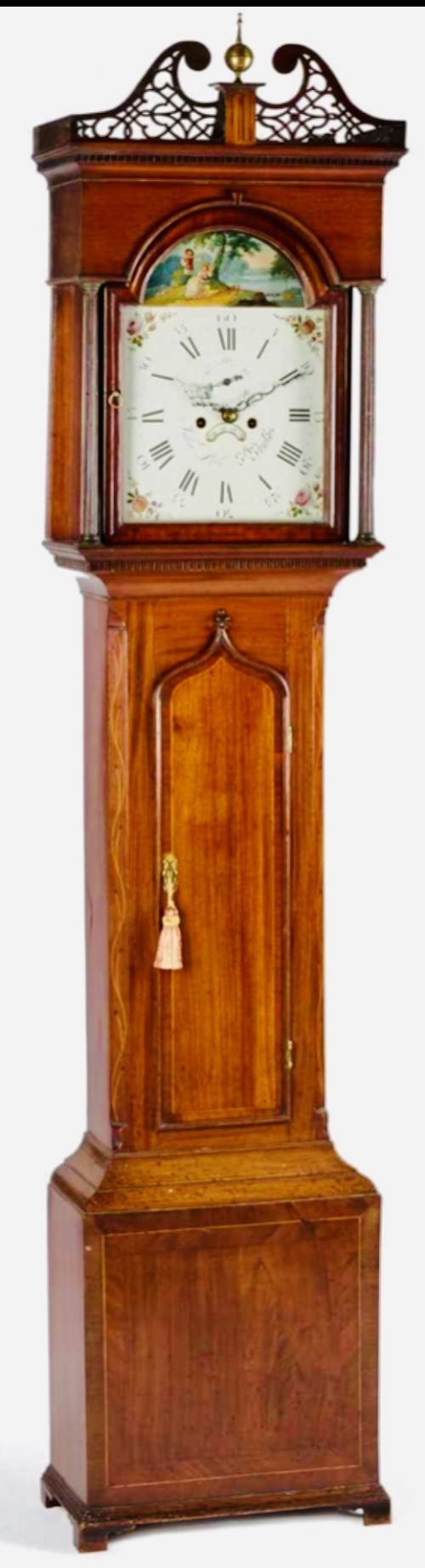
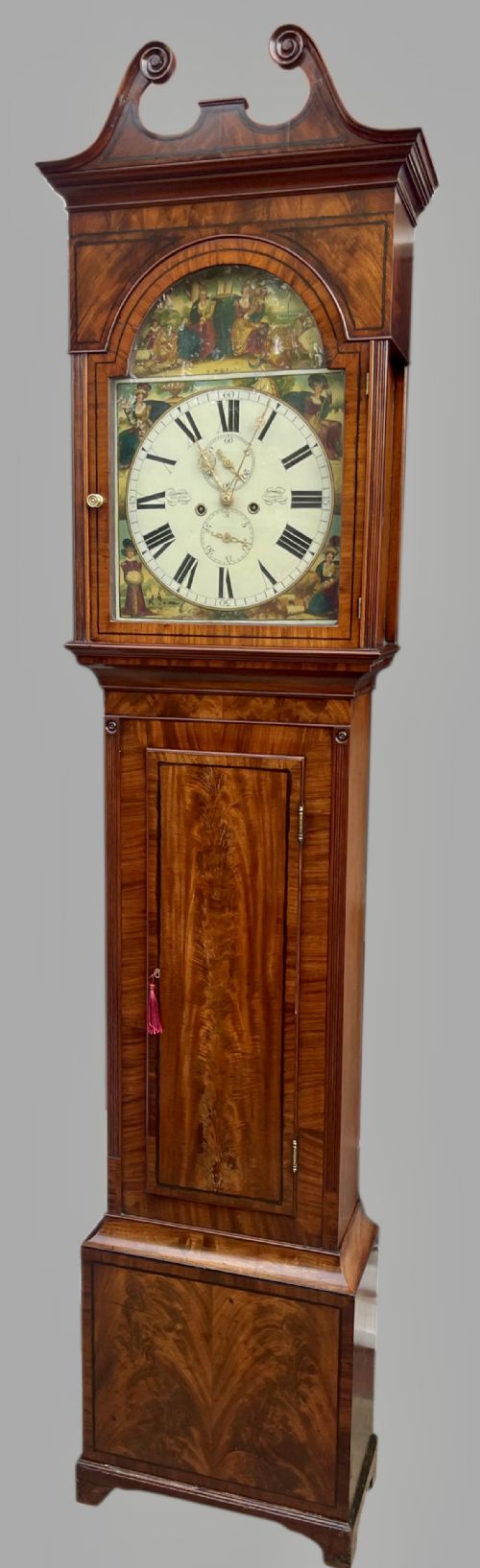
A painted clock case protects the pendulum and weights of a longcase or grandfather clock while displaying surface decoration. When you search for a painted clock case, you encounter tall housings built from timbers like oak and mahogany, often featuring decorated iron or enamel dials.
The pieces on this page span the 18th century, Georgian era, 19th century, and Victorian period. Regional variations appear in Scottish, Welsh, and English workshops, with forms ranging from grand longcases to wall-hanging and mantel clocks.
Makers inscribed their names on dials or movements, while cabinetmakers shaped the timber housings. Surfaces show finishes ranging from natural wood grain to blue lacquer, Chinoiserie, and duck egg blue paint.
How They Were Made
Cabinetmakers constructed these housings using solid timbers such as mahogany and oak, joining panels to support heavy mechanical movements. Wood surfaces received polish, inlay, or layers of paint, including Chinoiserie and lacquer work.
Dials were fashioned from iron, brass, or enamel, then painted with Roman or Arabic numerals and sometimes moonphase indicators. Smiths and clockmakers fitted wheels, gears, and pendulums inside the timber frames to drive eight-day or thirty-hour movements.
Painted Clock Case Retail Price Guide 2026
Typical asking prices for painted clock case among the pieces listed under this phrase on Sellingantiques today, from the lower quarter to the upper quarter. They describe what is for sale here now, not the wider market.
Listings feature oak and mahogany timbers alongside painted iron and enamel dials across 18th-century, Georgian, and Victorian periods.
What Varies in Quality
The refinement of the timber cabinetwork and the crispness of the dial painting set examples apart. Cases with finely figured mahogany, balanced proportions, and detailed regional cabinetmaking reflect higher standards of construction.
Movement complexity also marks the hierarchy, with moonphase displays and signed dials by known makers indicating superior manufacture. The preservation of original painted surfaces and integrated mechanical parts defines the better specimens.
Edward White Birmingham·Hendrie Ogg Dunfermline·D Straiton Montrose·Samuel Kellett Bredbury·Thomas Webbe New Quay·Charles Dowsett Canterbury·John Denbigh Merton Park·Will Lassell Toxteth Park
The Painted Clock Case Glossary
- Longcase clock
- A tall pendulum clock enclosed in a wooden housing, commonly known as a grandfather clock.
- Moonphase
- A dial mechanism showing the lunar cycle alongside the time of day.
- Chinoiserie
- European decorative art reflecting Chinese artistic styles, seen in painted case finishes.
- Fusee
- A conical pulley mechanism that equalises the driving force of the mainspring as it unwinds.
- Grandmother clock
- A smaller, more slender version of the traditional longcase clock.
Painted Clock Case: Frequently Asked Questions
How do I date a longcase clock?
Dating relies on stylistic clues in the timber case, the shape of the dial, and the signature of the maker inscribed on the face. Periods span from the 18th century through the Georgian and Victorian eras.
Cabinet construction methods and painted decoration also offer chronological markers. Comparing regional characteristics helps narrow down the decade of manufacture.
What is a moonphase dial?
A moonphase dial tracks the phases of the lunar cycle on a rotating disk behind an opening in the clock face. These complications required skilled craftsmanship to link with the movement.
They appear frequently on Georgian and 19th-century longcase clocks from Scottish and English workshops.
Where were these clocks made?
Workshops across England, Scotland, and Wales produced these clocks, with regional makers signing the iron or brass dials. Cities and towns like Birmingham, London, Glasgow, and Montrose held active horological trades.
Local cabinetmakers supplied the oak and mahogany housings to house the movements.
How should I care for an antique clock?
Place the clock in a stable environment away from direct sunlight and dramatic temperature fluctuations to protect the timber case and painted surfaces. Winding requires gentle handling according to the movement type.
Professional servicing keeps the mechanical gears running accurately without placing undue strain on the historic components.