





Painted Canton Urn
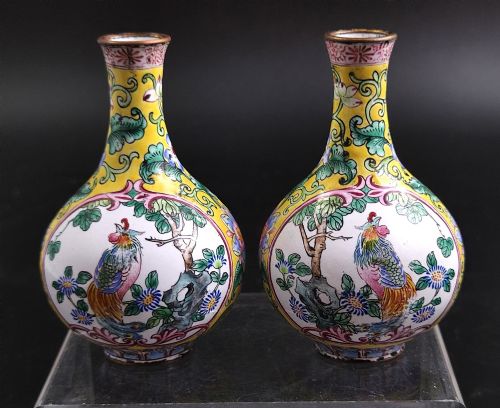
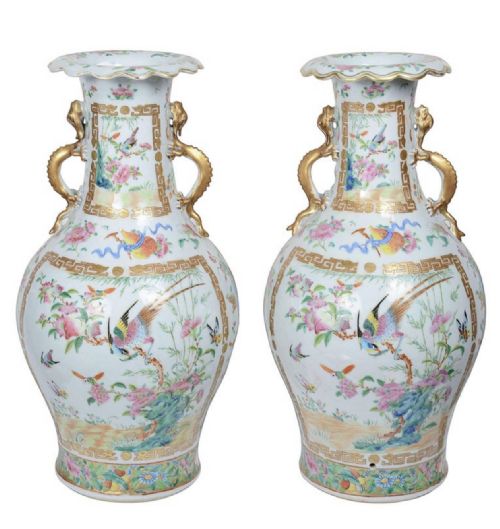
These painted canton urn pieces are Chinese export porcelain vessels that bring vibrant Qing Dynasty and Victorian interior character to a room.
Painted Canton Urn
When you search for a painted canton urn, you are looking at nineteenth-century porcelain vessels originating from China for export. These pieces span periods from eighteen-seventy to nineteen-hundred, alongside Victorian-era imports.
The forms on this page include large decorative vases, monumental floor vases, lidded examples, and pairs adapted as table lamps. Many arrive with silk or fabric elements or mounted on wooden stands.
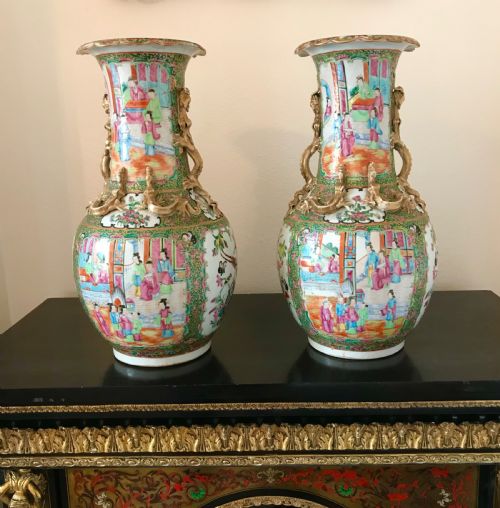
Chinese export and Qing Dynasty styles dominate the selection, frequently displaying Famille Rose and Rose Medallion palette work. These items served as striking decorative objects in historic interiors and retain that presence today.
How they were made
Potters shaped these vessels from fine porcelain, applying intricate hand-painted enamel decoration by brush. Artisans utilised rich glaze and gold leaf accents to highlight complex pictorial scenes and floral borders.
Metal components such as brass appear on pieces converted into lamps during later periods. Stands and wiring represent subsequent alterations rather than original kiln work.
Painted Canton Urn Retail Price Guide 2026
Typical asking prices for painted canton urn among the pieces listed under this phrase on Sellingantiques today, from the lower quarter to the upper quarter. They describe what is for sale here now, not the wider market.
What varies in quality
The fineness of the hand-painted enamel work dictates much of the distinction between ordinary and superior examples. Crisp brushwork in the figures and foliage demonstrates greater workshop skill.
Scale and proportion also separate monumental floor vases from standard mantel pieces. Preservation of the original glaze and the brightness of the gold leaf determine visual impact.
The Painted Canton Urn Glossary
- Canton
- Porcelain produced in the Guangdong province of China specifically for the Western export market. It is characterised by colourful enamel decoration and intricate panel scenes.
- Famille Rose
- A palette of opaque enamel colours dominated by pink or rose hues, introduced during the Qing Dynasty. This palette defines the visual character of Rose Medallion porcelain.
- Rose Medallion
- A distinct style of Canton porcelain featuring alternating panels of figures and birds or flowers, arranged around a central medallion. Pairs of these vases frequently survive intact.
- Qing Dynasty
- The final imperial dynasty of China, lasting from sixteen-forty-four to nineteen-home-and-twelve. Pieces from this era often carry specific nineteenth-century reign periods.
- Chinese Export
- Goods manufactured in China expressly for export to European and American markets. These objects blend traditional Chinese craftsmanship with Western aesthetic tastes.
Painted Canton Urn: Frequently Asked Questions
What is a painted canton urn?
A painted canton urn is a nineteenth-century Chinese export porcelain vessel decorated with hand-painted enamels. These pieces often feature Famille Rose or Rose Medallion motifs.
They were produced in various forms, including lidded vases, large floor vessels, and decorative pairs intended for prominent display.
How were these vases used?
Historically, these vessels functioned as decorative ornaments in grand reception rooms and parlours during the Victorian era. Their vibrant panels and gilt details suited the opulent tastes of nineteenth-century interiors.
Some examples were subsequently converted into table lamps during later decades, retaining their porcelain bodies while serving a new lighting purpose.
How do I identify the period?
Dating relies on stylistic indicators such as the specific Enamel palette, the complexity of the hand-painted panels, and the form of the porcelain body. Nineteenth-century examples often align with the Qing Dynasty and Victorian eras.
Evidence on this page points primarily to production dates spanning the mid-nineteenth century up to nineteen-hundred.
Are lamps original to the period?
Vessels fitted as table lamps typically represent later adaptations of nineteenth-century porcelain vases. The wiring, brass fittings, and silk or fabric shades were added after the initial manufacture.
Such conversions were common practice as owners sought to repurpose decorative antique vases into functional household lighting.