


Painted Cane Back Chairs
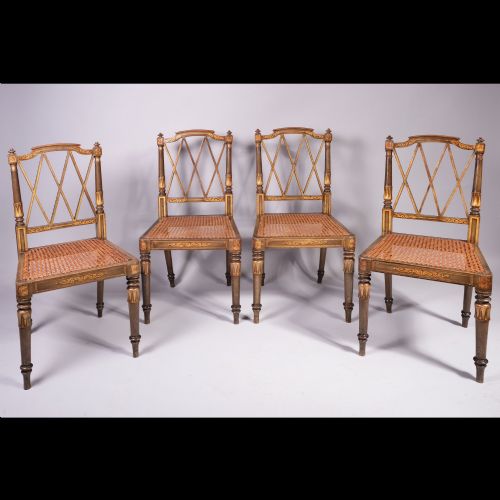
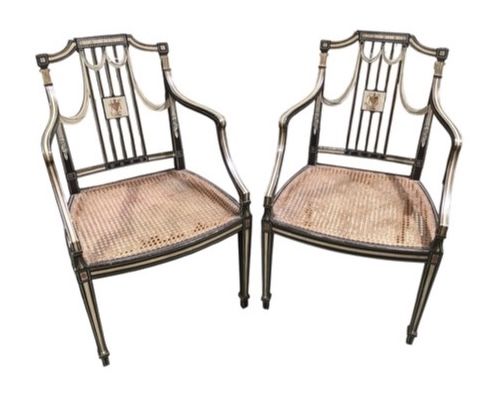
These painted cane back chairs bring lightness and texture to a room, offering historic form paired with woven seating.
Painted Cane Back Chairs
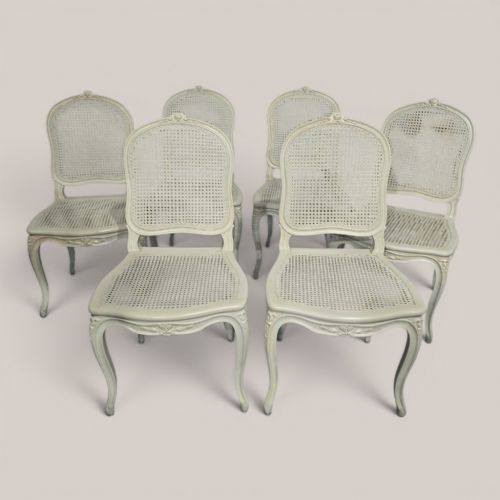
When searching for painted cane back chairs, buyers encounter seating spanning from the late eighteenth century through the Edwardian period and into the early twentieth century. These pieces appear as single side chairs, bedroom chairs, sets of dining chairs, and larger sets of armchairs or bergères.
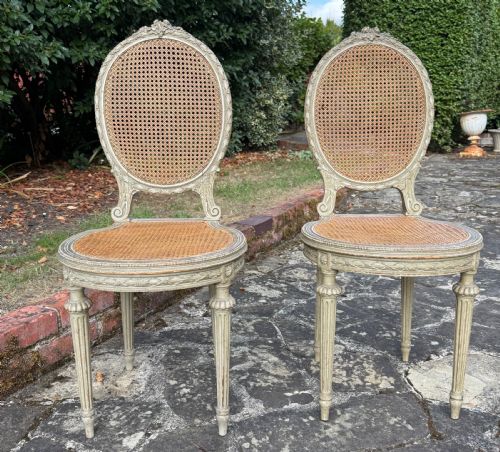
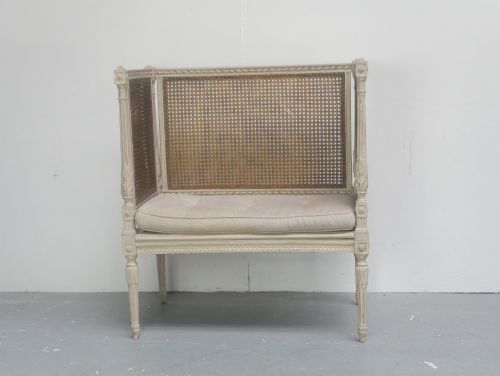
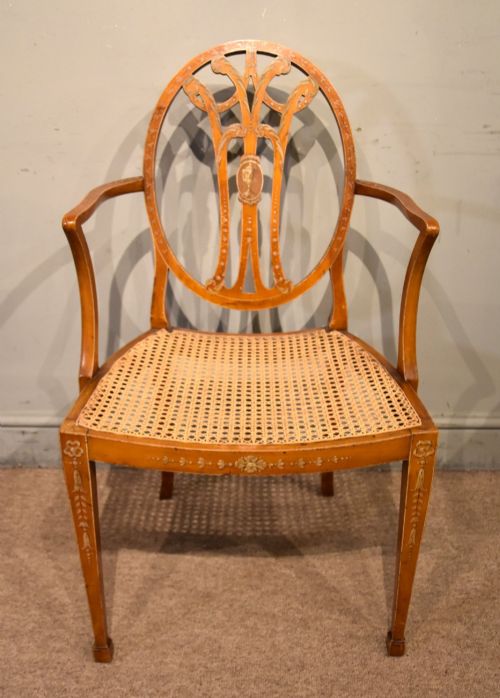
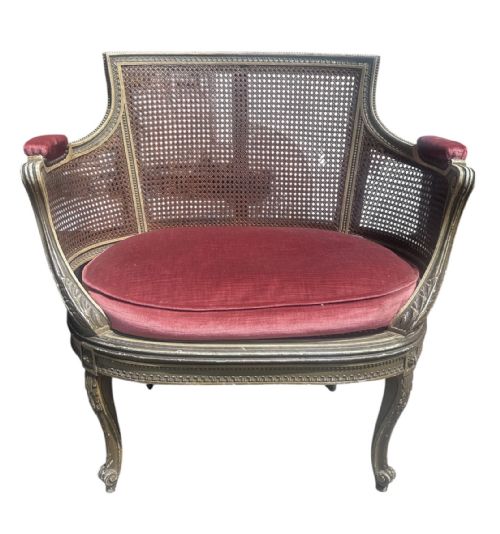
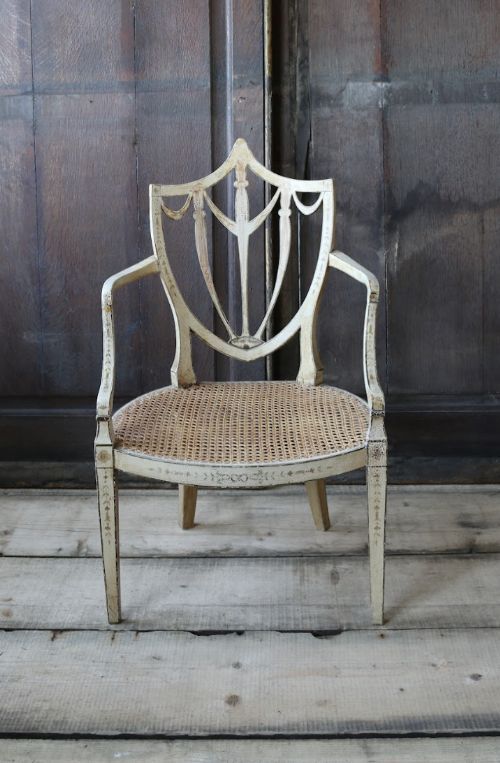
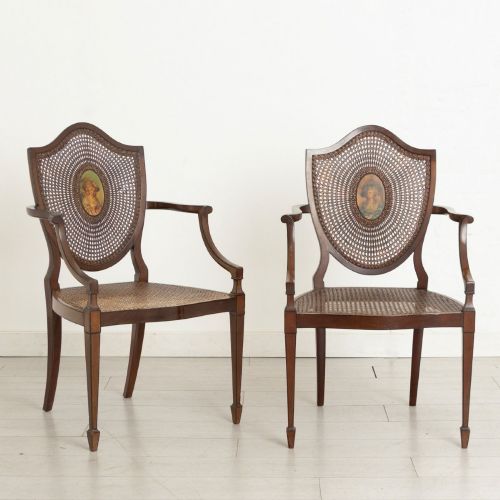
The selection includes English Regency and Chinoiserie examples alongside French Louis XV and Louis XVI styles. Forms range from shield-back armchairs and open armchairs to medallion chairs and substantial settees.
How they were made
Construction relies primarily on wood, with beech, satinwood, walnut, and ebonised wood forming the structural frames. Artisans shaped these timbers through carving and joinery to create specific period silhouettes.
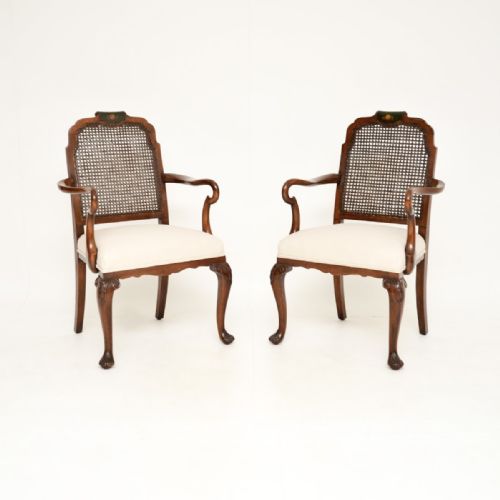
Surfaces receive paint, lacquer, or japanning, often combined with woven cane panels set into the backs and sometimes the seats. Fabric upholstery also appears on padded armrests and loose cushions accompanying the wooden frames.
Listings feature beech, satinwood, and walnut frames finished with paint, lacquer, or ebonisation.
What varies in quality
Quality rests in the crispness of the wood carving and the tightness of the woven cane work. Finer examples display meticulous hand-painted decoration on satinwood or smooth ebonised finishes.
The integrity of the frame construction and the preservation of the original painted surface dictate the standing of an individual piece within the range.
The Painted Cane Back Chairs Glossary
- Bergère
- An enclosed upholstered armchair with wooden framing and cane or upholstered sides. It typically includes a loose squab cushion.
- Caning
- A method of weaving rattan or cane slips to create a porous, resilient panel for chair backs and seats. It provides light support and decorative texture.
- Japanning
- A European imitation of East Asian lacquerwork using resin-based varnishes and heat-curing. It creates a glossy, dark surface often decorated with gilt motifs.
- Shield-back
- A chair back shaped in the outline of a shield, popular in late eighteenth-century furniture design. This form provides a broad canvas for painted decoration and open woodwork.
- Medallion chair
- A seat featuring an oval or circular framed backrest, characteristic of neoclassical French designs. The carved frame often surrounds an upholstered or caned centre.
Painted Cane Back Chairs: Frequently Asked Questions
How do I clean painted cane back chairs?
Dust the wooden frames and cane panels regularly with a soft, dry cloth to prevent dirt accumulation.
Avoid using harsh chemical cleaners or excess water, which can damage the painted surfaces and cause the cane to brittle.
Can I use these chairs for everyday dining?
Many sets function well for regular dining, provided the cane panels remain strong and supportive.
Consider adding loose cushions to older or more delicate bergères to protect the woven seats during prolonged sitting.
How do I identify a Regency period chair?
Regency pieces often draw inspiration from classical antiquity, featuring clean lines, ebonised finishes, and painted details.
They frequently manifest as substantial armchairs or matched sets of dining chairs dating from the early nineteenth century.
What is the difference between French and English styles here?
French pieces on the page lean towards Louis XV and Louis XVI aesthetics, showing carved medallion backs and enclosed bergère forms.
English examples tend to showcase Regency proportions, satinwood finishes, and Chinoiserie or japanned decoration.