


Grey French Side Chairs
These grey french side chairs bring period continental seating into modern rooms with ease.
Grey French Side Chairs
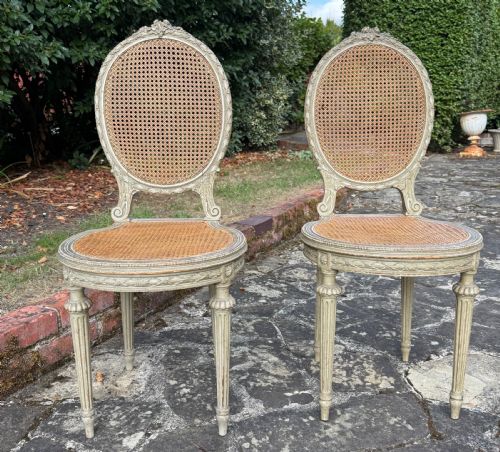
When you search for grey french side chairs, you are looking at continental seating that spans from the eighteenth century through to the early decades of the twentieth century. These pieces encompass side chairs, dining chairs, and armchairs built to serve formal rooms and intimate parlours alike.
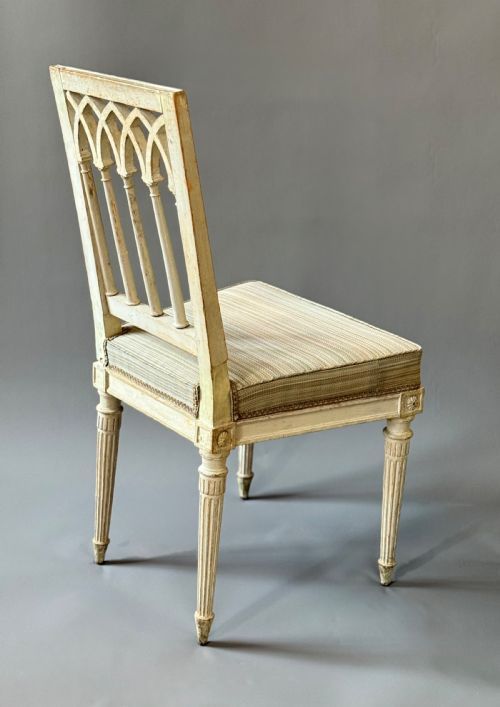
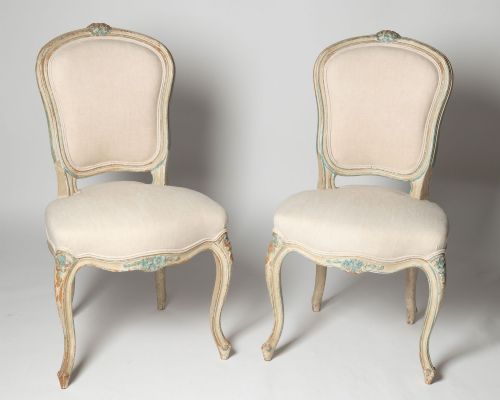
The versions you are most likely to meet on this page include painted wood frames finished in shades of grey, often displaying the curves of the Louis XV style or the straight lines of French Neoclassical design. Makers across different periods drew on Gothic Revival, Queen Anne Revival, and French Provincial traditions to shape these forms.
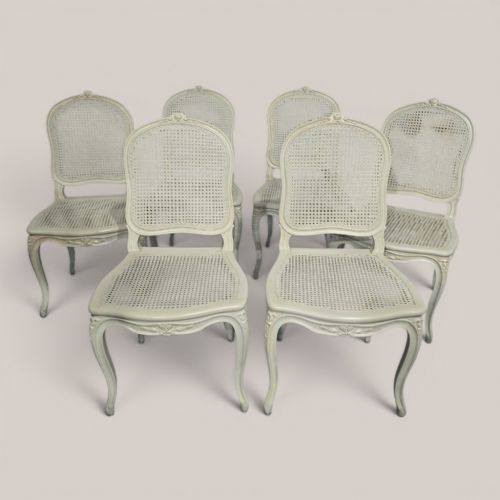
Originating predominantly from France, these chairs arrive in pairs, sets of six or eight, or as individual items. They frequently feature exposed woodwork paired with upholstery in linen or other woven fabrics.
How they were made
Makers constructed these chairs primarily from beech and walnut, selecting hardwoods capable of supporting intricate hand carvings. Carpenters shaped the frames using traditional joinery before applying layers of paint to the wood surface.
Seating areas and backs often incorporated cane, rattan cane, or textile elements such as linen. Craftsmen secured these materials by hand to create durable support structures within the painted wooden framework.
One eighteenth-century pair combines French grey paint with the Gothick taste.
What varies in quality
The distinction between standard examples and superior pieces rests in the execution of the hand carving upon the beech or walnut frames. Crisp detailing on Louis XV style curves indicates a higher standard of workmanship than softer, more generalized moulding.
Material choice and structural integrity also define the range. Chairs utilising robust walnut and tightly woven rattan cane sit at a different level of craftsmanship compared to simpler painted wood versions.
The Grey French Side Chairs Glossary
- Bergere
- An enclosed upholstered armchair with wooden framing. These pieces typically feature upholstered backrests and armrests integrated into the main structure.
- Side chair
- A chair without arms designed primarily for dining or occasional seating. These forms remain compact to fit easily around tables or against walls.
- Louis XV
- A decorative style defined by asymmetrical curves, cabriole legs, and naturalistic floral carvings. This aesthetic originated in eighteenth-century France and reappeared in later revival periods.
- Cane
- Woven material made from the peeled bark of rattan palm. Craftsmen utilise this flexible substance to create open-work panels for chair backs and seats.
Grey French Side Chairs: Frequently Asked Questions
Where should I place these chairs?
These chairs find natural placement around dining tables or as accent seating in living spaces and bedrooms. Their painted frames allow them to complement both traditional and contemporary interior colour schemes.
Pairs work effectively flanking a console table or fireplace, while larger sets accommodate dining arrangements.
How do I identify the period?
Dating relies on examining the characteristics of the wood carving, construction methods, and stylistic details. Eighteenth-century pieces display authentic period craftsmanship, whereas items from the nineteenth and twentieth centuries often reflect revival movements.
Comparing the specific stylistic cues like Louis XVI straight lines against Louis XV curves helps establish the likely era of manufacture.
Are painted finishes original?
Finish history varies across these pieces, with some retaining early grey paint layers while others have undergone later decorative updates. The underlying painted wood surface often shows craquelure and wear consistent with age.
Examining the paint accumulation around carved joints provides clues regarding the age of the surface layer.
How do I care for cane seats?
Cane and rattan panels require moderate humidity to prevent the natural fibres from becoming brittle and snapping. Avoid placing these chairs near direct heat sources or in overly dry environments.
Gentle dusting with a soft brush keeps the woven surfaces clean without damaging the material.