




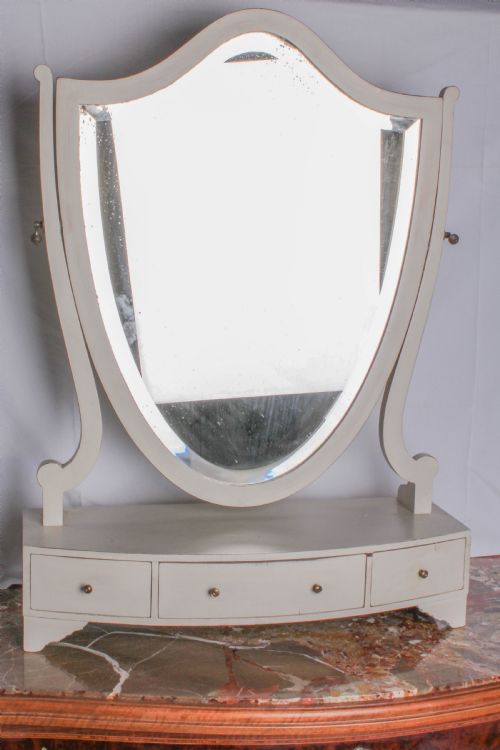


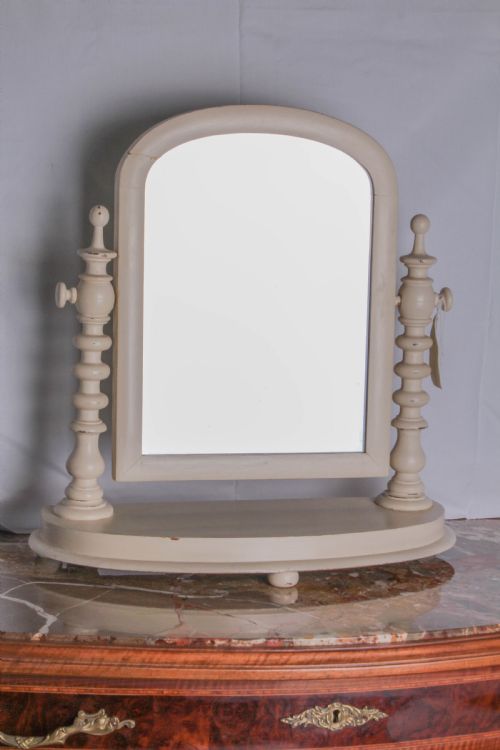
Painted Bedroom Table Mirror
These painted bedroom table mirror pieces offer practical vanity surfaces and adjustable glass, sought after for period rooms and personal grooming.
Painted Bedroom Table Mirror
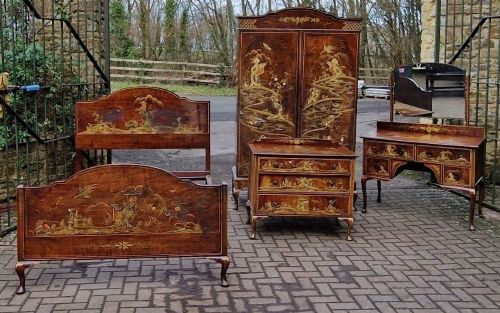
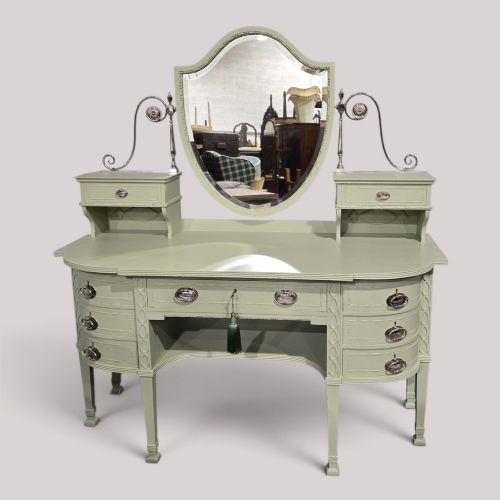
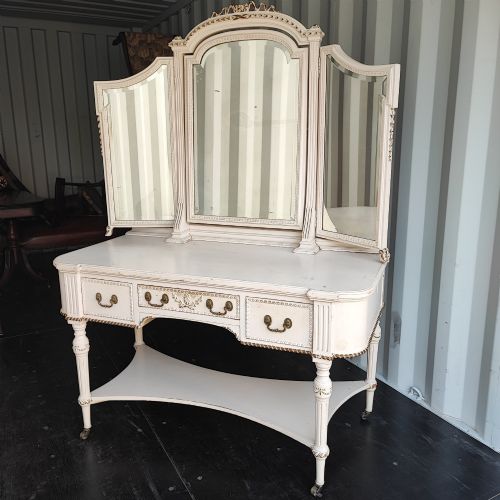
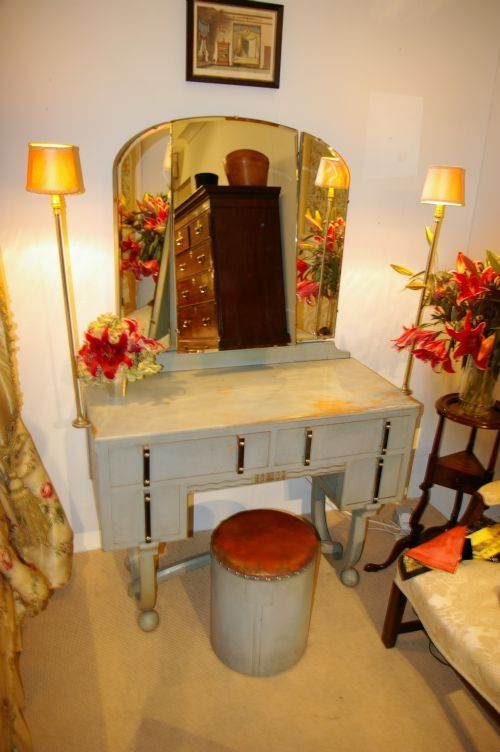
When buyers search for a painted bedroom table mirror, they encounter a range of forms designed for grooming and dressing spaces. These pieces span periods from the Victorian era through the Edwardian years up to the 1920s.
The most common versions on this page are compact dressing mirrors and larger dressing table chests incorporating swing glasses. Makers utilised pine, walnut, and satin birch to build these utilitarian yet decorative furnishings.
Styles vary from simple Victorian painted wood to elaborate French Chateau, Louis XVI Revival, and Art Deco designs. Each type serves the dual purpose of reflecting light and organising bedroom spaces.
Materials and construction
Carpenters constructed the structural frames using solid timber such as pine and walnut, often applying painted finishes directly to the wood. Metal components like brass provided functional embellishments and pivots for adjustable glass elements.
Surface decoration frequently involved traditional paint applications, ranging from plain finishes to decorative stencilling. Glass mirrors were mounted securely within wooden frames, supported by swing brackets or vanity chests.
Painted Bedroom Table Mirror Retail Price Guide 2026
Typical asking prices for painted bedroom table mirror among the pieces listed under this phrase on Sellingantiques today, from the lower quarter to the upper quarter. They describe what is for sale here now, not the wider market.
Listings on this page feature painted bedroom table mirrors spanning from the Victorian era and 1860s up to the 1920s Art Deco period.
Judging quality and craftsmanship
Quality in these pieces rests upon the integrity of the timber framing and the subtlety of the painted finish. Finer examples display thoughtful proportions and careful joinery that has survived decades of daily use.
The sophistication of the hardware, from brass embellishments to the mechanism of the swing mirror, separates standard items from superior works. Original painted surfaces hold more interest for collectors than later overpainting.
Maples of London and Paris·Rowley Gallery
The Painted Bedroom Table Mirror Glossary
- Swing mirror
- A glass plate mounted on pivots within a frame, allowing the user to tilt the angle for grooming. This mechanism is central to table dressing mirrors.
- Satin birch
- A pale, fine-grained timber utilised for decorative furniture surfaces during the nineteenth and early twentieth centuries. It provides a distinctive blond tone.
- Shaving stand
- A specialist piece of furniture incorporating an adjustable mirror and surfaces for shaving paraphernalia. These often date from the Victorian period.
- French Chateau
- A decorative style characterised by ornate proportions and neoclassical influences, frequently seen in large painted dressing tables.
Painted Bedroom Table Mirror: Frequently Asked Questions
What is a painted bedroom table mirror?
A painted bedroom table mirror is a vanity glass designed to sit upon a chest or dressing table, usually featuring a wooden frame finished with paint.
These pieces emerged in various forms throughout the nineteenth and early twentieth centuries to assist with personal grooming.
How do I date a painted dressing mirror?
Dating relies on observing the timber types, paint finishes, and construction methods used in the frame. Victorian and Edwardian examples often display distinct decorative styles such as stencilling or revival motifs.
Hardware details like brass fixings also help place a piece within its correct period.
Where should I place a dressing mirror?
These mirrors suit bedroom placement upon matching dressing chests, tables, or dedicated shaving stands. They function best near a natural light source to illuminate the glass.
Ensure the supporting surface is stable enough to hold the weight of the frame.
What styles are available for these mirrors?
Styles range from simple Victorian pine pieces to ornate French Neoclassical and Louis XVI Revival designs. Art Deco examples from the 1920s offer cleaner geometric lines.
Each style reflects the interior aesthetic of its original period.