




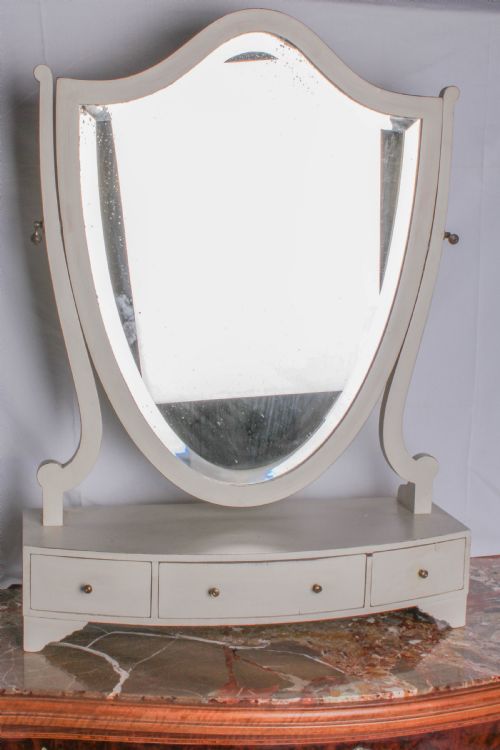

Georgian Shield Vanity Mirror
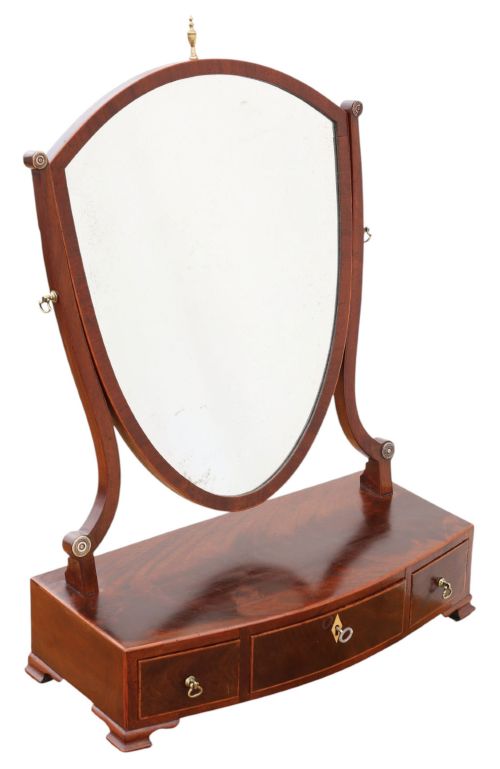
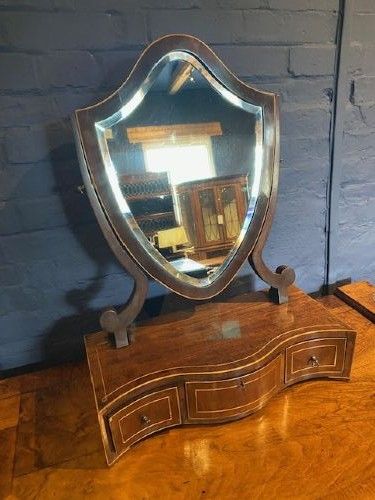
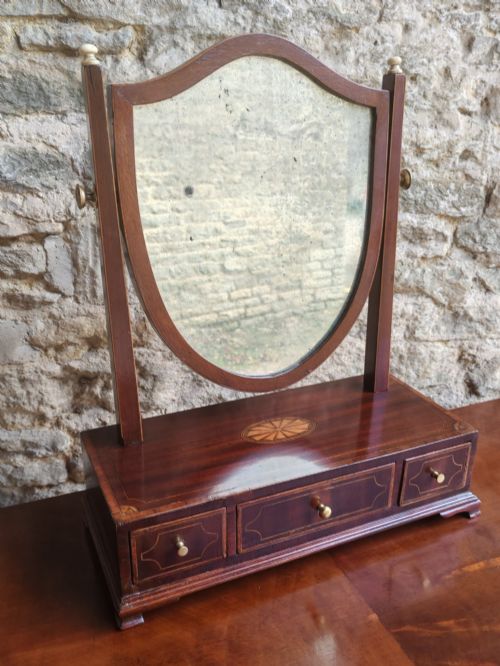
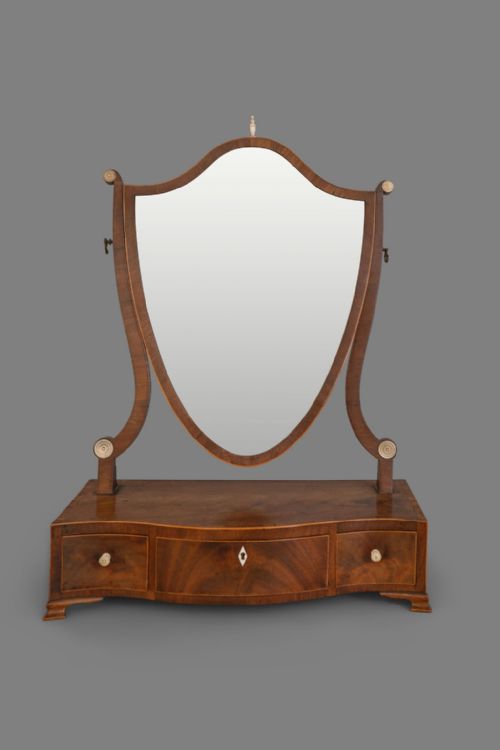
A georgian shield vanity mirror sits on the dressing table, offering a polished surface for morning routines with refined period grace.
Georgian Shield Vanity Mirror
When you search for a georgian shield vanity mirror, you encounter small table mirrors designed for dressing tables and chest tops. These pieces appear across several periods, including the eighteenth century and the nineteenth century.
Materials and construction methods
Cabinetmakers constructed these frames and bases using dense timber such as mahogany and yew, occasionally incorporating satinwood or wood inlay for decorative contrast. The natural grain of the wood provides the primary visual texture across the structure.
Mirrors utilise genuine mirror glass secured within shaped wooden surrounds and supported by brass hardware. Small bone escutcheons or drawer pulls often accent the fitted base compartments.
Current listings feature mahogany, yew, satinwood, and brass across pieces spanning the eighteenth and nineteenth centuries.
Distinctions in craftsmanship and form
Quality rests in the balance of proportions and the sophistication of the base construction. Serpentine and bowfront designs demand greater woodworking skill than straight-fronted alternatives.
The choice of secondary woods, the crispness of any inlay work, and the original patination of the timber separate standard examples from finer pieces.
The Georgian Shield Vanity Mirror Glossary
- Shield mirror
- A dressing glass cut into the outline of a heraldic shield. This silhouette defines the aesthetic of the group.
- Swing mirror
- A plate mounted on pivots that tilts back and forth. It allows the user to adjust the angle of reflection.
- Serpentine base
- A front contour that curves inward and outward in a continuous wave. This shape requires advanced carpentry skills.
- Toilet mirror
- The historical term for a small dressing table mirror. These items stood upon larger furniture pieces.
Georgian Shield Vanity Mirror: Frequently Asked Questions
Where did people place these mirrors?
These mirrors stood on top of dressing tables, chest of drawers, or washstands in bedrooms and dressing rooms.
Their compact size allowed them to be moved easily to catch the best morning light.
How do I date a mahogany mirror?
Dating relies on examining the construction methods of the base drawers, the thickness of the timber, and the style of the brass pivots.
Earlier examples from the eighteenth century show hand-cut dovetails and lighter framing compared to later nineteenth-century revivals.
What is a serpentine front?
A serpentine front is a shaped wooden facade that curves outward in the centre and inward toward the edges.
This undulating line adds visual movement and complexity to the base of the dressing glass.
Are these mirrors stable on tables?
The base design provides a stable platform with small feet or a stepped plinth that distributes the weight of the pivoting frame.
Upright arms connect the glass securely to the lower drawers while allowing smooth tilting action.