
Painted Bedroom Drawers
These painted bedroom drawers bring honest 19th-century utility and decorative surface into modern sleeping spaces.
Painted Bedroom Drawers
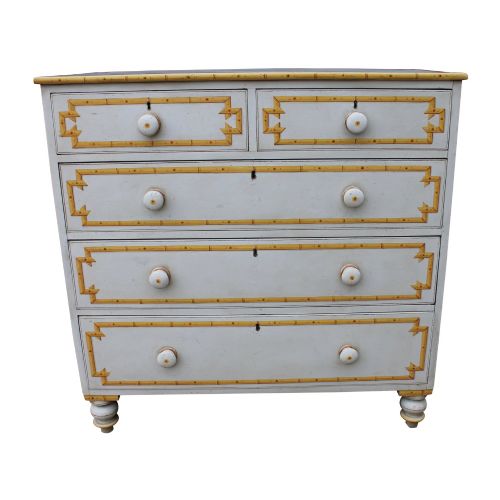
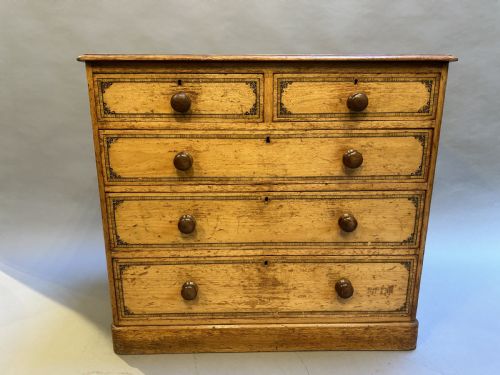
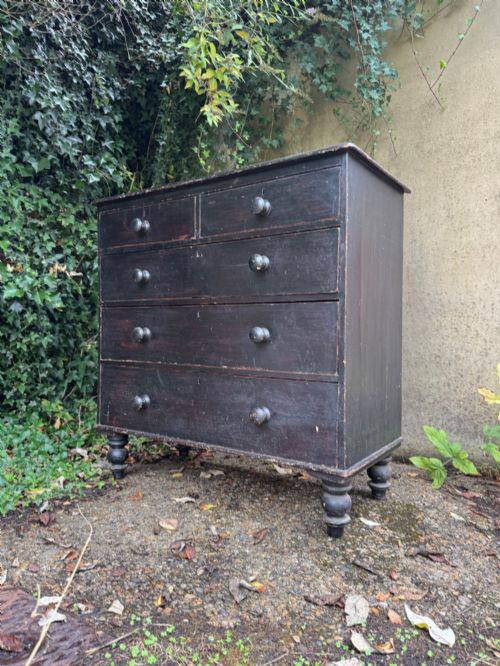
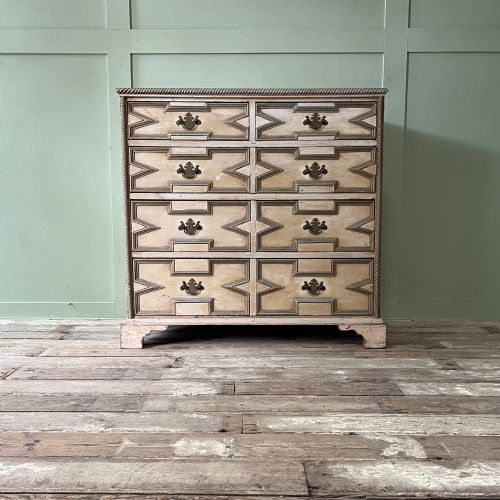
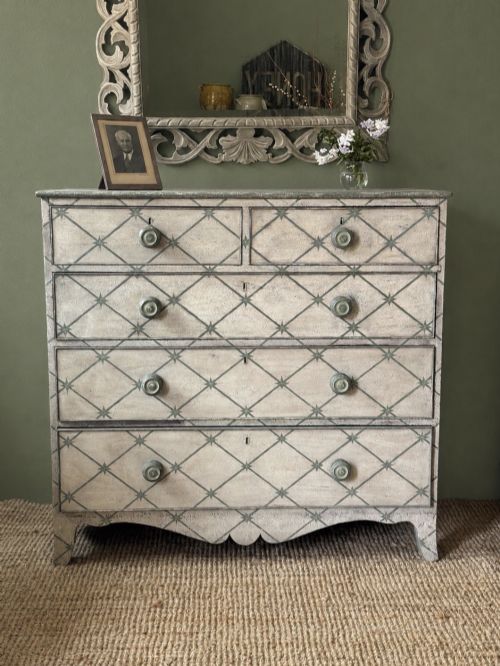
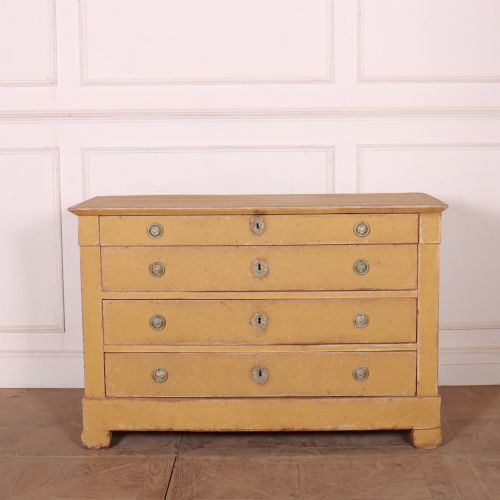
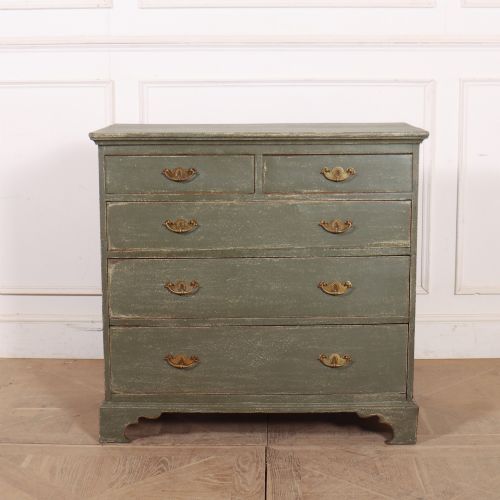
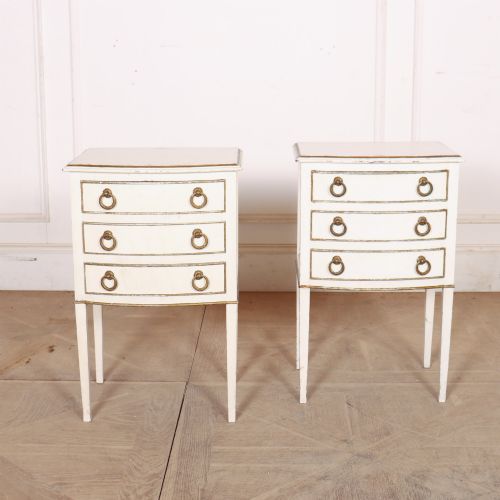
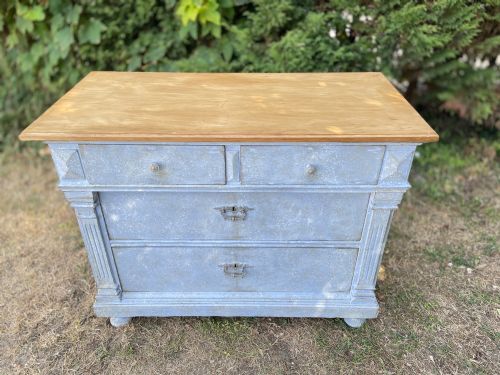
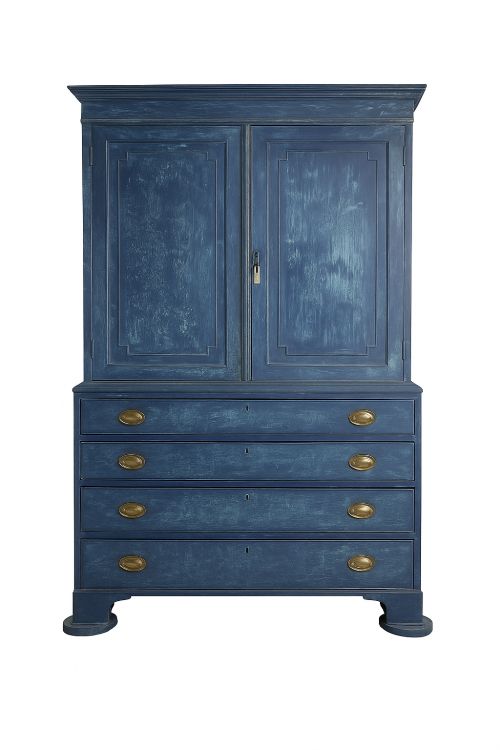
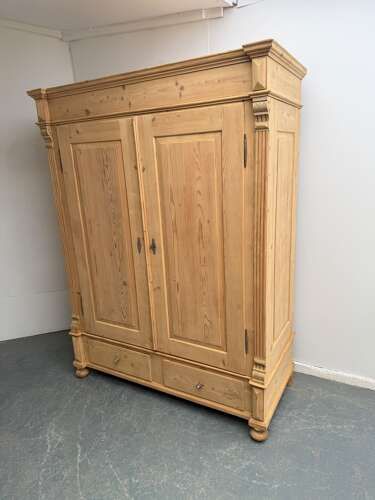
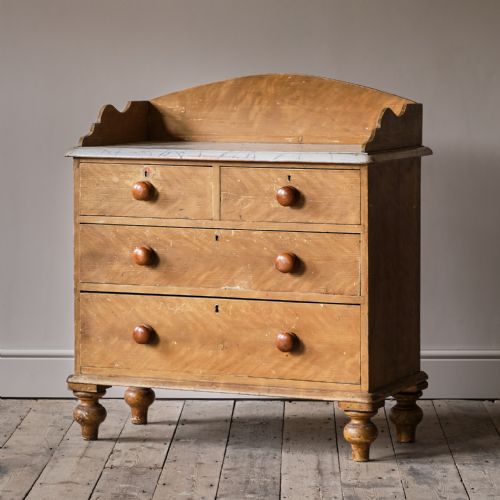
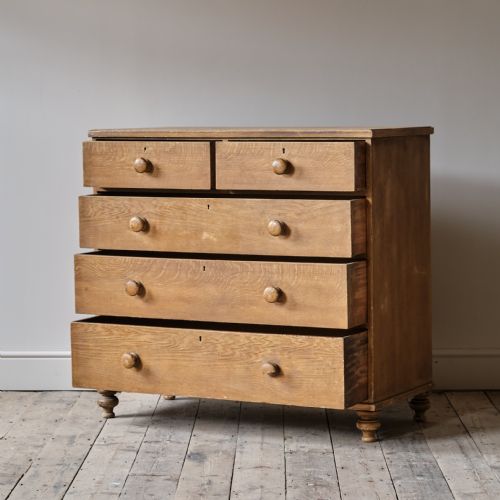
When you search for painted bedroom drawers, you encounter a selection spanning the 18th, 19th, and early 20th centuries, dominated by functional pine pieces designed for domestic storage. The most common form on this page is the chest of drawers, alongside associated bedroom items like wardrobes, bedside tables, dressing tables, commodes, and linen presses.
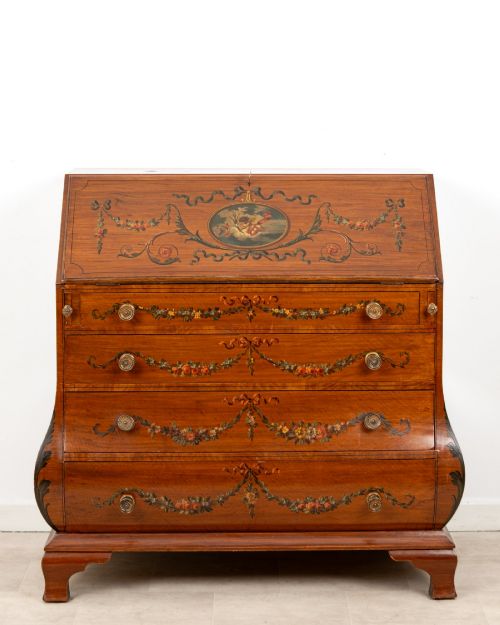
Originating from English, French, Swedish, Hungarian, and Spanish workshops, these pieces cross multiple style traditions including Victorian, Regency, Gustavian, Arts and Crafts, and Edwardian. Buyers select them for their combination of traditional storage capacity and decorative painted finishes that range from straightforward country scumble to faux bamboo and detailed stencilling.
How they were made
Construction relies heavily on timber such as pine, mahogany, and satinwood, assembled using traditional joinery and often designed in knockdown sections for transport. Hardware typically incorporates brass or iron handles and key escutcheons to secure the drawers.
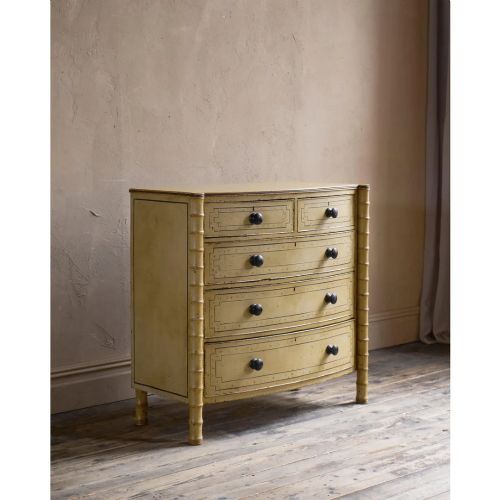
The defining characteristic is the application of paint, utilising original scumble, faux bamboo effects, blue or grey pigments, and diamond-point commode detailing. Many retain their original surface finishes applied during the Victorian, Regency, or Edwardian eras.
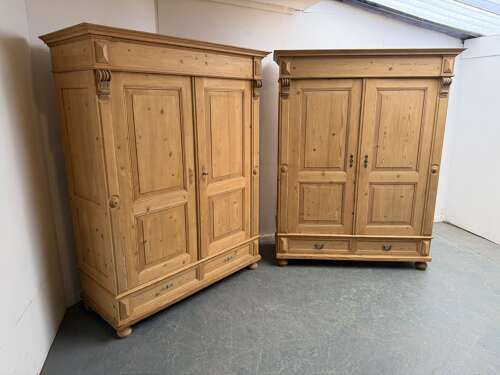
Several Victorian wardrobes were built with knockdown frames so they could squeeze up narrow staircases without a fuss.
What varies in quality
The distinction between standard and superior pieces rests largely on the survival of original surface decoration, such as authentic scumble, period stencilling, or specific regional paint schemes. Pieces retaining their untouched early finish hold greater interest than those subjected to later overpainting.
Structural integrity and the retention of original brass or iron hardware also set examples apart. Maker attribution to known firms like Edwards and Roberts elevates a piece beyond standard utilitarian output.
Sir Clough Williams-Ellis·Edwards and Roberts
The Painted Bedroom Drawers Glossary
- Scumble
- A decorative painting technique involving layers of translucent or opaque glaze dragged or brushed over a base coat to imitate wood grain or create textured patterns. It is frequently seen on 19th-century pine furniture.
- Faux bamboo
- A decorative carving and painting style popular in the 19th century where timber is shaped and painted to resemble natural bamboo stalks.
- Linen press
- A tall storage piece comprising upper cupboard doors enclosing sliding trays for textiles, positioned above a base of lower drawers.
- Commode
- A low French or continental chest of drawers or cabinet designed for bedroom or reception room use.
- Knockdown wardrobe
- A large wardrobe designed to dismantle entirely into flat panels and separate components for ease of transport between rooms or houses.
Painted Bedroom Drawers: Frequently Asked Questions
What periods do these painted bedroom drawers come from?
The pieces span the 18th century, the Regency era, the Victorian period, and into the early 20th century including Edwardian examples.
Craftsmanship and paint styles reflect the specific decade of their origin, from 18th-century Georgian designs to early 1900s Arts and Crafts production.
Are the paint finishes original?
Many listings specifically retain original paint, scumble, or stencilling applied during the 19th or early 20th centuries.
Some pieces record specific historical surfaces like original brown scumble or blue pigment.
What woods are used beneath the paint?
Pine serves as the primary timber for the vast majority of country and Victorian pieces, while satinwood and mahogany appear in more refined Edwardian or Georgian examples.
Iron and brass components provide the structural hardware and drawer pulls.
What styles are represented here?
The selection includes English Country, Victorian Country, French Provincial, Gustavian, Regency, and Arts and Crafts aesthetics.
Continental origins add Swedish, Spanish, and Hungarian regional variations to the English pieces.
Do these wardrobes dismantle for transport?
Several listed wardrobes are described as knockdown pieces built to separate into manageable parts.
This historical construction method originally allowed large bedroom furniture to move easily between properties.