
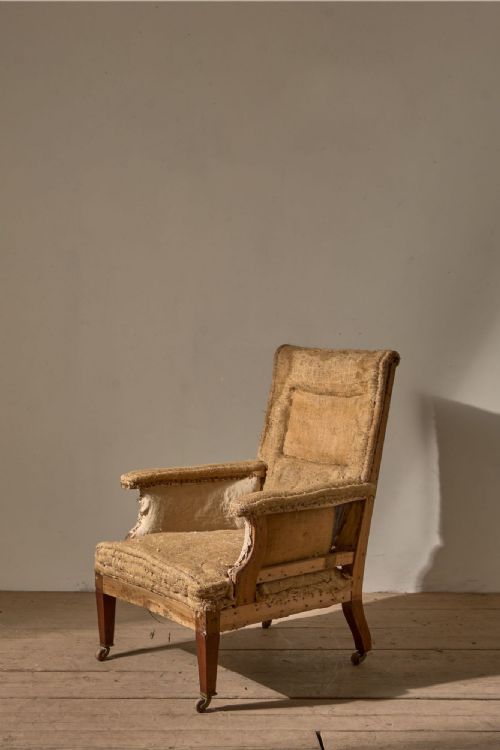
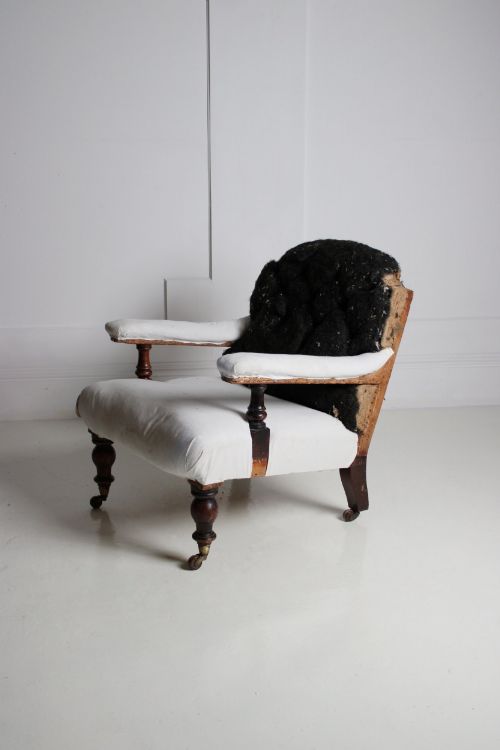


Padded Arm Fireside Chair
A padded arm fireside chair brings deep seating and traditional comfort to a room, drawing on centuries of upholstery and timber framing.
Padded Arm Fireside Chair
A padded arm fireside chair encompasses generous seating forms designed for warmth and repose near a hearth. These chairs bridge formal parlour seating and relaxed country house styles, spanning periods from the eighteenth century through to the twentieth.
The most common examples encountered on this page are Victorian and nineteenth century pieces, often featuring mahogany or walnut frames alongside upholstered pads. Buyers also encounter Georgian wing backs and later twentieth century Bridgewater styles.
Forms range from open armchairs with exposed timber to fully upholstered easy chairs and library chairs with leather or textile coverings. Each variant offers a distinct proportion while maintaining a supportive frame for fireside use.
How they were made
Frames are constructed from dense timbers such as mahogany, walnut, and general hardwoods, providing a sturdy skeleton for daily use. Joinery techniques varied by period, employing traditional framing to support the stresses placed on arms and legs.
Upholstery relies on textiles including velvet, fabric, leather, and general textile coverings fastened over padded interiors. Brass detailing often appears in tack work or castors, completing the functional construction of the chair.
Listings feature periods spanning from the eighteenth century through to the 1930s, constructed in mahogany, walnut, and brass.
What varies in quality
The distinction between ordinary and exceptional pieces rests upon the proportions of the frame and the elegance of the woodwork. Refined carving on cabriole legs or unusual back designs elevate a piece beyond standard utilitarian production.
Quality also manifests in the integrity of the original timber frame and the sympathetic nature of any reupholstery. Chairs that retain their original structural timber without excessive alteration command greater appreciation from discerning buyers.
Howard And Sons
The Padded Arm Fireside Chair Glossary
- Cabriole leg
- A furniture leg that curves out and then in, resembling an animal limb. This form typically terminates in a pad or foot and is characteristic of eighteenth-century and revival styles.
- Wing back
- An armchair with side panels attached to the arm rests, designed to shield the sitter from draughts. These high-backed chairs are traditional fireside staples.
- Open armchair
- A chair design where the arms are left unpadded or partially exposed, displaying the polished wood frame. This style offers a lighter visual presence than fully upholstered variants.
- Mahogany
- A durable tropical hardwood prized for its rich grain and deep colour, frequently utilised in fine framing. It resists warping and takes a high polish.
- Bridgewater style
- A relaxed upholstered armchair design characterised by low rolled arms and deep cushions. It became popular in the late nineteenth and early twentieth centuries for country house comfort.
Padded Arm Fireside Chair: Frequently Asked Questions
What is a padded arm fireside chair?
A padded arm fireside chair is a comfortable seating form designed for domestic hearths, featuring upholstered arms and supportive backs. They range from Georgian wing backs to Victorian mahogany frames.
These pieces combine functional warmth with period aesthetics, serving as practical seating and decorative elements within traditional interiors.
How do I date a fireside chair?
Dating relies on observing structural characteristics, timber choices, and stylistic cues such as cabriole legs or carved backs. Eighteenth-century pieces often display simpler mahogany framing, whilst Victorian examples introduce heavier walnut and distinct upholstery methods.
Comparing the joinery and overall proportions against known period designs helps narrow the decade or century of manufacture.
Where should I place a fireside chair?
These chairs find a natural home beside a fireplace or stove, fulfilling their original purpose of providing draught-free seating. They also suit reading corners, studies, and drawing rooms where deep seating is desired.
Their substantial presence allows them to act as anchor pieces within a room layout, pairing well with side tables and reading lamps.
How do I care for antique upholstery and wood?
Preserving the timber frame involves regular dusting and occasional polishing with appropriate wax to maintain the grain and finish. Upholstery care depends on the textile used, requiring gentle vacuuming and professional cleaning for delicate fabrics like velvet.
Protecting the chair from direct sunlight and excessive temperature fluctuations prevents the wood from drying and the textiles from fading.