
Padded Accent Chair
A padded accent chair brings upholstered comfort and period character to a room, ranging from Georgian walnut frames to Victorian revival designs.
Padded Accent Chair
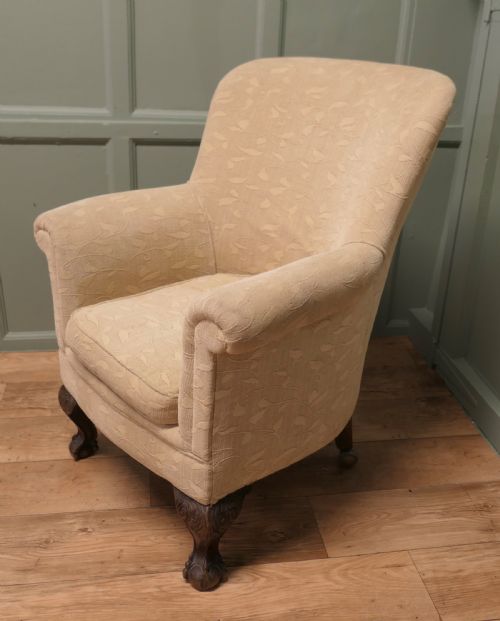
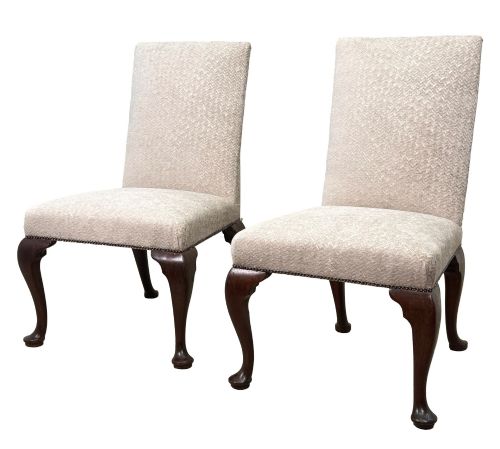
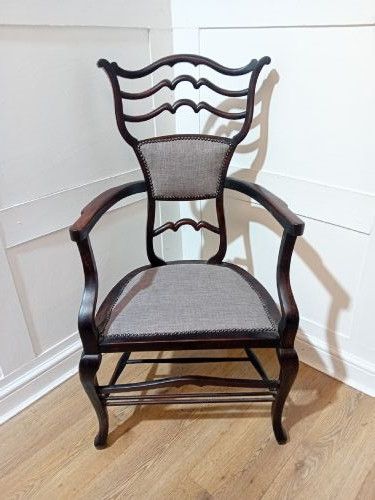
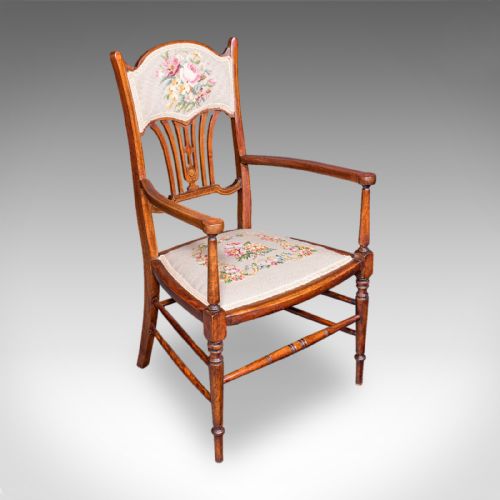
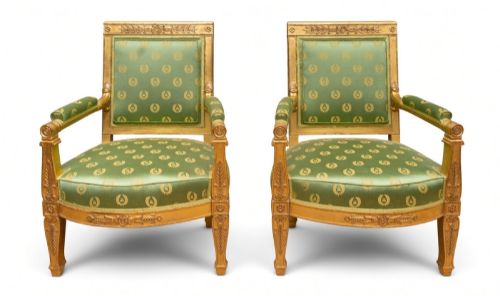
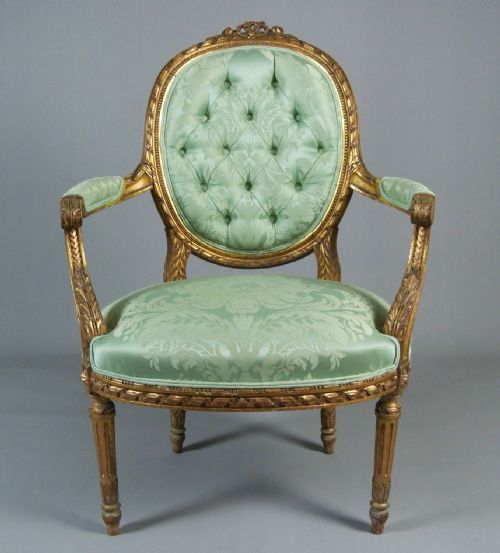
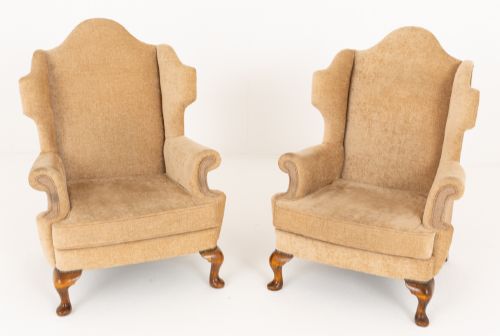
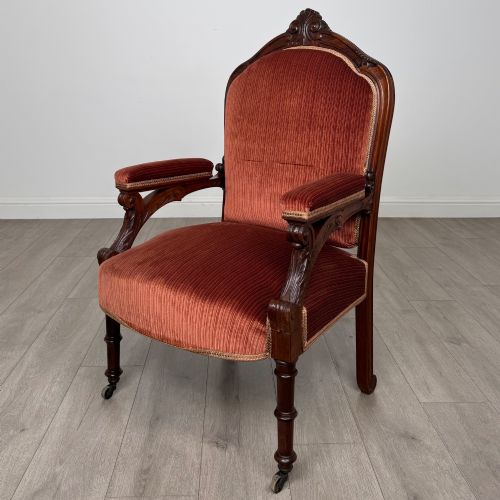
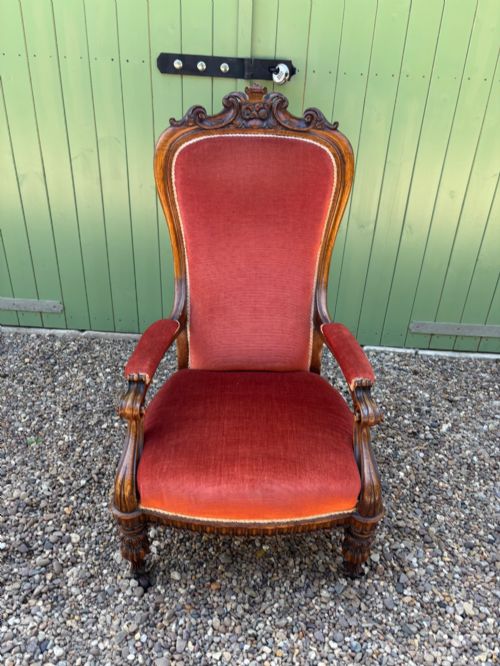
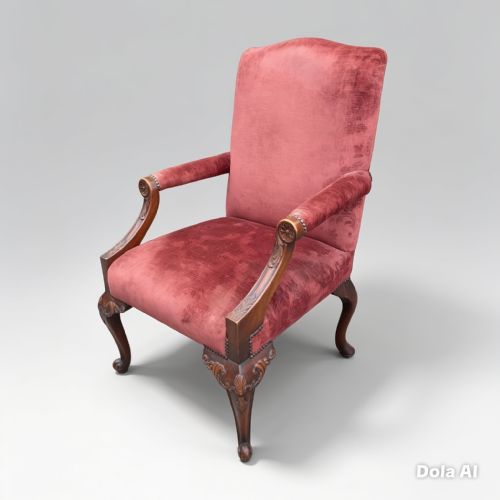
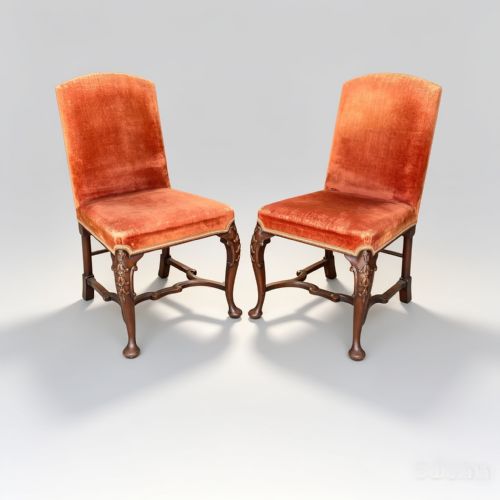
A padded accent chair encompasses seating forms such as open armchairs, tub chairs, wing backs, fauteuils, and side chairs spanning the eighteenth, nineteenth, and early twentieth centuries. When searching for a padded accent chair, buyers encounter diverse regional interpretations including English mahogany and beech frames alongside French giltwood and walnut pieces.
The selection includes specific historical iterations like George II style library chairs, Victorian nursing chairs, and Edwardian empire period seating. These pieces originate from distinct eras including Georgian, Victorian, and early twentieth-century revival periods, reflecting shifts in domestic seating comfort over centuries.
Materials and construction
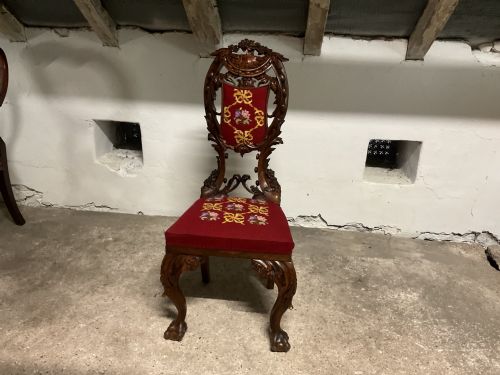
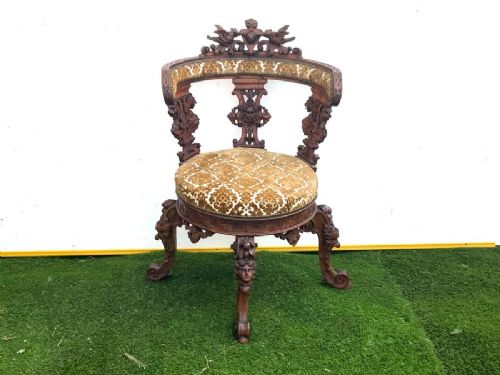
Frames rely on sturdy timbers such as mahogany, walnut, beech, oak, and yew wood, often shaped with carved details or left with original paint and giltwood finishes. Joinery traditions dictate the stability of these frames, supporting various structural forms from cabriole legs to twisted rope legs.
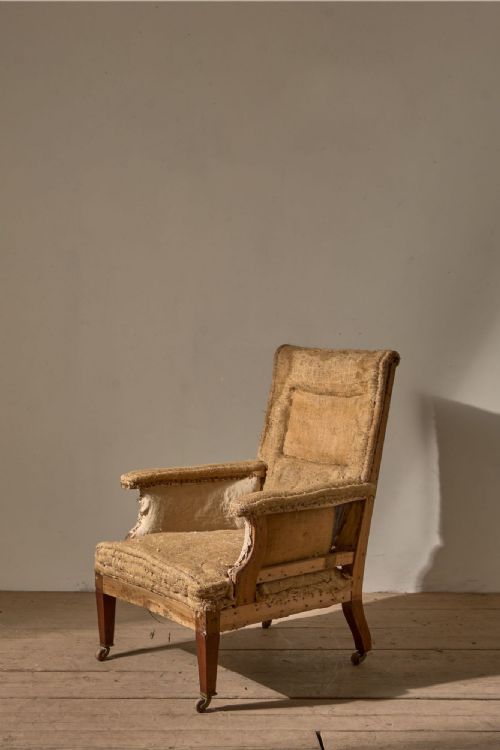
Upholstery techniques incorporate textile coverings, velvet, silk, and needlework over padded seats and backs. Brass elements occasionally accent the timber framework, while exposed show frames define the profile of open armchairs and tub chairs.
Periods represented cover the eighteenth century, Georgian era, nineteenth century, Victorian era, and early twentieth century.
Assessing the craftsmanship
Quality rests upon the crispness of timber carving, the integrity of the wood grain in walnut or mahogany frames, and the execution of period specific styling such as Rococo revival or Chippendale details. Superior examples maintain balanced proportions and robust joinery across the arms and legs.
The standard of upholstery and the preservation of original show frames, paint, or gilding contribute significantly to an individual piece's character. Restored elements blend with authentic timber structures to determine the overall finish.
Thomas Chippendale·Jacob Desmalter·Hille
The Padded Accent Chair Glossary
- Fauteuil
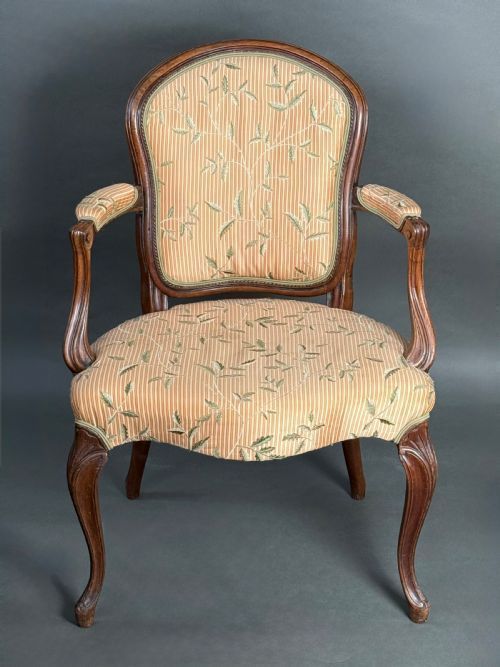
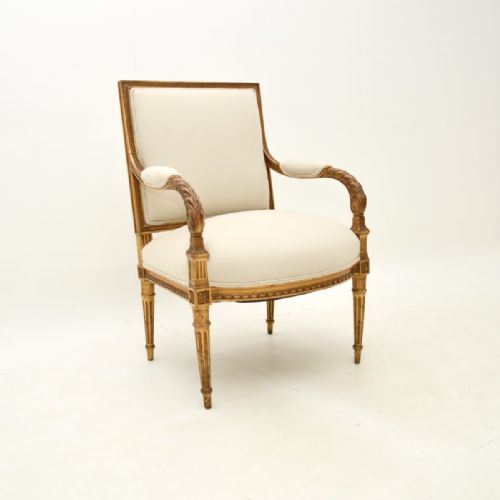
- An open-framed armchair originating in France, typically featuring exposed wood and upholstered armrests. These chairs embody classical styles from Louis XV and Louis XVI periods.
- Gainsborough
- A wide, upholstered armchair with open padded arms, designed during the eighteenth century for libraries and writing desks. They frequently stand on cabriole or straight legs.
- Bergere
- An enclosed upholstered armchair with wooden frames and stuffed back and sides, often featuring cane work panels. They provide deep seating comfort associated with eighteenth and nineteenth-century rooms.
- Cabriole leg
- A furniture leg that curves outward and then tapers inward, mimicking an animal's leg. This design appears frequently on eighteenth-century walnut and mahogany seating.
Padded Accent Chair: Frequently Asked Questions
How do I identify a Georgian armchair?
Look for characteristic timbers like mahogany and walnut, alongside specific design motifs such as cabriole legs or carved splats. Proportions tend to favour sturdy comfort suited to parlours and libraries.
Construction methods typically involve traditional joinery without modern metal fasteners. Examining the underside and frame joints reveals the hand-worked nature of eighteenth-century carpentry.
What is the difference between a fauteuil and a standard armchair?
A fauteuil is an open-arm armchair of French origin with exposed wooden framing around the upholstered sections. English armchairs often feature fully padded arms or different structural proportions.
French pieces like fauteuils emphasise carved giltwood or polished walnut show frames. They reflect distinct continental aesthetic movements from the Rococo and neoclassical periods.
How should I care for antique upholstered seating?
Protect delicate textiles, silk, and velvet covers from direct sunlight to prevent fading. Regular gentle dusting preserves the integrity of the fabric and the underlying padding.
Condition the exposed wooden frames with appropriate furniture wax rather than harsh polishes. Inspect the joints periodically to ensure the historical timber remains stable.
Are these chairs suitable for daily use?
Many period armchairs and side chairs remain structurally robust for regular seating when supported by sound timber frames. Checking the joinery ensures the piece handles everyday domestic demands.
Upholstery condition dictates seating comfort, and professional reupholstery can refresh worn padding while retaining the antique frame. Selecting sturdy woods like mahogany or oak ensures longevity.