



Grey Tub Chair
A grey tub chair offers a deep, curved embrace that brings together nineteenth-century seating and twentieth-century lounge comfort.
Grey Tub Chair
A grey tub chair is a rounded armchair designed to enclose the sitter, appearing across periods from the nineteenth century through the 1930s. The form spans English buttonback lounge pieces, large English armchairs, and French painted designs.
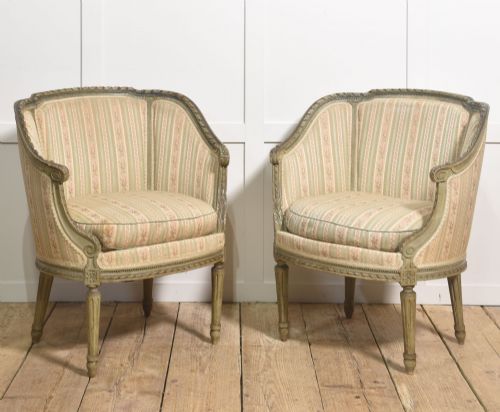
Buyers will most frequently meet early twentieth-century French styles, particularly Louis XV revival painted cane armchairs alongside Art Deco club chairs and Lloyd Loom pieces. These pieces function as standalone armchairs or as part of larger lounge suites including sofas.
The style ranges from Victorian mahogany and taupe upholstered examples to French neoclassical forms and robust beech frames. Each version relies on the signature curved backrest that defines the tub silhouette.
How they were made
Construction relies on timber frames built from beech, mahogany, and general wood, paired with woven materials like cane and kraft paper. Makers shaped these materials into sturdy armchairs and lounge suites designed for daily sitting.
Upholstery techniques involve velvet and fabric coverings, often finished with buttonback detailing or structured over steel wire frameworks. Paint finishes frequently decorate the wooden frames of French models, while Lloyd Loom utilises twisted kraft paper over wire.
Grey Tub Chair Retail Price Guide 2026
Typical asking prices for grey tub chair among the pieces listed under this phrase on Sellingantiques today, from the lower quarter to the upper quarter. They describe what is for sale here now, not the wider market.
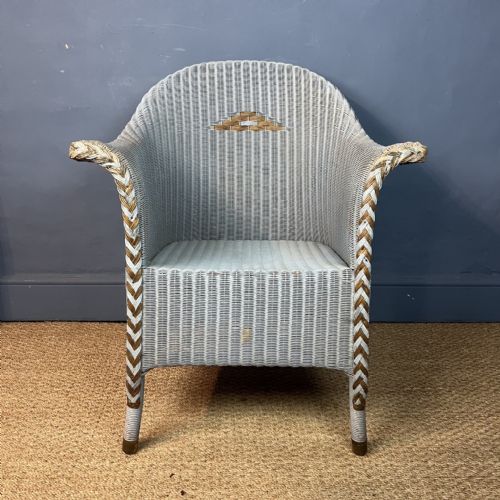
Lloyd Loom chairs weave humble kraft paper over steel wire to create surprisingly resilient lounge seats.
What varies in quality
Quality rests in the precision of the carved or painted wooden frames, where crisp Louis XV style details and solid beech or mahogany construction distinguish finer examples. The integration of materials, such as tight cane weaving and substantial frame joinery, marks the difference between standard production and superior workshop output.
Proportion and upholstery execution dictate the visual weight of the chair, with well-balanced buttonback padding and choice velvet or fabric elevating the piece. Historical provenance, as seen in pieces linked to notable makers or notable country houses, further separates standard seating from distinguished collector items.
Holland and Sons·Lloyd Loom
The Grey Tub Chair Glossary
- Tub chair
- An armchair with a continuous curved back and arms forming a single rounded enclosure. This shape provides enclosed seating comfort.
- Cane
- Woven material made from rattan peel used for chair backs and seats. It offers a light, patterned texture to wooden frames.
- Buttonback
- Upholstery style featuring deep-set buttons arranged in a grid pattern across the inner backrest. This technique secures the padding while creating a tufted surface.
- Art Deco
- Design style dominant in the 1920s and 1930s favouring streamlined forms and modern materials. It produced club armchairs in burr birch and similar woods.
Grey Tub Chair: Frequently Asked Questions
What is a tub chair?
A tub chair is an upholstered armchair featuring a low, rounded back that curves seamlessly into the arms. The shape resembles an open barrel or tub.
This design envelops the sitter, offering a supportive and cosy seat that works well in studies, bedrooms, and drawing rooms.
How do I date a grey tub chair?
Dating relies on stylistic clues, materials, and construction methods. Victorian examples show heavier mahogany frames and buttonback upholstery.
Early twentieth-century pieces often display French Louis XV revival painted woodwork or Art Deco burr birch veneers. Lloyd Loom items introduce twisted paper fibre over steel wire from the 1930s onwards.
Where should I place one?
These chairs suit corners, reading nooks, or paired arrangements opposite a sofa. Their curved profiles allow them to sit comfortably away from walls.
In larger rooms, they anchor seating groups when matched with settees from the same period.
Are painted frames original?
Many French styles from the early twentieth century feature original paintwork applied to beech or fruitwood frames. These finishes often show subtle ageing and wear consistent with their age.
Examining the layers beneath helps determine whether the paint dates to the initial manufacture or represents a later decoration.