





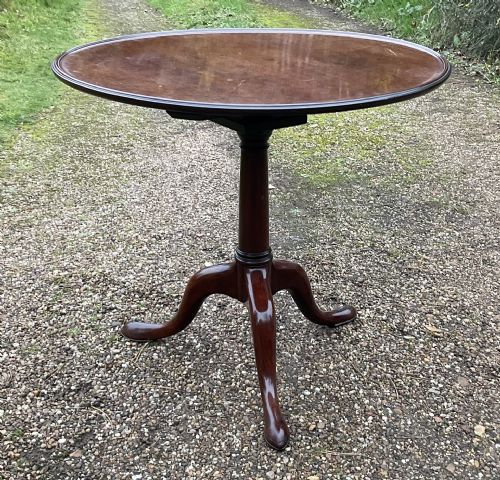
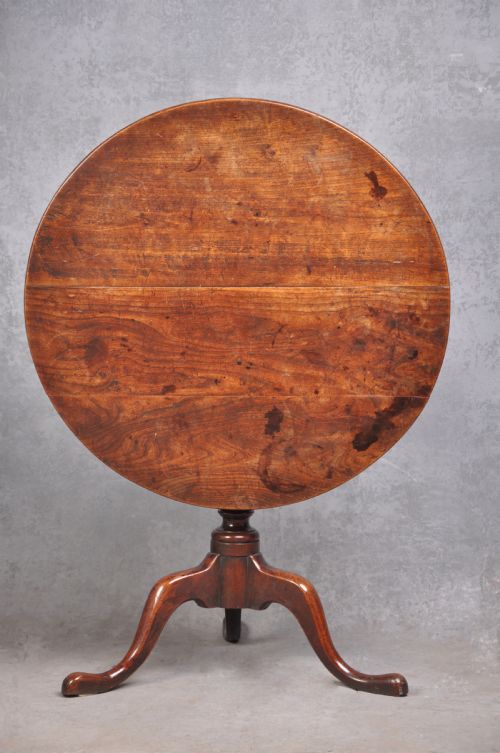

Pad Foot Tripod Table
A pad foot tripod table is a sturdy, compact surface supported by three legs, ideal for keeping a drink or lamp close at hand.
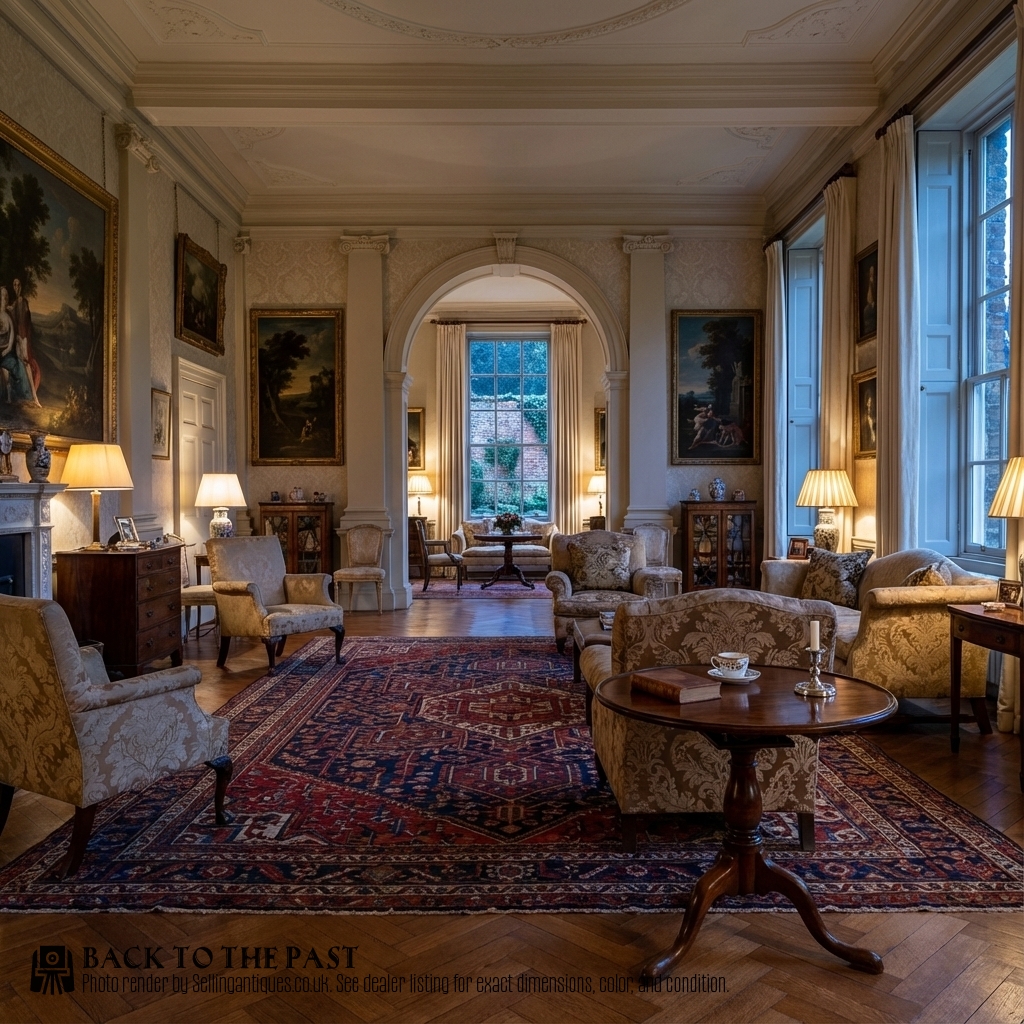
Pad Foot Tripod Table
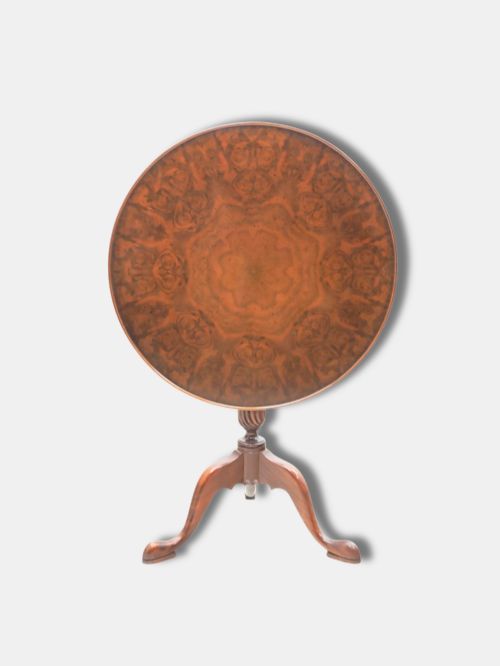
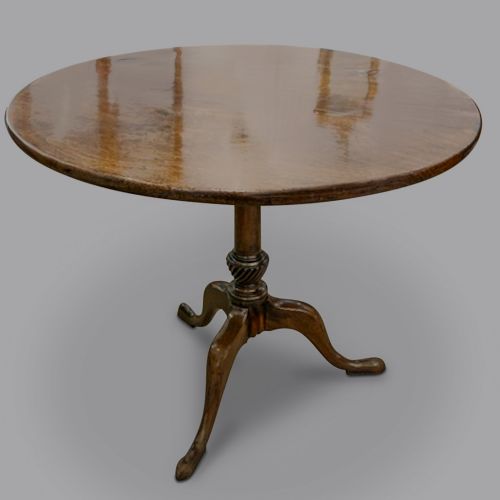
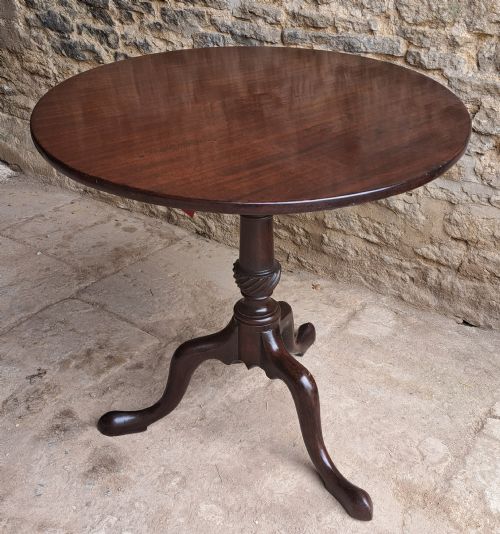
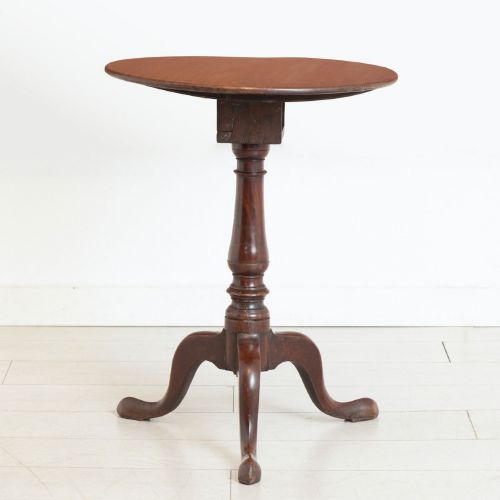
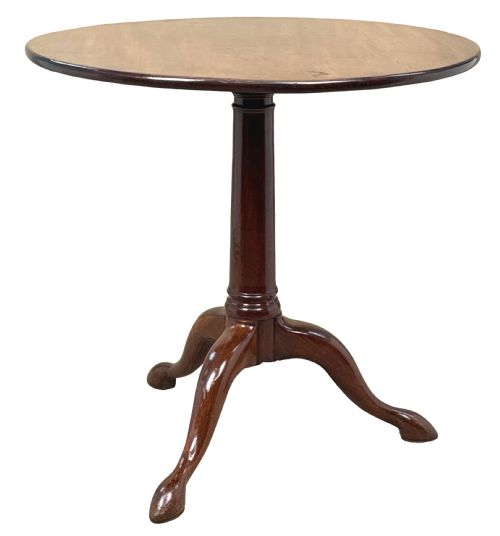
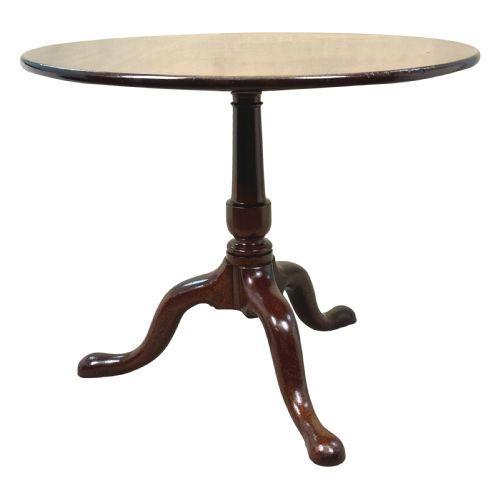
A pad foot tripod table brings together a circular top, a central pillar, and three spreading legs terminating in simple rounded pads. When you search for a pad foot tripod table, you are looking at items designed primarily as occasional, side, or supper tables.
The versions most commonly met on this page date from the Georgian period through to the early twentieth century, spanning styles from George II to Georgian Revival. These tables served practical functions in domestic spaces, often featuring tilting mechanisms or birdcage actions to save space when not in use.
Materials and Construction
Cabinet makers utilised a range of timbers including mahogany, walnut, fruitwood, oak, elm, and cherrywood to construct these tables. Solid cuts sat alongside burr walnut veneer, while brass components appeared in certain fittings and catches.
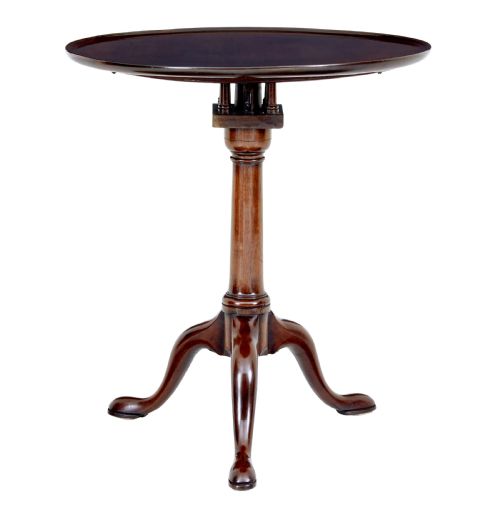
Turned central pillars connect firmly to three shaped legs, often joined by clever pivoting mechanisms such as birdcage frames that allow the top to rotate and tilt vertically.
Pad Foot Tripod Table Retail Price Guide 2026
Typical asking prices for pad foot tripod table among the pieces listed under this phrase on Sellingantiques today, from the lower quarter to the upper quarter. They describe what is for sale here now, not the wider market.
Some tables double as cricket tables, proving that even eighteenth-century furniture occasionally needed to multitask.
Judging Quality in Tripod Tables
Quality rests upon the selection of timber, such as deeply figured mahogany or richly patinated fruitwood, and the crispness of the turning on the central pillar. Proportion between the top and the base dictates the visual balance of the piece.
Finer examples display careful joinery at the leg junctions and precise movement within the tilt-top or birdcage mechanism, showing the maker's hand in every fitted joint.
The Pad Foot Tripod Table Glossary
- Pad foot
- A simple rounded foot at the base of a cabriole or straight leg. It rests flat on the floor without complicated carving.
- Tilt top
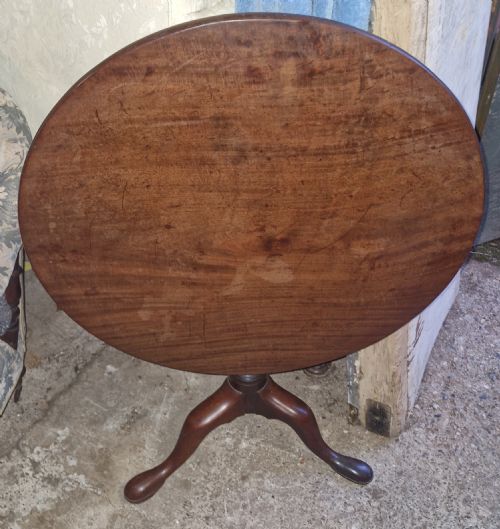
- A tabletop mounted on a catch that allows the surface to swivel upright. This enables the table to be stored flat against a wall.
- Birdcage
- A wooden framework beneath the top that allows the surface to both rotate and tilt. It sits between the pillar and the tabletop.
- Dish top
- A solid timber top with a raised rim carved directly from the edge. This feature prevents items from rolling off the surface.
- Tripod base
- A support structure formed of three legs radiating from a central column. It provides stability on uneven floors.
Pad Foot Tripod Table: Frequently Asked Questions
What were pad foot tripod tables used for?
These tables served flexible roles in Georgian and later interiors, acting as wine tables, supper tables, or small lamp stands.
Because they could be easily moved or tilted upright against a wall, occupants shifted them about the room as daily needs demanded.
How do I tell an 18th century table from a later revival?
Eighteenth-century examples show hand-tooled surfaces, traditional timber shrinkage, and construction marks appropriate to period hand tools.
Later Georgian Revival pieces from the twentieth century often display more uniform machine working and different timber densities.
Why do some tables have tilting tops?
A tilting top allows the table to take up minimal space when pushed against a parlor or dining room wall.
The birdcage or block mechanism underneath facilitates this movement while maintaining stability when locked horizontally.
Which woods are most common?
Mahogany appears frequently across Georgian examples, alongside regional timbers like oak, elm, fruitwood, and cherry.
Walnut and burr walnut veneer also feature in specific periods, complemented occasionally by brass hardware.