

Overmantel Mirror with Cresting
An overmantel mirror with cresting sits above a fireplace, anchoring a room with carved detail and gilt presence.
Overmantel Mirror with Cresting
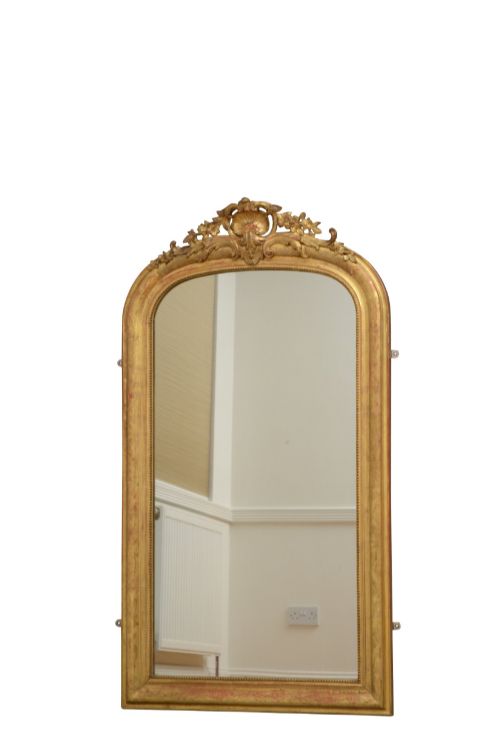
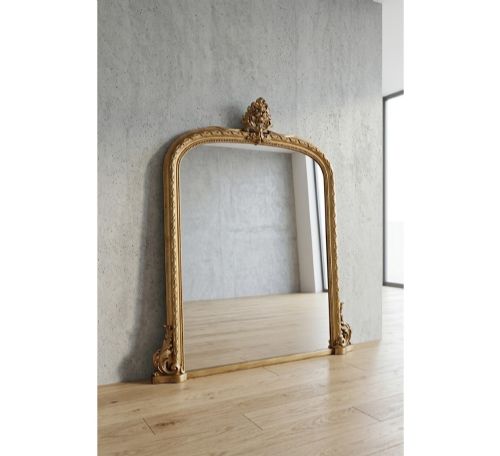
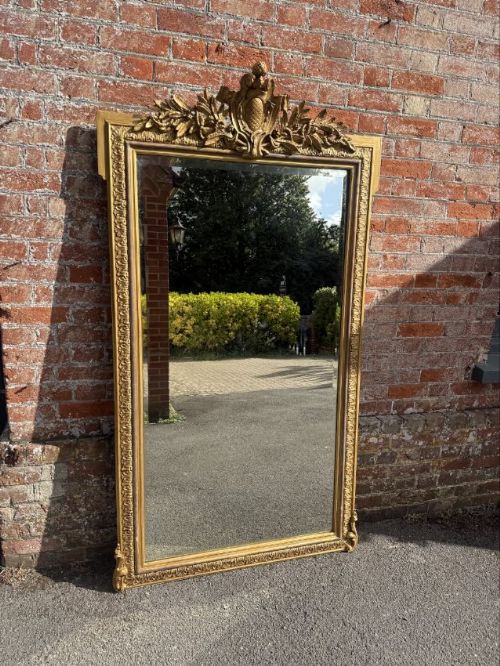
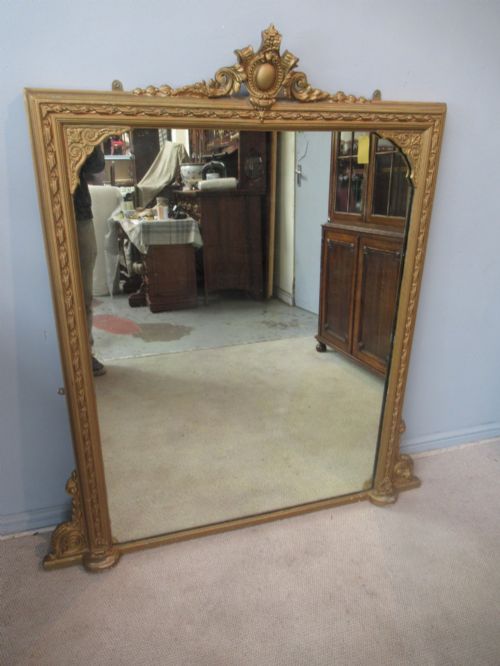
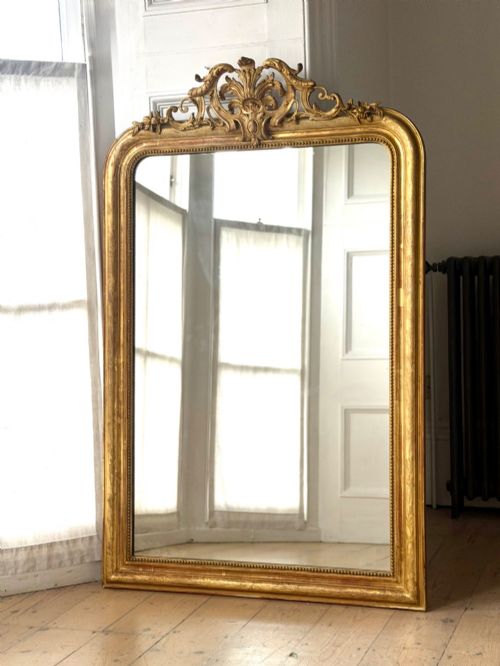
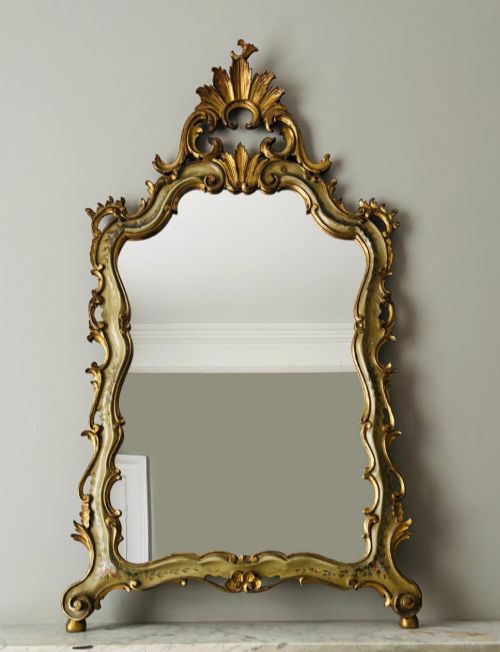
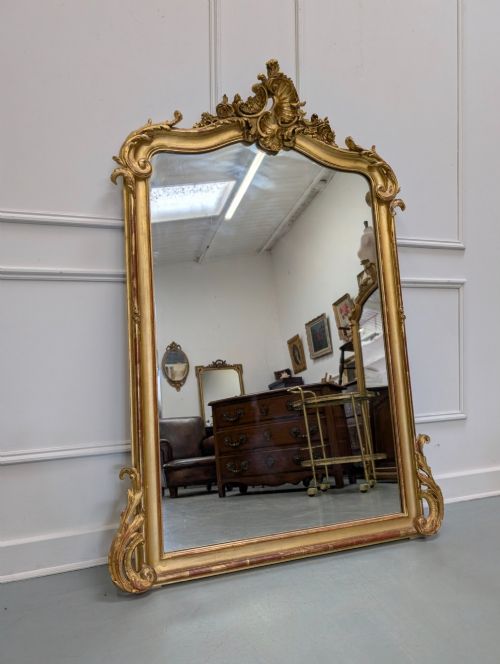
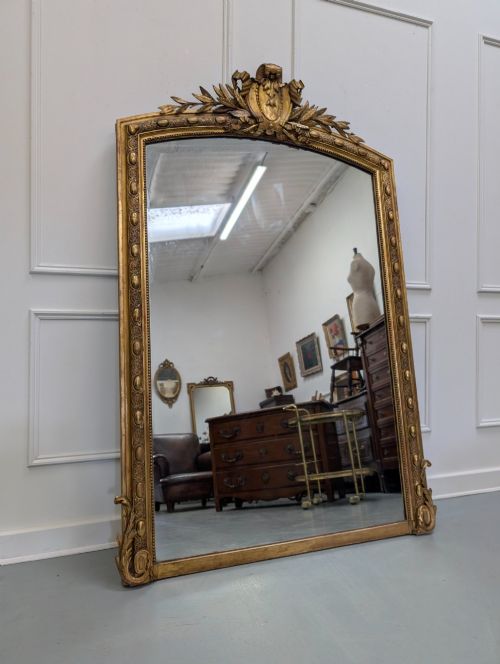
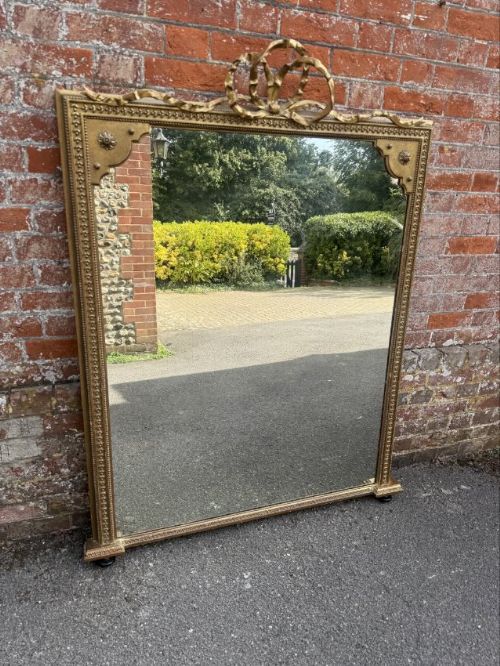
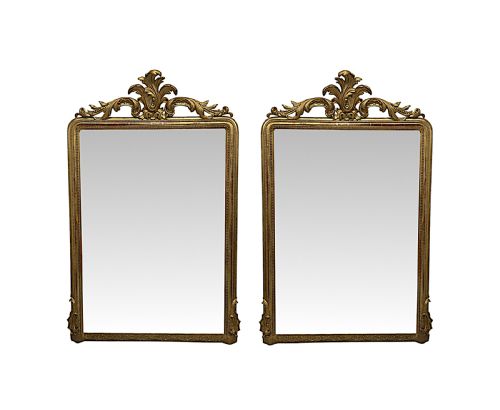
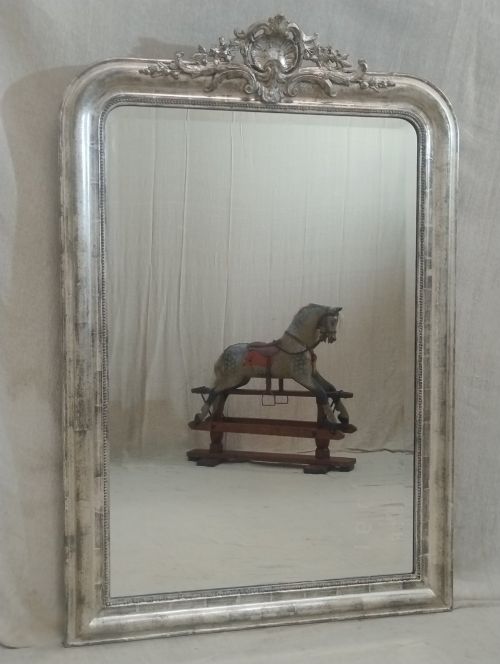
An overmantel mirror with cresting is a large wall-hanging looking glass designed specifically to sit upon the mantelpiece ledge of a hearth. The versions you meet most frequently on this page belong to the nineteenth century, including Victorian, Regency, and Georgian eras, often finished in bright giltwood or gesso.
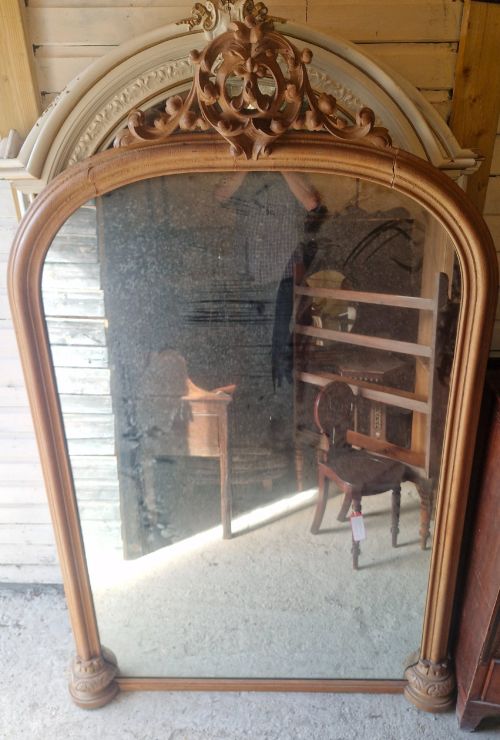
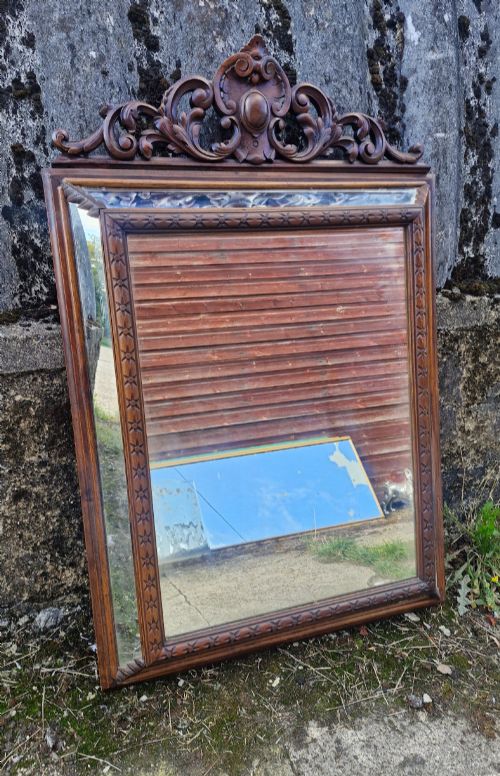
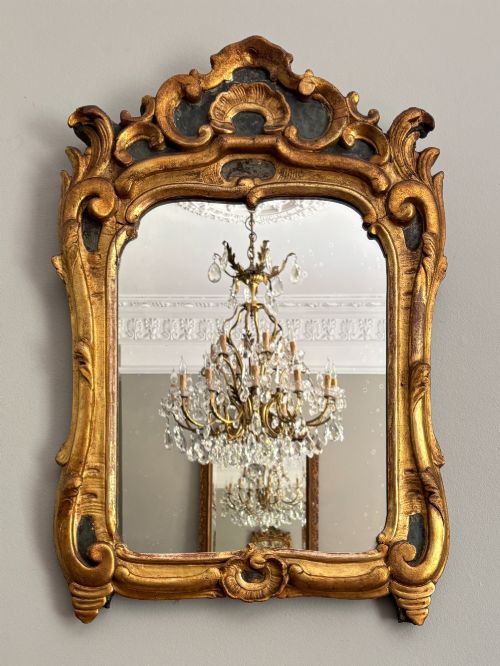
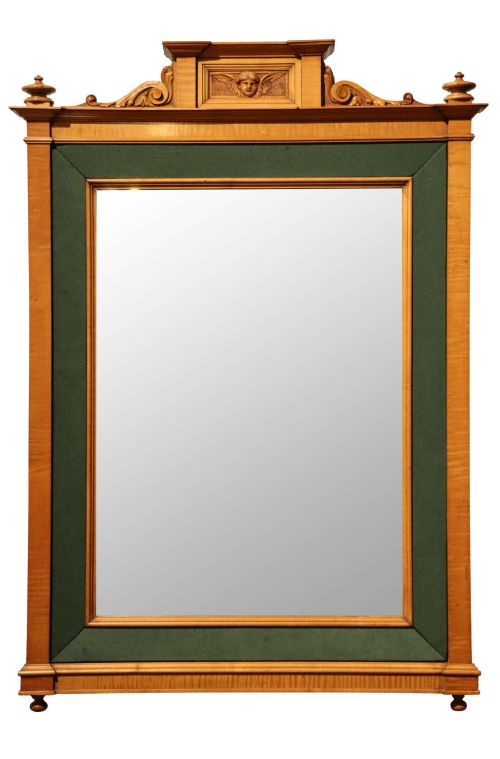
These pieces showcase distinct decorative focal points at their topmost edge, known as the cresting. Examples range from carved Ho-ho birds and central cartouches to ribbon ties, putto figures, and lion heads, defining the architectural character of the frame above the glass.
Materials and construction methods
Makers built these frames using timber such as mahogany, painted wood, or ebonised bases, heavily ornamented with moulded gesso to receive layers of gold leaf or paint. Gilt bronze also appears on select continental items, bringing a heavier metallic finish to the frame structure.
The decorative cresting and surface motifs were carved directly into the wood or built up in gesso relief before gilding. Silvered mirror glass, often in triptych formats or arched top plates, was then secured into the rebate behind the decorated wooden frame.
Judging the quality of the finish
Quality rests in the crispness of the carved or moulded cresting and the depth of the gilding. Deeply modelled details on items featuring Ho-ho birds, cartouches, or putto figures show superior artisan skill compared to softer, flatter pressings.
The integration between the primary frame and the applied ornament dictates visual harmony. Superior examples maintain intact gold leaf and coherent proportions across wide archtop or rectangular formats without clumsy joins in the timber.
The Overmantel Mirror with Cresting Glossary
- Cresting
- The decorative carving or ornamentation mounted at the very top of a mirror frame. It provides a striking silhouette against the wall above the glass plate.
- Gesso
- A plaster-like mixture applied to wood frames to create a smooth surface for gilding or painting. It holds fine relief details for motifs like shells and leaves.
- Cartouche
- An ornamental tablet or oval frame design placed centrally on the cresting. It often bears scrollwork or central engraving.
- Triptych
- A mirror divided into three distinct vertical sections or glass panels within a single frame. This layout is typical of large nineteenth-century overmantel pieces.
Overmantel Mirror with Cresting: Frequently Asked Questions
Where should I hang an overmantel mirror?
These mirrors traditionally sit directly on the mantel shelf above a fireplace, reflecting light and the room around them. They also function well on plain walls as principal focal points in principal rooms.
Ensure the wall fixings or the mantel support can bear the substantial weight of large giltwood and gesso frames safely.
How do I date a giltwood mirror?
Dating relies on the underlying wood, the style of the gesso ornaments, and the character of the mirror plate. Georgian pieces often display specific bird crests and lighter frames, while Victorian and Regency examples introduce distinct revival styles.
Examine the construction joints at the back of the frame to understand the period of manufacture.
What is a Ho-ho bird cresting?
A Ho-ho bird is a mythical Chinese phoenix figure adopted by eighteenth and nineteenth-century designers during periods of revivalism. It appears perched atop the mirror frame with elaborate tail feathers.
This motif is characteristic of Chippendale revival and Regency pieces in giltwood or gesso.
How do I clean a gilt mirror?
Dust the carved cresting and frame gently with a soft, dry brush to protect fragile gold leaf and gesso. Avoid liquid cleaners or chemical polishes that can strip historical surfaces.
Clean the glass plate using a minimal amount of glass cleaner applied to a cloth rather than sprayed directly onto the mirror.