

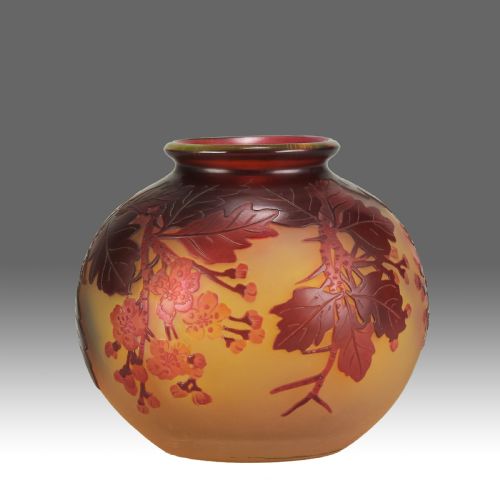
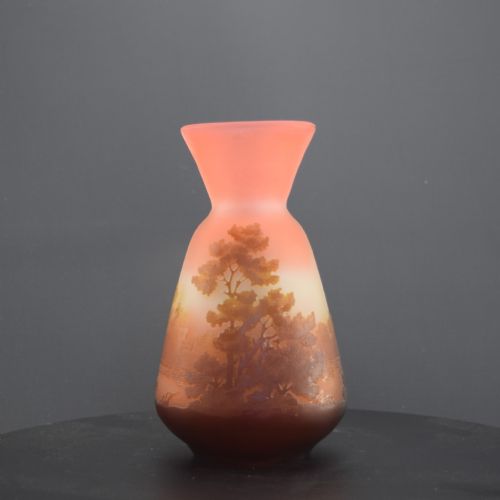


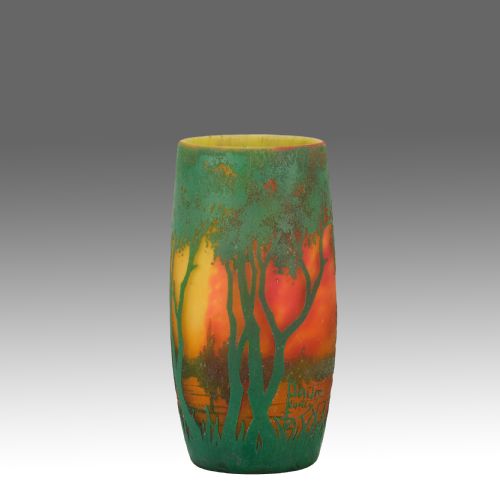
Overlaid Etched Glass Vase
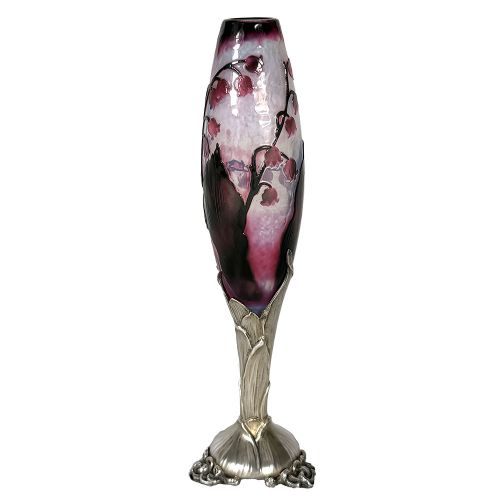
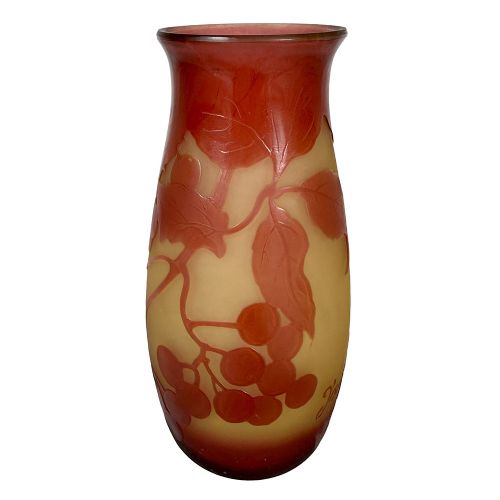
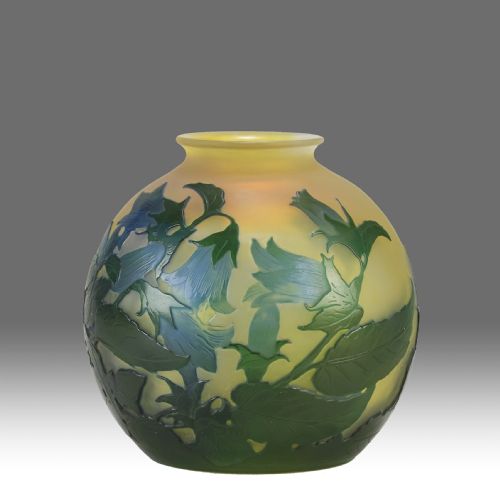
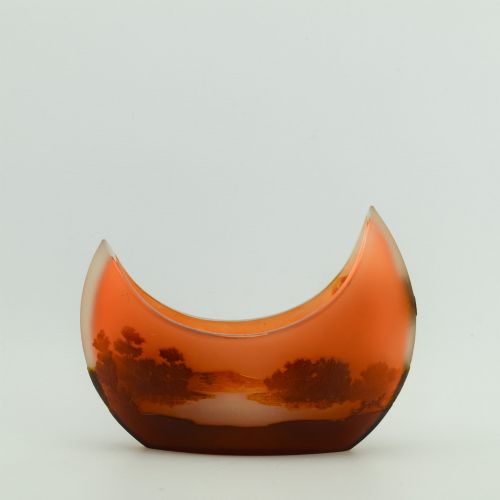
An overlaid etched glass vase brings rich colour and botanical relief into a room, capturing the finest decorative work of the early twentieth century.
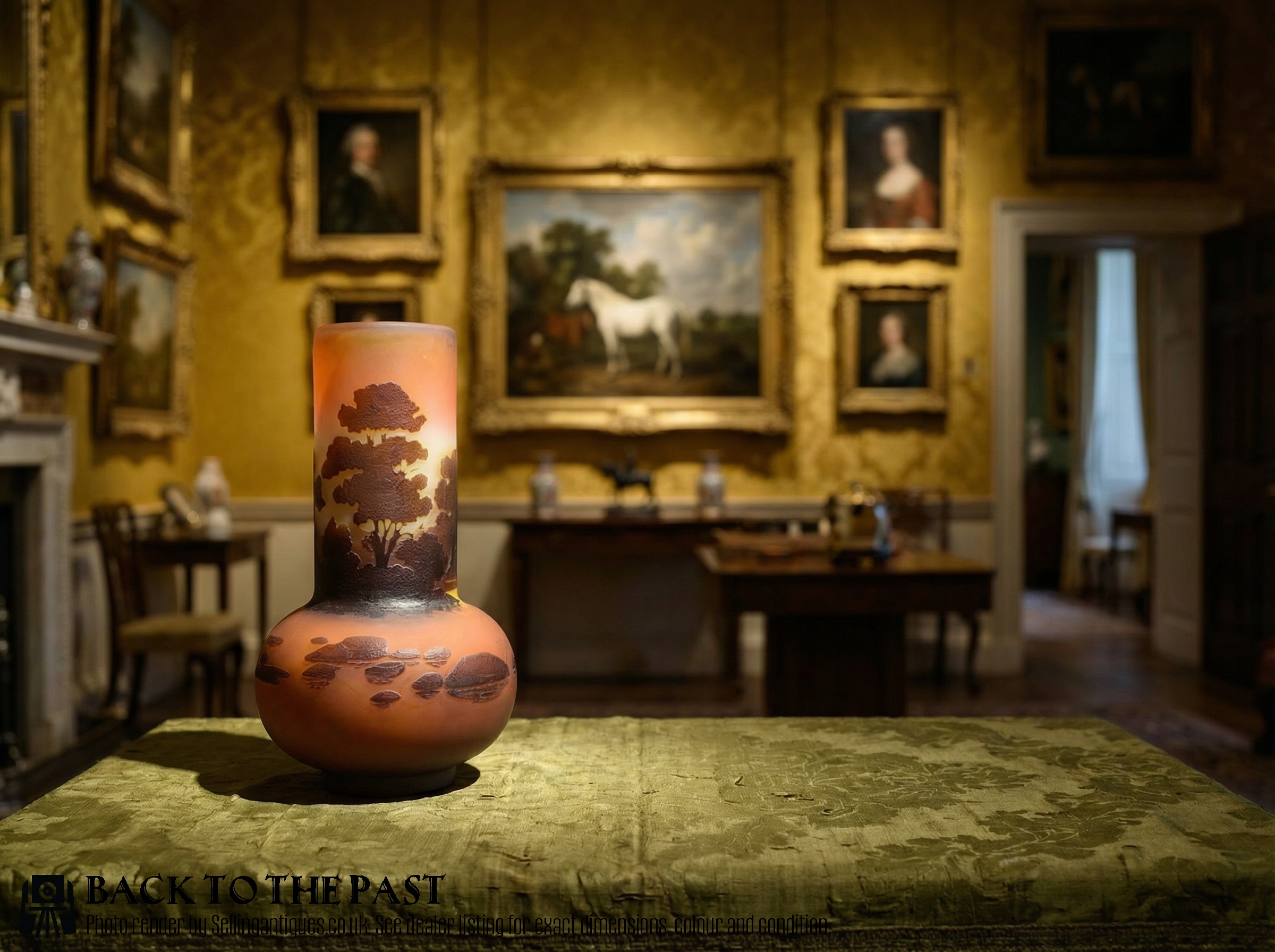
Overlaid Etched Glass Vase
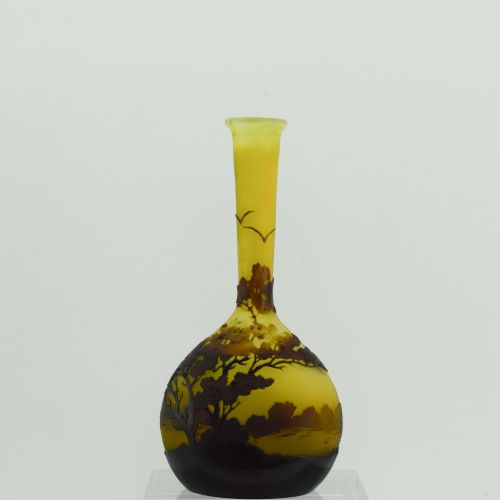
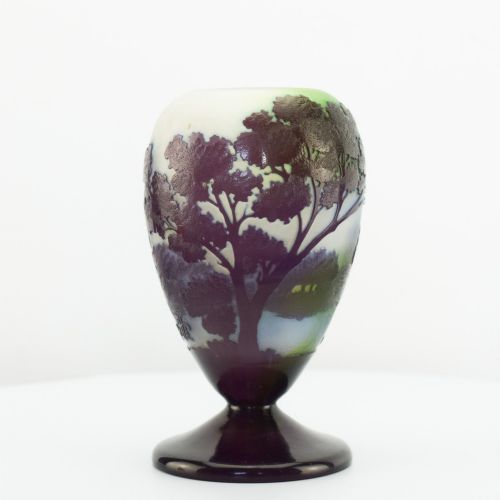
An overlaid etched glass vase is a decorative vessel featuring multiple layers of glass carved or bitten back by acid to reveal contrasting background colours. These pieces sit firmly within the Art Nouveau and Art Deco movements, dominated by French production from the late Victorian period through the nineteen-twenties.
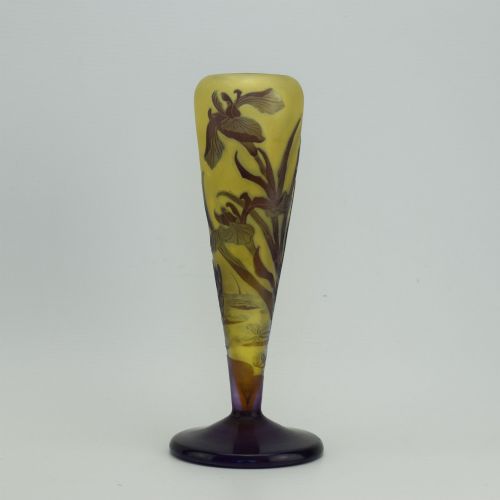
The most common examples encountered on this page are botanical and landscape vessels by Emile Gallé, alongside select works by Daum Frères, Baccarat, Thomas Webb and Sons, and Paul Nicholas for D'Argental. Forms range from crescent and banjo shapes to tall floral and aquatic vessels.
Buyers seek these objects for their sculptural depth and the way light interacts with the layered surfaces. The motifs lean heavily towards natural subjects such as cornflowers, poppies, irises, apple blossoms, and wooded landscapes.
What varies in quality
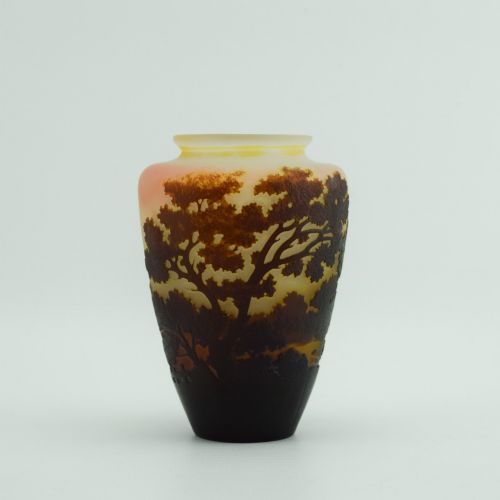
Quality rests primarily in the ambition of the design and the precision of the acid work. Finer vessels display crisp transitions between colour layers and intricate detailing in natural motifs like oak leaves, ferns, and sunset skies.
The weight of the glass, the balance of the silhouette, and the subtlety of the colour palette separate standard production from exceptional studio output. Pieces that integrate complex aquatic or wooded scenes demand a higher tier of craftsmanship.
Materials recorded across these vessels include cameo glass, acid-etched glass, frosted glass, and gold leaf highlights.
Emile Gallé·Daum Frères·Baccarat·Thomas Webb and Sons·Paul Nicholas for D'Argental
The Overlaid Etched Glass Vase Glossary
- Cameo glass
- A vessel formed of multiple fused glass layers carved or etched to create a raised design in relief. This technique provides the primary sculptural effect seen across these pieces.
- Acid-etched glass
- Glass treated with hydrofluoric acid to eat away exposed surfaces and form decorative patterns. It allowed makers to achieve fine gradations without manual wheel cutting alone.
- Frosted glass
- A matte surface finish produced by acid treatment or sandblasting to diffuse light softly. It frequently forms the background layer behind darker botanical overlays.
- Art Nouveau
- A decorative style characterised by flowing, organic lines inspired by natural forms between eighteen-ninety and nineteen-ten. Most floral and landscape vases on this page belong to this movement.
- Gold leaf
- Extremely thin beaten gold applied to portions of the glass surface for decorative enhancement. It catches light within the layered design.
Overlaid Etched Glass Vase: Frequently Asked Questions
What is an overlaid etched glass vase?
It is a vessel made from multiple layers of coloured glass that are carved or acid-etched to create a raised, two-tone design.
These objects rely on the contrast between the outer coloured layer and the background glass to reveal detailed botanical or landscape motifs.
How do I identify the period?
Periods are identified through stylistic cues such as Art Nouveau floral curves or Art Deco geometry, alongside maker signatures.
Most examples date from the late nineteenth century through the nineteen-twenties, reflecting the peak years of cameo glass production in France.
Where were these vases made?
The majority of pieces originated in France, particularly around Nancy through workshops like Gallé and Daum Frères.
English makers such as Thomas Webb and Sons also produced notable cameo glass vessels during the same era.
How should I display them?
Place these vases near natural light sources to allow the layered colours and etched details to illuminate properly.
Keep them away from direct sunlight or heavy foot traffic areas to protect the delicate glass surfaces.