
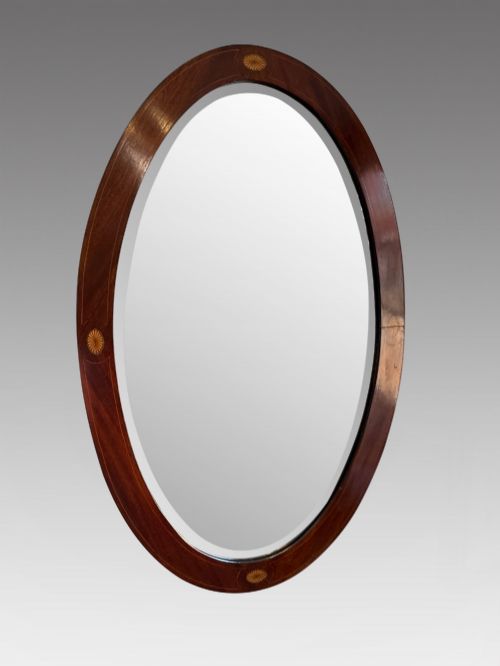
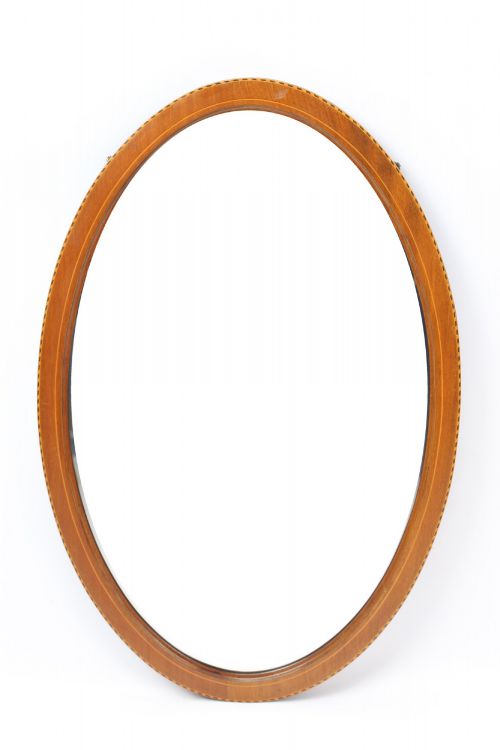
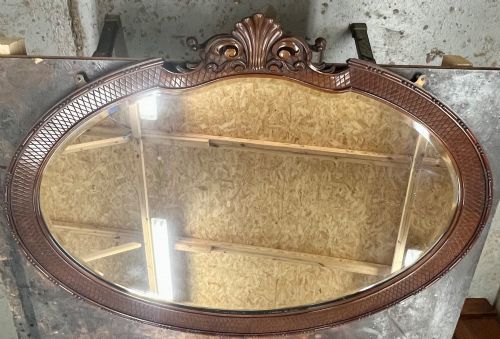
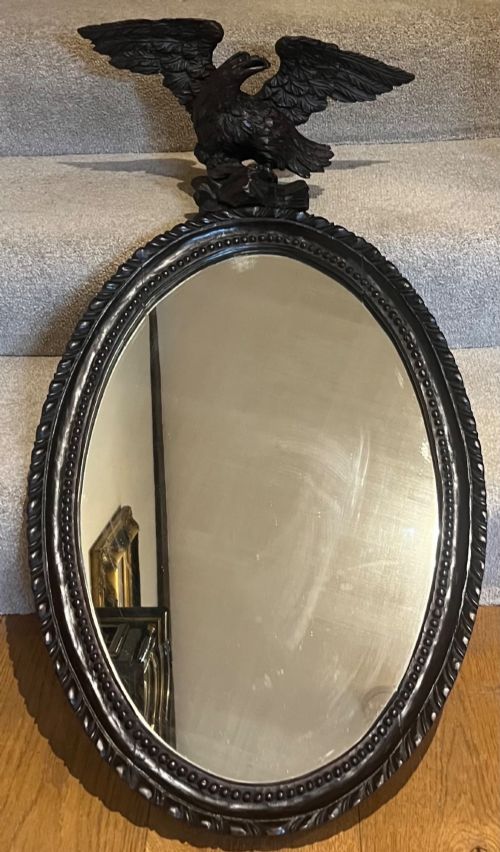


Oval Wooden Wall Mirror
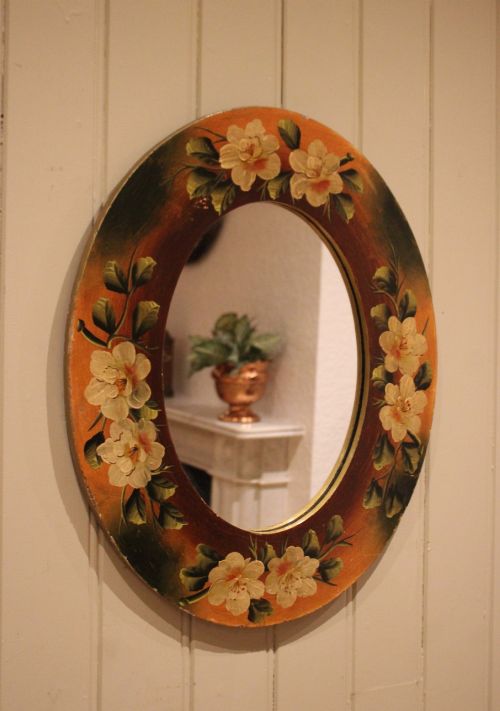
An oval wooden wall mirror brings warmth and a softer line to a room, catching the light in a way rectangular frames simply cannot manage.
Oval Wooden Wall Mirror
An oval wooden wall mirror is a staple of traditional interiors, combining functional glass with timber frames shaped in gentle curves. You will encounter pieces spanning from the eighteenth century through to the Edwardian period and later revivals.
Mahogany and oak dominate the timber selections, often augmented by giltwood, gesso, or painted finishes. These mirrors appear in various scales, from compact boudoir pieces to large overmantels designed for country houses.
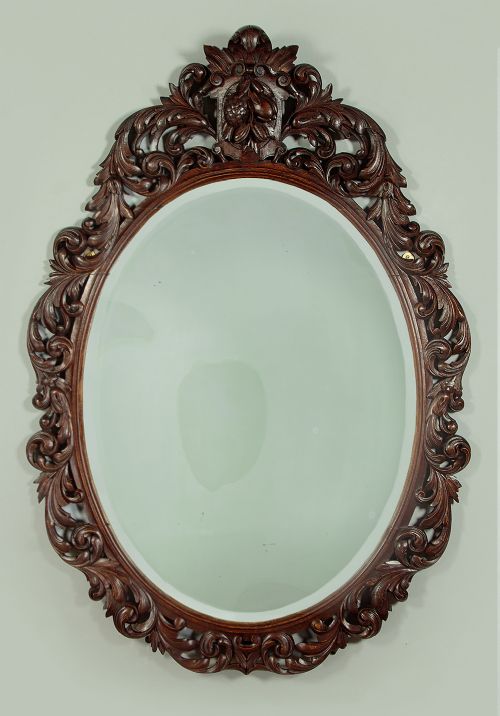
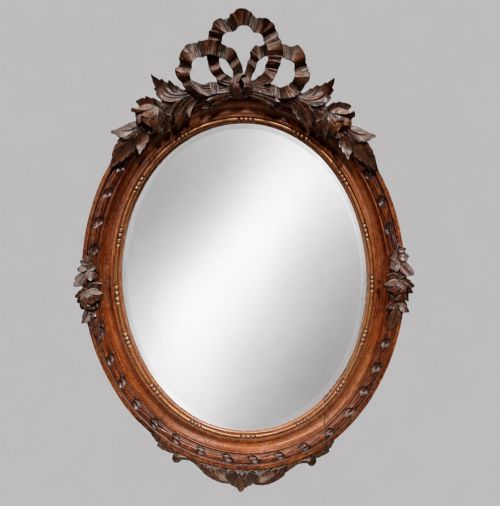
The form adapts to numerous design movements, showing influences from Neoclassical and Regency styles to French Rococo and Edwardian revivalism. The resulting selection ranges from austere Georgian frames to heavily carved nineteenth-century specimens.
Materials and construction
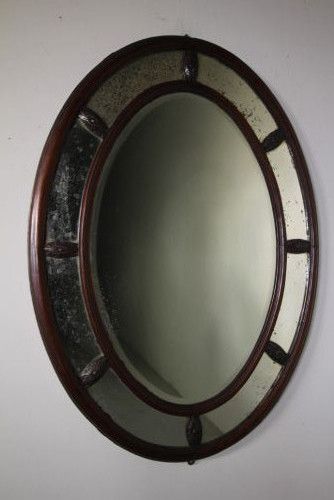
Makers utilised solid timbers such as mahogany and oak, frequently shaping them through steam or carving from single blocks. Frame construction often involved joined mitred corners or laminated wooden segments to achieve the sweeping oval curve.
Giltwood and gesso elements required layers of chalk preparation applied to a wooden base before gold leaf was laid. Carved details were executed by hand, utilising gouges and chisels on walnut, beech, and oak.
Mirror glass was bedded into the rebate of the wooden frame, secured with wooden slips or backing boards. Early plates often display hand-bevelling and minor silvering imperfections inherent to period manufacturing methods.
Listings feature oak and mahogany frames predominantly, spanning Georgian craftsmanship through to 1920s interpretations.
Judging quality in oval frames
The crispness of the hand-carved detail distinguishes superior examples from standard production pieces. Deep, undercut foliage and sharp moulding profiles demonstrate the hand of a skilled artisan rather than mechanical replication.
The choice of timber underpins the integrity of the piece, with select burr veneers, dense mahogany, and figured oak commanding greater attention. Original surface patination, free from aggressive over-cleaning, preserves the historical character of the wood.
Construction fidelity at the frame joints indicates workshop competence. Tight mitres and robust original wooden backing boards ensure the frame remains stable under the weight of the mirror glass.
The Oval Wooden Wall Mirror Glossary
- Giltwood
- Wood that has been coated with gold leaf over a prepared gesso base. This finish is typical of Neoclassical and Rococo revival frames.
- Overmantel mirror
- A large mirror designed specifically to hang above a fireplace mantelpiece. These often incorporate architectural or domed top elements.
- Gesso
- A plaster mixture applied to wood to create a smooth surface for gilding or painting. It accepts fine detail work before leaf application.
- Fretwork
- Thin wood sawn into intricate decorative patterns, frequently seen on eighteenth-century and revival mahogany frames.
- Bevelling
- The angled edge polished around the perimeter of the mirror glass. This catches light and indicates period manufacturing techniques.
Oval Wooden Wall Mirror: Frequently Asked Questions
How do I hang a heavy wooden mirror?
Ensure the wall fixings engage directly with structural studs or masonry using appropriate heavy-duty screws and wall plugs.
Verify that the hanging wire or integrated brackets on the wooden back are securely fastened to the frame itself.
Are these mirrors fitted with original glass?
Many retain their period glass, which can exhibit subtle distortions, small bubbles, or light foxing in the silvering.
Replacement glass is occasionally fitted during conservation to ensure safety and clarity for daily use.
How do I date an antique wooden frame?
Examine the timber species, construction joints, and backboards for clues consistent with known period manufacturing techniques.
Stylistic cues such as carving motifs and gilding methods further help place the piece within a specific century or revival era.
How should I clean a giltwood frame?
Dust the carved surfaces gently with a soft, dry brush to remove particles without disturbing delicate gesso or gold leaf.
Avoid commercial liquid polishes and water entirely, as moisture quickly damages historic water-gilt finishes.