
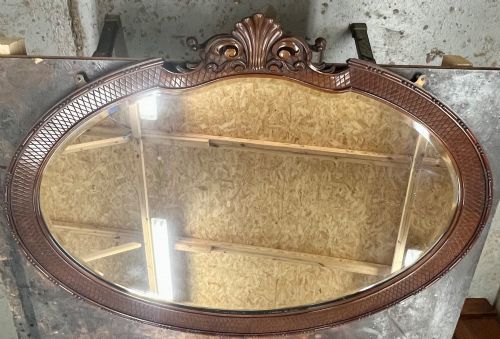
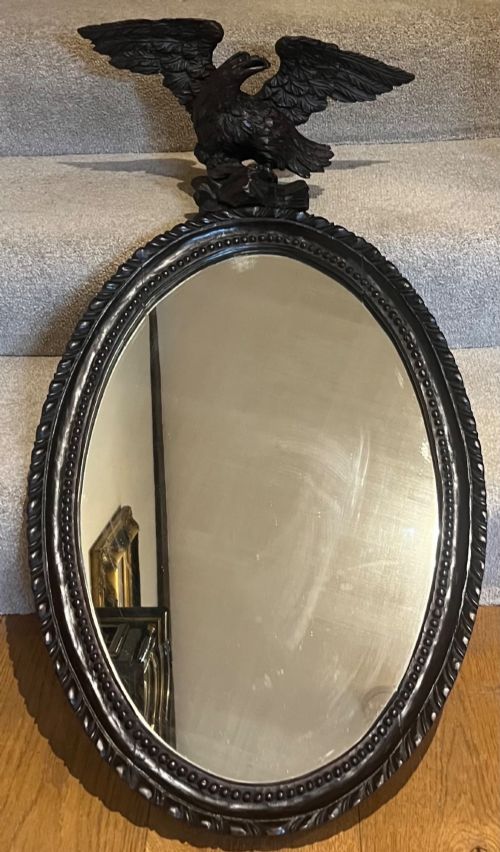


Oval Wooden Mirror
An oval wooden mirror brings softness to a room, trading rigid corners for flowing lines.
Oval Wooden Mirror
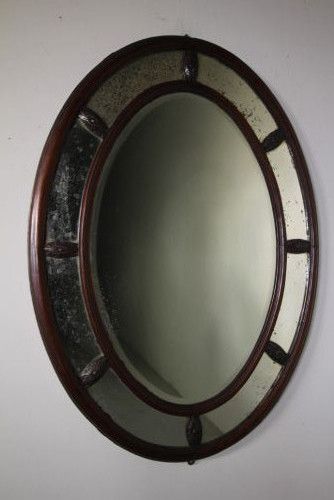
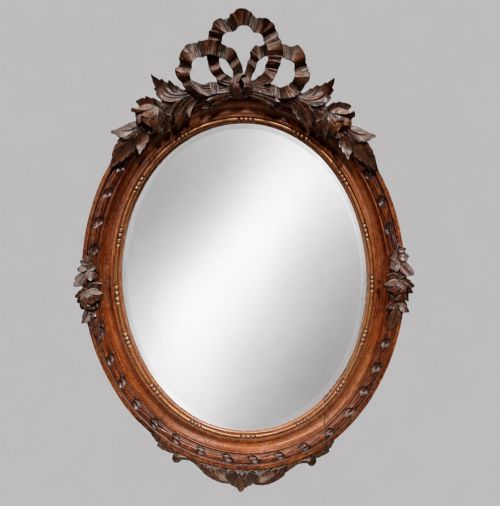
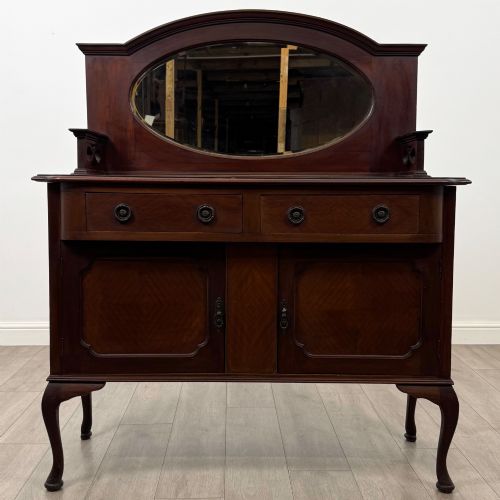
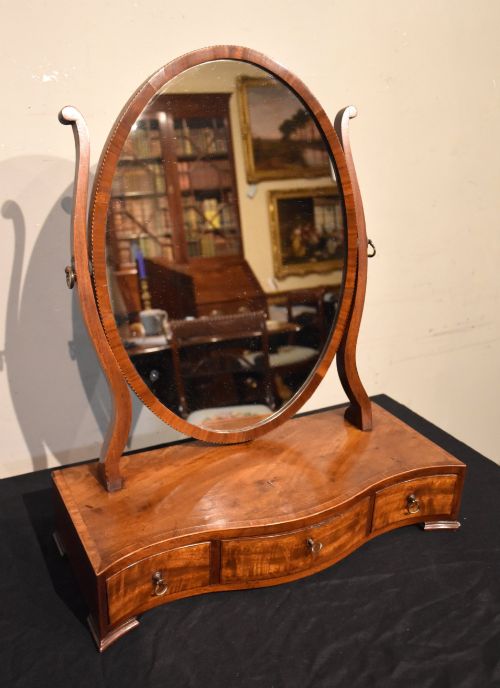
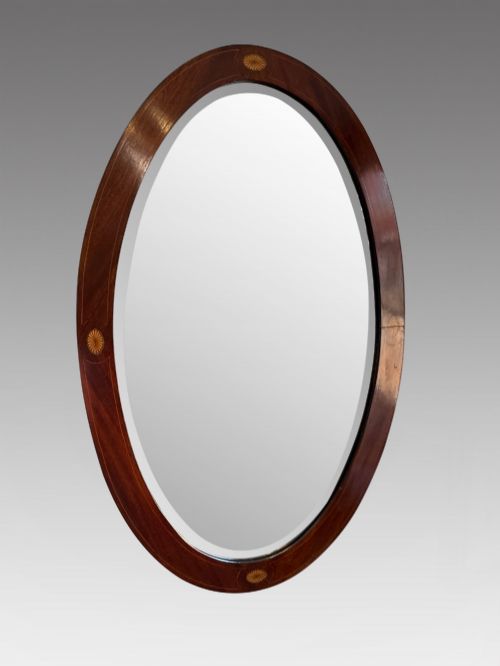
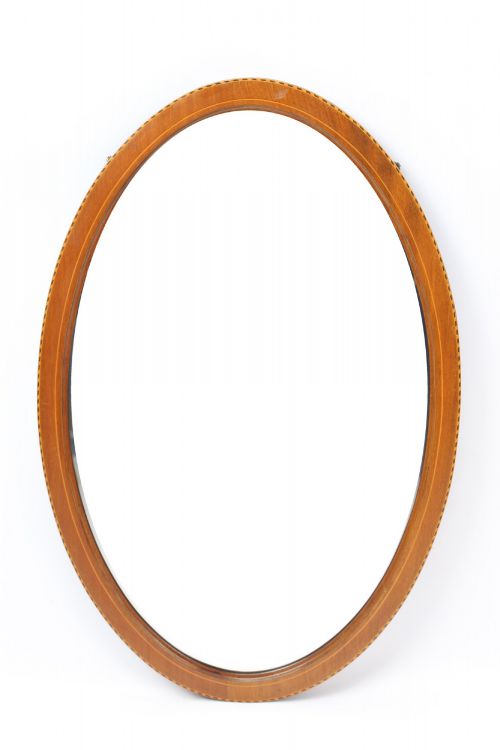
An oval wooden mirror takes many forms, appearing as a compact toilet glass for a dressing table or a grand country house wall hanging. When searching for an oval wooden mirror, buyers encounter everything from simple Edwardian oak frames to substantial mahogany pieces originating in the Georgian and nineteenth-century periods.
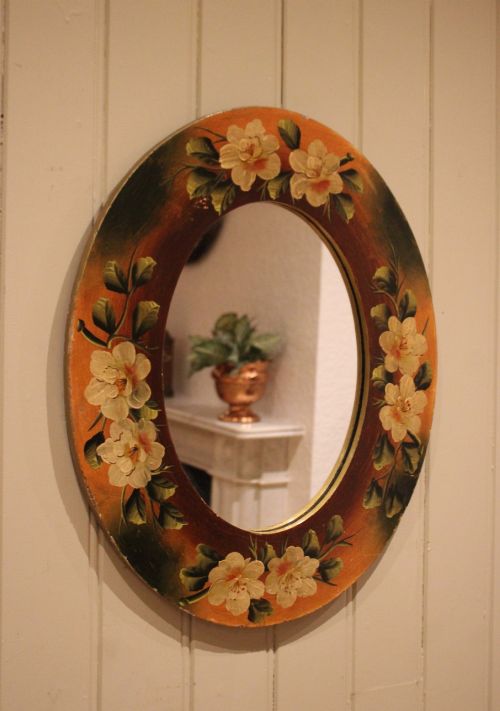
The selection ranges across distinct regional and stylistic variations, including Scottish mahogany fretwork designs and French floral painted examples. Wall-mounted versions dominate the offerings, though dressing mirrors with swing frames also appear frequently alongside larger overmantel pieces.
How they were made
Cabinet makers utilised native and imported timbers, shaping solid mahogany, oak, and beech into curved frames. Craftspeople often added decorative elements such as giltwood, gesso, or brass fittings to enhance the timber surfaces.
Joinery techniques varied from simple bentwood and framed construction to intricate hand-carving and inlay work. Silvered mirror glass was then secured within the wooden rebate, frequently supported by original wooden backing boards.
Listings feature woods including mahogany, oak, beech, burr yew, and satinwood alongside giltwood and brass.
What varies in quality
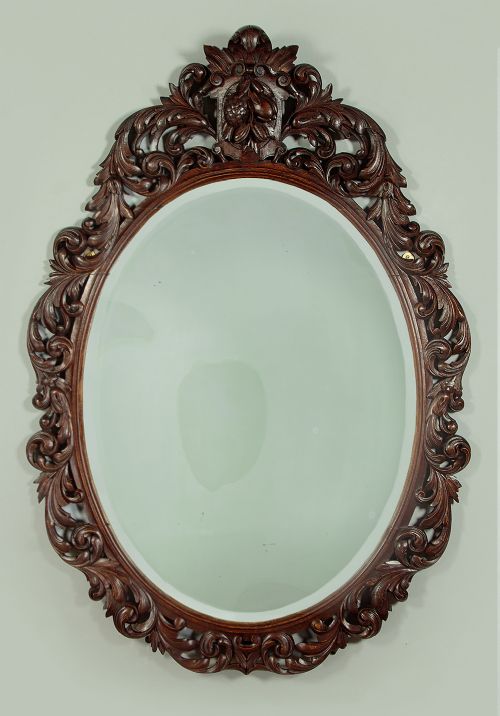
The standard of carving and timber selection determines the distinction between ordinary pieces and superior examples. Deeply undercut hand-carving in oak or mahogany displays a higher level of craftsmanship than mass-produced later framing.
Proportion and the integrity of the original mirror plate also govern overall merit. Untouched timber surfaces with deep patination hold more appeal than heavily restored or stripped frames.
The Oval Wooden Mirror Glossary
- Toilet mirror
- A small table mirror designed for a dressing chest, often featuring a swing frame supported by upright arms.
- Overmantel mirror
- A wide mirror intended to hang specifically above a fireplace mantelpiece.
- Fretwork
- Thin wood cut into decorative patterns using a fretsaw, common on eighteenth and nineteenth-century frames.
- Giltwood
- Timber that has been coated with a thin layer of gold leaf or gilt paint.
- Gesso
- A plaster-like mixture applied to wood as a base for gilding and detailed moulding.
Oval Wooden Mirror: Frequently Asked Questions
Where should I hang an oval mirror?
An oval mirror suits narrow wall spaces, hallways, or above a mantelpiece where its curved shape breaks the linearity of rectangular furniture.
Position it at eye level to reflect light and create a sense of depth in smaller rooms.
How do I date a wooden mirror?
Examine the timber species, the construction of the joints, and the backing boards to determine the period. Older frames often utilise hand-sawn boards and older secondary woods behind the glass.
Screw types and the clarity of the mirror plate also offer clues to the age of the piece.
Are dressing mirrors stable?
Dressing mirrors rely on sturdy side supports and a weighted base or frame to remain upright during use. Most swing freely between two vertical pillars.
Check that the pivot screws or wooden nuts tighten properly to hold the glass at the desired angle.
What is a toilet mirror used for?
A toilet mirror provides a close reflection for grooming and styling hair when placed upon a chest of drawers or dressing table. These portable pieces date back centuries.
Many incorporate small drawers at the base for storing trinkets or personal items.