



Brown Oval Frame Mirror
A brown oval frame mirror brings warmth and depth to a wall, combining rich timber tones with a classic curved silhouette.
Brown Oval Frame Mirror
A brown oval frame mirror is a wall-hanging glass looking-glass housed in timber, spanning periods from the nineteenth century into the 1920s. These pieces serve primarily as functional wall mirrors while acting as decorative focal points in hallways, bedrooms and living rooms.
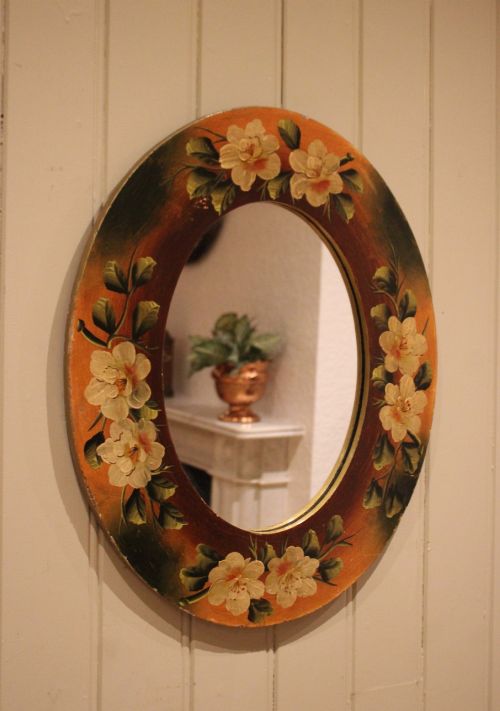
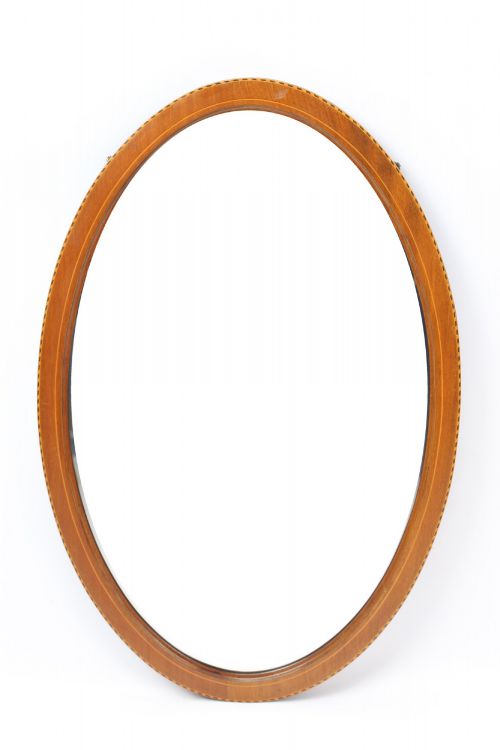
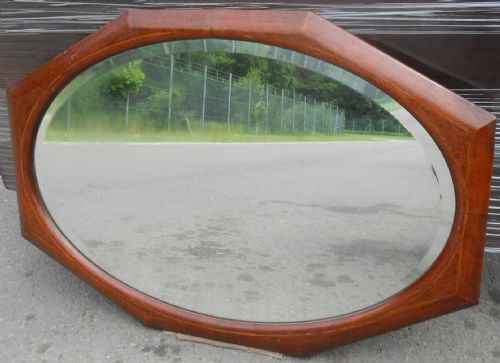
The versions most commonly met on this page include Edwardian mahogany frames, plain oak surrounds, and pieces featuring decorative wood inlay or painted floral motifs. Styles range from simple Edwardian and Victorian designs to more ornate French Country, Jacobean Revival, Victorian Gothic Revival, Black Forest, and Venetian interpretations.
Materials and construction
Frames are constructed predominantly from solid hardwoods such as mahogany and oak, often shaped into sweeping curves and secured as hanging wall mirrors. Some examples utilise wood inlay to add surface pattern, while others employ a simulated wood finish or paint.
The mirror glass itself is fitted securely within the timber surround, with certain pieces featuring bevelled edges that catch the light. Plaster is occasionally utilised in the decorative detailing of the frame construction.
Some nineteenth-century mirrors come with simulated wood finishes, proving that even past generations enjoyed a clever shortcut.
Distinguishing quality
The distinction between standard examples and finer pieces lies in the choice of timber and the precision of the frame's construction. Rich mahogany with well-executed wood inlay or crisp carving represents a higher grade of craftsmanship compared to plain or simulated wood finishes.
Detailing such as bevelled mirror glass and hand-painted floral accents elevate certain pieces above simpler utility mirrors. The integrity of the wooden frame and the depth of the timber grain determine the overall character of the piece.
The Brown Oval Frame Mirror Glossary
- Inlay
- A decorative technique where contrasting strips of wood are set into the surface of the primary timber to create patterns. Edwardian Sheraton Revival pieces often employ this method.
- Bevelled
- Glass with an angled edge cut and polished to a thinner width around the perimeter. This treatment refracts light and adds a decorative dimension to the mirror.
- Black Forest
- A style originating from a specific European region known for deeply carved wood ornamentation, often depicting natural motifs. These frames show intricate craftsmanship.
Brown Oval Frame Mirror: Frequently Asked Questions
Where should I hang an oval mirror?
An oval mirror suits narrow wall spaces, above mantelpieces, or in entryways where the curved shape softens hard architectural lines. Their vertical orientation works particularly well in bedrooms or above console tables.
Ensure the hanging wire and wall fixings match the weight of the timber frame, especially with larger nineteenth-century mahogany examples.
How do I identify an Edwardian mirror?
Edwardian mirrors often feature light mahogany timbers, subtle wood inlay, and refined proportions characteristic of the early twentieth century. They frequently reflect the Sheraton Revival style popular during the period.
Compare the backboards, fixings, and secondary woods to confirm the period construction methods of the era.
How do I care for a wood frame mirror?
Dust the timber frame regularly with a dry cloth and apply occasional appropriate wood wax to nourish the grain. Avoid excessive moisture on both the wood and the mirror glass.
Keep the mirror away from direct sunlight and damp environments to protect the original finish and the backing of the glass.