


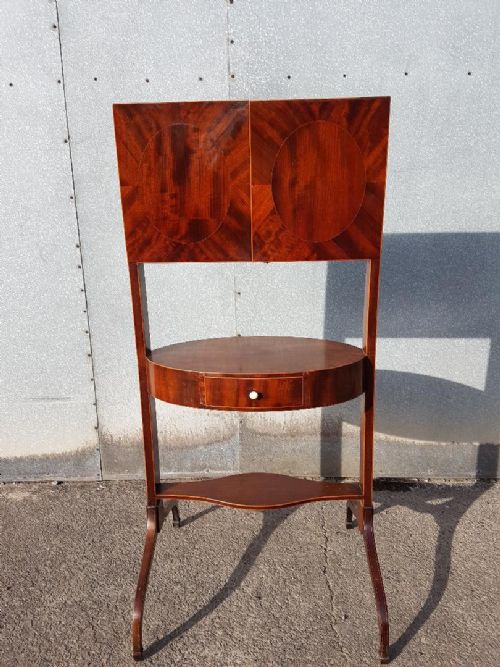
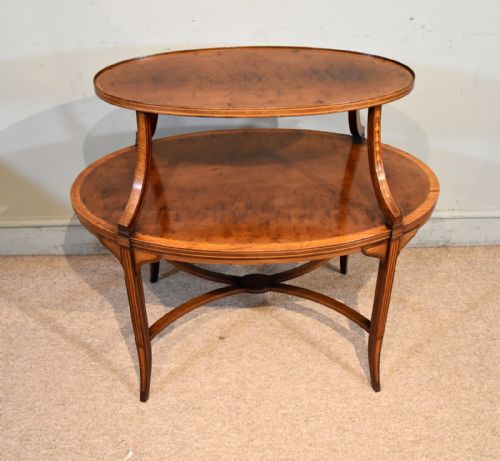


Oval Tiered Table
An oval tiered table brings layered display surface and graceful curves to a room, uniting utility with decorative presence.
Oval Tiered Table
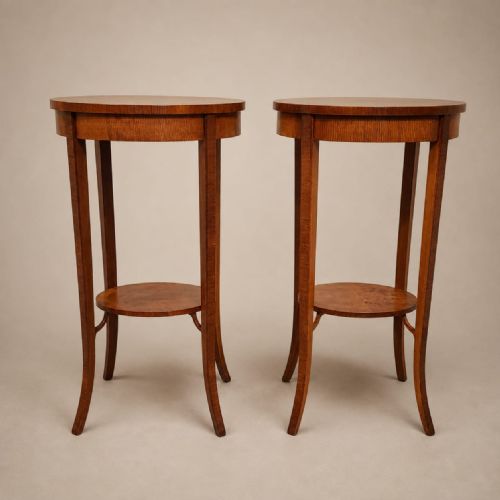
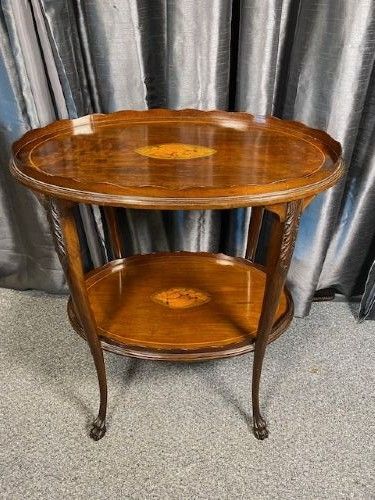
An oval tiered table provides multiple levels of surface area arranged vertically, taking the form of etageres, occasional tables, and lamp stands. These pieces appear most frequently from the Edwardian era and the nineteenth century, constructed with stacked platforms linked by slender supports.
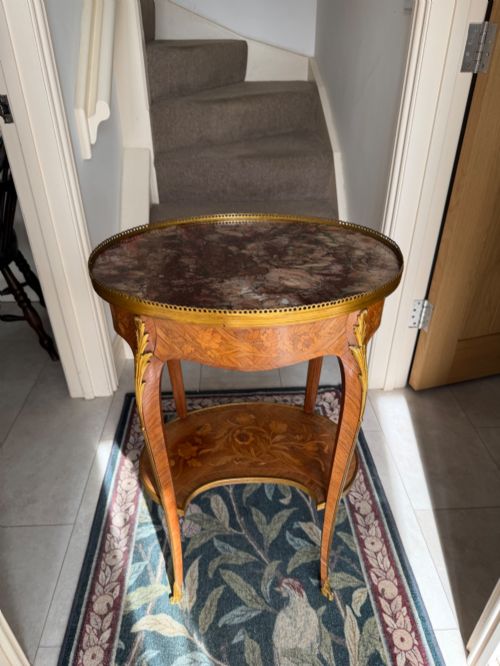
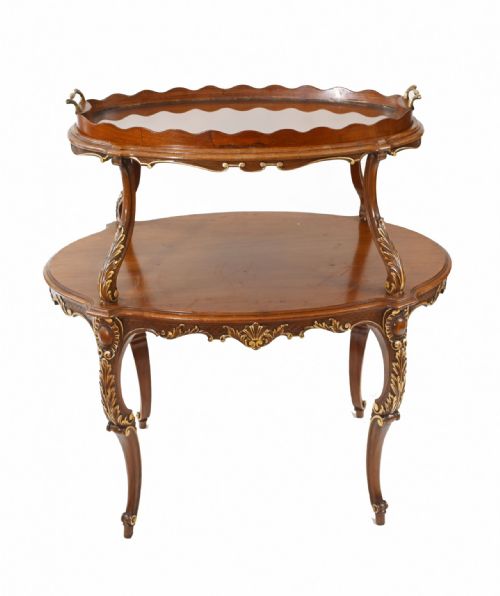
The layout serves compact spaces and larger rooms alike, functioning beside seating or as a freestanding display piece. Variations range from simple two-tier mahogany examples to elaborate inlaid French designs with brass mounts.
Materials and construction
Cabinetmakers utilised dense timbers such as mahogany, walnut, and rosewood, often applying satinwood, kingwood, and wood veneers to create contrasting borders and central panels. Marquetry and parquetry inlay add geometric or floral patterns across the upper surfaces.
Structural elements incorporate brass mounts, ormolu details, and turned supports that connect the separate tiers securely. Hand-carved foliate decoration and polished finishes complete the manufacture of these multi-level surfaces.
Listings span the Victorian, Edwardian, and interwar periods, showcasing timber varieties from mahogany and walnut to amboyna.
Quality factors in tiered furniture
The standard of an oval tiered table rests upon the precision of the veneer work and the crispness of any marquetry inlay. Timber selection dictates longevity, with finely figured grain and solid secondary woods marking out superior examples.
Construction integrity shows in the stability of the upright supports and the flush alignment of the tiers. Refined brass fittings and restrained decorative carving distinguish workshop output from mass production.
Haentgos Freres Paris
The Oval Tiered Table Glossary
- Étagère
- A piece of furniture with open shelves or tiers for displaying small objects or ornaments. The form originated in France during the eighteenth century.
- Marquetry
- Decorative woodwork where pieces of veneer are fitted into a ground material to form designs. This technique frequently employs contrasting timbers like mahogany and satinwood.
- Ormolu
- Gilt bronze ornamentation applied to furniture mounts and feet. The method involves coating bronze with a finely ground gold-mercury amalgam.
- Parquetry
- Geometric mosaic woodwork used for flooring and table surfaces. The small wooden blocks create repeating patterns across the top tier.
- Occasional table
- A small, versatile table designed for specific, intermittent use within a room. These pieces move easily to serve as lamp or side stands.
Oval Tiered Table: Frequently Asked Questions
What is an oval tiered table used for?
An oval tiered table functions as a display surface for lamps, books, and decorative objects across multiple levels. The stacked platforms maximise display capacity while occupying a modest floor footprint.
These pieces find placement beside seating arrangements, in hallways, or as freestanding accent furniture. The upper and lower tiers separate items for visual balance.
How do I identify an Edwardian oval tiered table?
Edwardian examples typically feature light mahogany construction, often paired with satinwood banding and delicate inlaid motifs. The proportions remain slender, reflecting the neo-classical revival tastes of the period.
Construction methods from this era often include machine-assisted veneer work alongside hand-finished details. Labels or stamps underneath the tiers occasionally indicate the maker or retailer.
What is the difference between an etagere and a side table?
An etagere incorporates multiple open shelves or tiers specifically designed for display purposes. A standard side table usually provides a single primary surface with optional lower storage.
Tiered etageres emphasise verticality and decorative framing around each level. Both forms overlap in smaller occasional table formats.
How should I care for a veneered walnut table?
Maintain polished walnut and mahogany surfaces by dusting with a soft, dry cloth. Avoid placing wooden furniture near direct heat sources or strong sunlight to prevent veneer lifting and fading.
Occasional application of appropriate wax polish preserves the sheen of the timber. Protect the tiers from moisture by using coasters under drinks or damp items.