


Oval Etagere Table
An oval etagere table is a tiered display piece that brings practical surface space and elegance to any room.
Oval Etagere Table
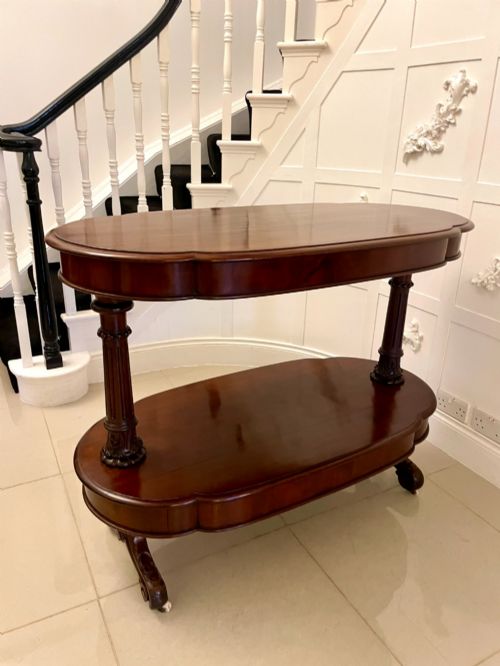
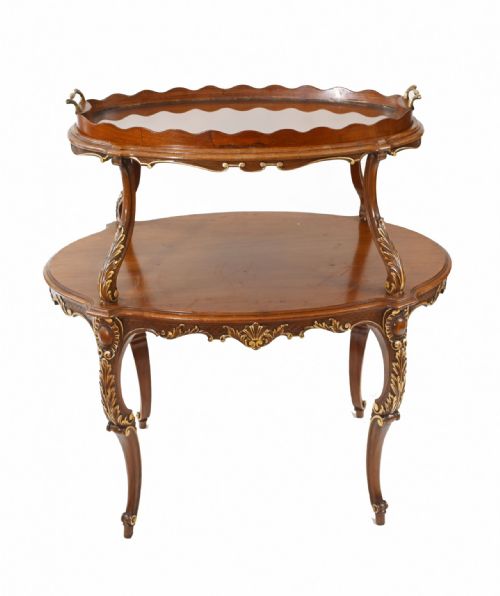
An oval etagere table provides multiple tiers for display and surface use, taking the form of tiered tables, occasional tables, and whatnots. These multi-level pieces serve as functional side tables or decorative display stands within a room.
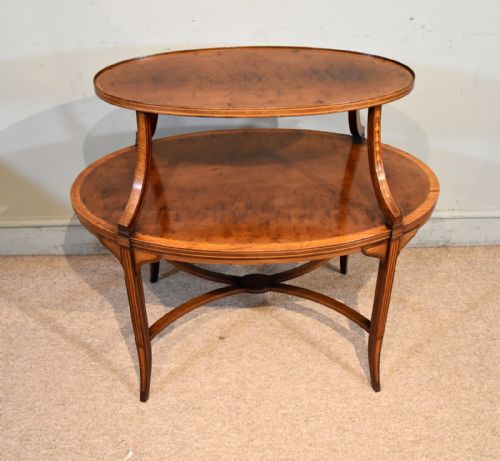
The versions most commonly met on this page span the Victorian and Edwardian periods, frequently appearing in mahogany with satinwood inlay. Makers of these eras favored the soft oval shape to soften room layouts while offering stacked surfaces.
Origins stretch from English workshops to French ateliers, showing influences from Sheraton Revival to Rococo Revival designs. Pieces range from simple two-tier occasional tables to more elaborate marquetry-inlaid creations.
Materials and construction methods
Cabinetmakers constructed these tables using timbers such as mahogany, walnut, burr walnut, and satinwood, often embellishing the surfaces with marquetry inlay. Brass mounts and giltwood details frequently accent the frames, adding structural contrast and decorative flair.
Tiers are joined by slender vertical supports or columns, creating open shelving designed to hold decorative objects or serving items. Marquetry and stringing techniques define the inlaid ornamentation seen across Edwardian and Victorian examples.
Listings include pieces from the Victorian, Edwardian, and 1930 periods, constructed in mahogany, walnut, satinwood, and brass.
What separates the finest examples
Quality rests in the precision of the timber selection, such as figured burr walnut or carefully matched satinwood veneers. The crispness of the marquetry inlay and the solidity of the tiered joinery indicate the original maker's skill.
Refinement shows in the quality of the brass mounts and the delicacy of the turned supports. Superior pieces maintain structural rigidity across multiple tiers without sacrificing visual lightness.
The Oval Etagere Table Glossary
- Etagere
- A set of open shelves or tiers for displaying small objects and ornaments. This French form became popular in Britain during the nineteenth century.
- Whatnot
- A piece of furniture with shelves for books or ornaments, closely related to the etagere. These served practical display functions in period interiors.
- Marquetry
- Decorative veneer work forming geometric or floral patterns using various tinted woods. Craftsmen applied these patterns to the top surfaces of tables.
- Sheraton Revival
- A late nineteenth and early twentieth-century style drawing on the lighter neoclassical furniture of George Sheraton. Pieces typically feature satinwood and delicate inlay.
- Campaign
- Portable furniture designed for travel, featuring brass corners and flush handles. These pieces were built for easy dismantling and transport.
Oval Etagere Table: Frequently Asked Questions
What is an oval etagere table used for?
These tiered tables provide multiple surfaces for placing lamps, books, or decorative objects in a living space. Their open shelving design allows for both display and everyday utility.
They function well as side tables, occasional tables, or central display pieces within a room layout.
How do I identify an Edwardian etagere?
Edwardian examples often feature light timbers like satinwood and mahogany, frequently decorated with delicate marquetry inlay. The overall aesthetic leans towards refined lightness and Sheraton Revival styling.
Construction from the early twentieth century typically displays precise veneering and slender supporting columns.
Are these tables sturdy enough for daily use?
The multiple tiers provide strong support when the joints and vertical columns remain secure and well-maintained. They were originally built to hold books, ornaments, or tea services.
Placement on level flooring ensures the stability of the stacked tiers during everyday service.
What is the difference between an etagere and a whatnot?
Both terms describe tiered furniture used for display, though whatnot historically referred to shelving units for miscellaneous items. In practice, makers and merchants often used the names interchangeably for tiered tables.
Both forms offer open shelves supported by vertical posts or legs.