


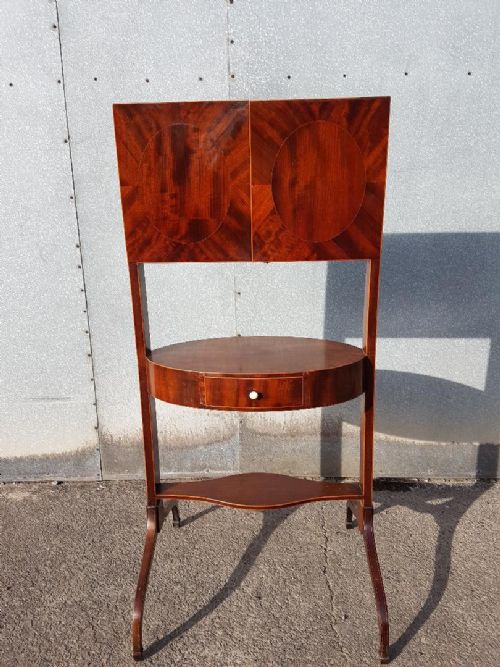
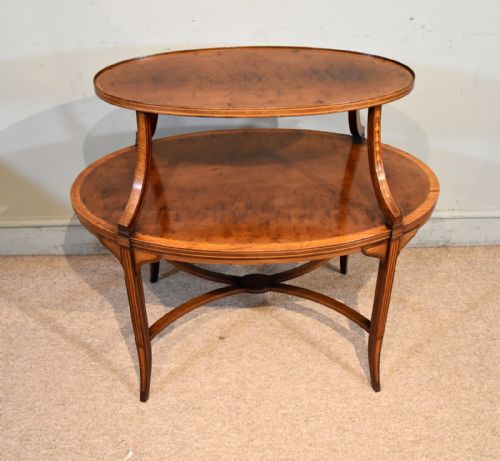


Oval Tier Side Table
An oval tier side table brings curved elegance and stacked surface space to a room, offering the classic utility collectors seek.
Oval Tier Side Table
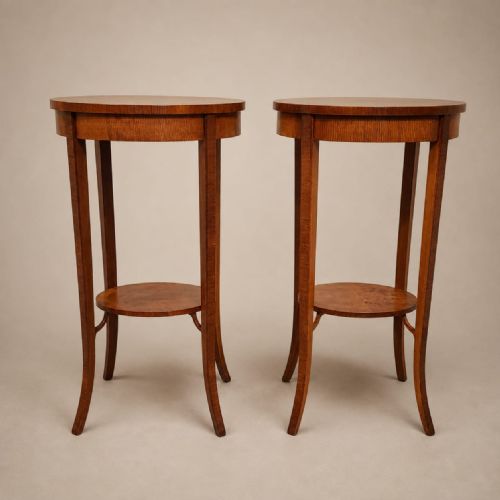
An oval tier side table provides multiple display levels within a rounded footprint, making it a versatile choice for compact spaces or beside seating. These pieces appear frequently in Edwardian and Victorian forms, often constructed as two-tier occasional tables or étagères with slender supports.
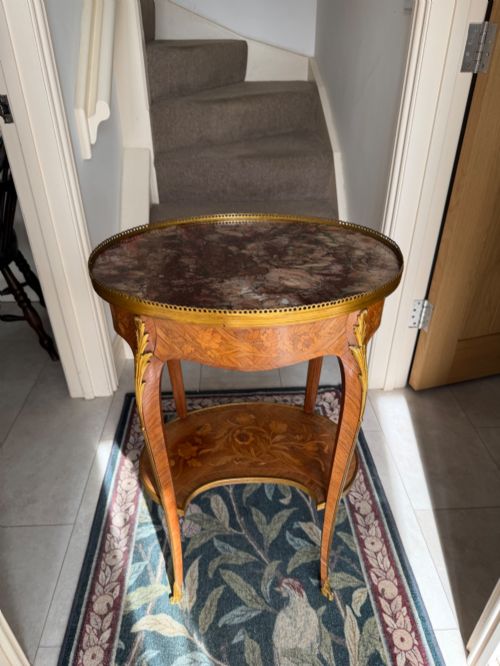
Makers designed these tiered surfaces to hold lamps, decorative items or small books without dominating the room. The selection spans simpler mahogany occasional tables to more ornate French and revival pieces featuring marquetry and brass mounts.
How They Were Made
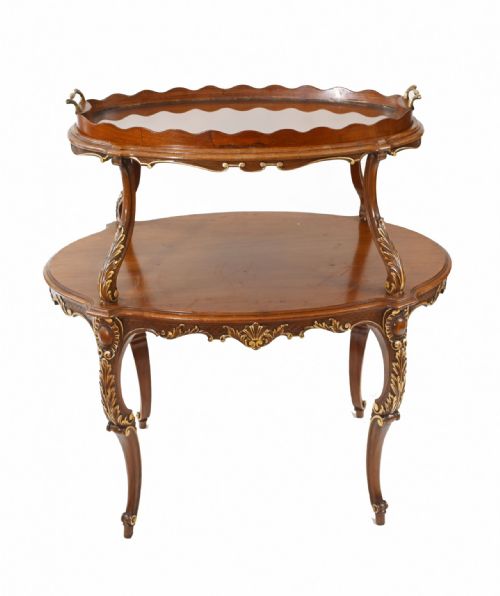
Cabinetmakers utilised timbers such as mahogany, walnut and satinwood, frequently applying fine wood veneers and intricate marquetry inlays to create decorative surface patterns. Brass mounts, ormolu accents and subtle hand-carved foliate details frequently punctuate the frames of the more elaborate examples.
Construction methods relied on stable multi-tier joints, supporting secondary shelves beneath the main oval top. The integration of contrasting woods like rosewood and kingwood allowed artisans to produce distinct borders and geometric panel designs.
What Varies in Quality
The distinction between standard production and superior craftsmanship rests in the precision of the veneer work and the crispness of the marquetry inlay. Finer examples display seamless timber matching across multiple tiers and carefully secured structural supports that maintain rigidity.
Material selection dictates the overall presence of the piece, with richly figured burr walnut, amboyna or detailed brass and ormolu mounts indicating a higher grade of manufacture. Simpler solid mahogany versions rely entirely on balanced proportions and clean joinery for their appeal.
Haentgos Freres Paris
The Oval Tier Side Table Glossary
- Étagère
- A piece of furniture consisting of a set of open shelves for displaying small objects. This form appears often among the multi-tiered tables.
- Marquetry
- Decorative veneer applied to furniture in patterns using different woods, metals or other materials. It creates pictorial or geometric designs on the table top.
- Ormolu
- Gilded bronze used for decorative mounts and furniture accents. It adds metallic highlights to French and revival styles.
- Satinwood
- A durable, yellowish wood used for fine cabinet-making and inlay work. It provides a bright contrast against darker timbers like mahogany.
Oval Tier Side Table: Frequently Asked Questions
What is an oval tier side table used for?
These tables serve primarily as flexible surface furniture placed beside seating or against walls. The additional tiers provide extra space for lamps or display items.
Their compact oval shape allows them to fit easily into corners or narrower gaps where rectangular tables might obstruct movement.
How do I identify an Edwardian tier table?
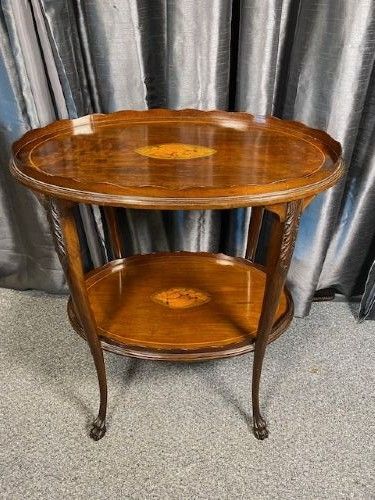
Edwardian examples often feature light mahogany construction with subtle satinwood stringing and inlaid details. They frequently incorporate two distinct levels connected by slender upright supports.
Stylistic cues draw heavily from Sheraton Revival influences, focusing on refined proportions rather than heavy ornamentation.
Are these tables sturdy enough for daily use?
Most multi-tier tables are built with solid framing designed to support everyday objects like books and lighting. The lower tiers add structural stability to the entire piece.
Care should be taken not to overload secondary shelves, particularly on lighter antique models with delicate spindle supports.
What materials are most common on these tables?
Mahogany and walnut form the structural foundation for the majority of these tables. Satinwood, rosewood and kingwood frequently appear as contrasting veneers.
Decorative accents often include brass hardware, marquetry panels and occasional hand-carved edges.