


Oval Tabletop Swing Mirror
An oval tabletop swing mirror is a dressing table companion designed to tilt on vertical pivots, bringing adjustable reflection and classic timber warmth to a room.
Oval Tabletop Swing Mirror
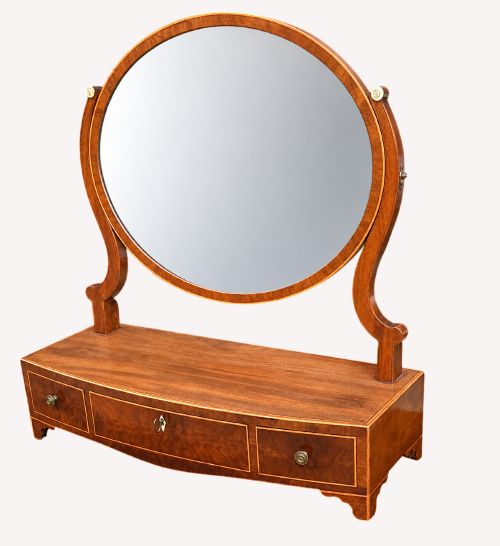
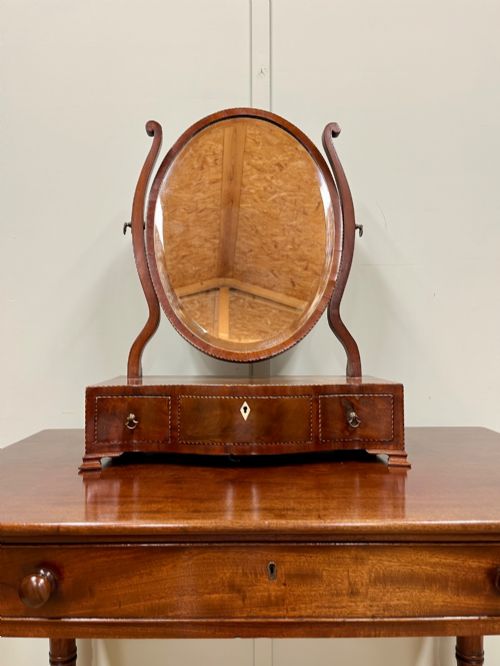
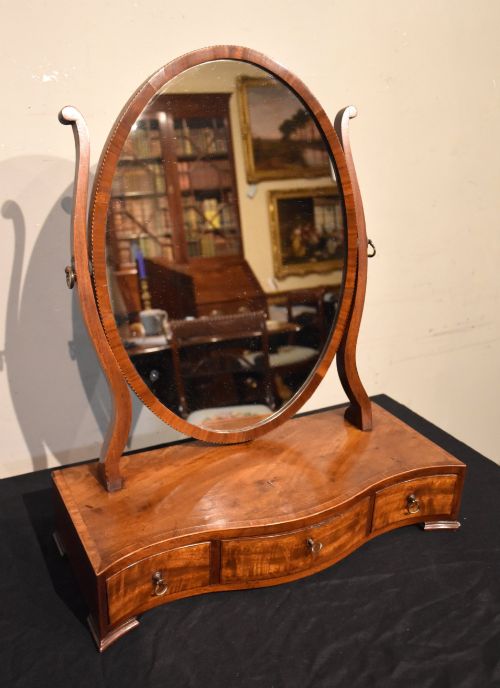
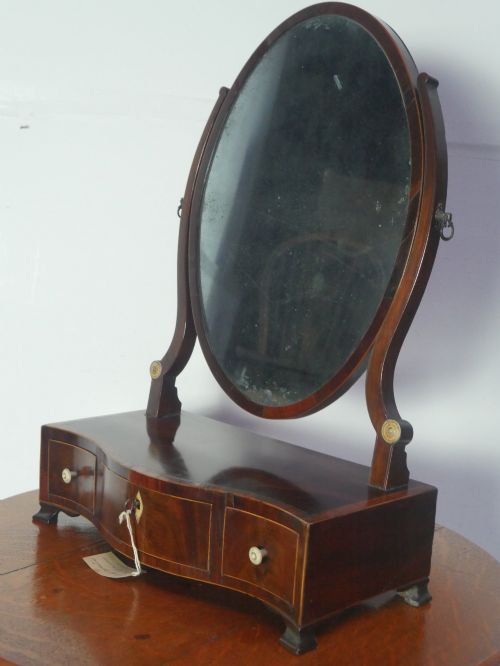
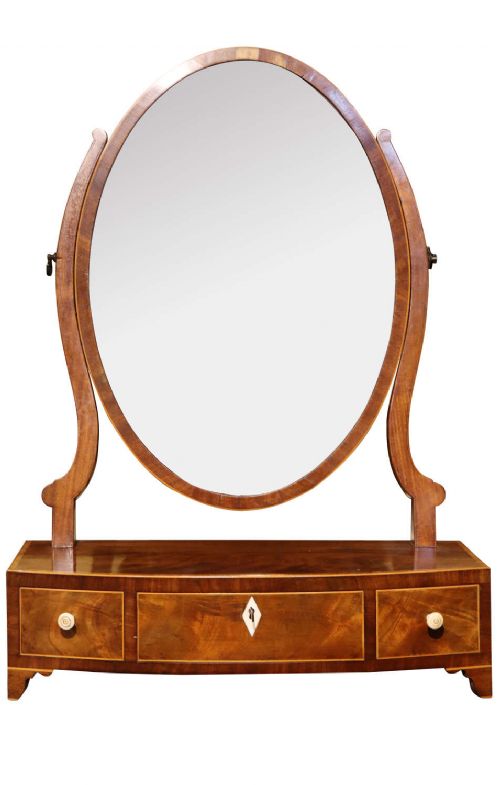
An oval tabletop swing mirror sits upon a small box base or curved supports, designed for daily grooming and reflection on a dressing table. You will frequently meet Georgian and Victorian examples fashioned in rich mahogany, often featuring serpentine or bow-fronted drawers beneath the glass.
The format ranges from plain George III designs with slender uprights to elaborate Victorian and Edwardian interpretations complete with satinwood inlay, bone escutcheons, and carved feet. These pieces serve as both functional toilet mirrors and decorative focal points for a chest of drawers or vanity.
How they were made
Cabinetmakers constructed the frames and drawer bases of these mirrors predominantly from solid mahogany, walnut, or satinwood, frequently applying boxwood stringing and crossbanding to the curved perimeters. Brass pivot screws and side arms hold the pivoting frame securely between upright supports, allowing the glass to tilt at various angles.
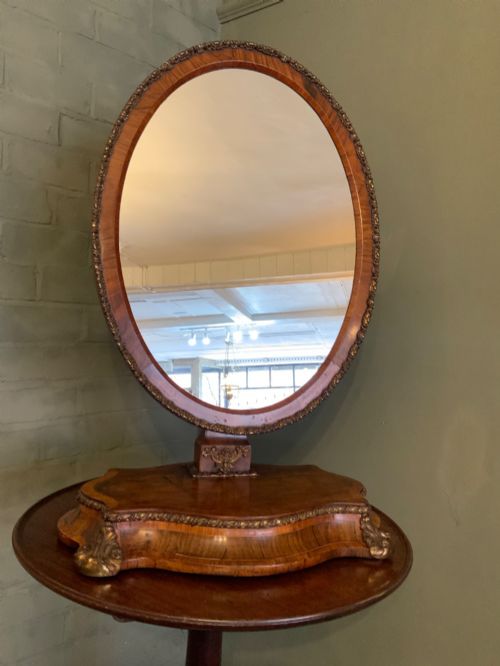
Italian and French pieces employ carved giltwood and gesso over a wooden core, building up intricate relief decoration. The mirror plates themselves are held within rebated wooden frames, sometimes backed with simple timber panels.
Listings feature mahogany predominantly, accompanied by walnut, satinwood, giltwood, and gesso, spanning the Georgian, Victorian, and Edwardian periods.
What varies in quality
The distinction between ordinary and superior pieces rests upon the choice of timber figure, such as flame mahogany or finely figured satinwood, and the precision of the boxwood inlay. Better examples display crisp joinery on the serpentine or bow-fronted drawer bases and retain their original cast brass hardware.
Proportion and carved detail dictate the upper tier of craftsmanship, where shaped supports, delicate boxwood stringing, and well-executed bun feet elevate a standard toilet glass into a refined decorative object.
The Oval Tabletop Swing Mirror Glossary
- Serpentine
- A curved line of furniture fronting that bends inward centrally and outward at the sides, creating a gentle undulating shape. This contour appears frequently on the drawer bases of Georgian dressing mirrors.
- Toilet mirror
- A traditional term for a small mirror designed to sit on a dressing table or washstand. These pieces often incorporate small drawers for storing cosmetics or trinkets.
- Crossbanding
- A narrow strip of veneer applied to the border of a panel or drawer front with the grain running perpendicular to the main surface. It frames the primary wood grain for a decorative finish.
- Gesso
- A plaster-like mixture applied to wood surfaces as a base for moulding and gilding. It allows craftsmen to create ornate relief decoration on giltwood frames.
- Swing mirror
- A glass plate mounted on pivots between two upright posts, allowing it to tilt back and forth. This mechanism forms the defining functional feature of the tabletop dressing mirror.
Oval Tabletop Swing Mirror: Frequently Asked Questions
How do I identify a Georgian mirror?
Georgian mirrors typically feature solid mahogany construction, precise dovetail joints in the drawer bases, and understated bracket feet or serpentine fronts. The timber possesses a deep natural patina developed over generations.
Later Victorian interpretations often use heavier proportions, machine-cut veneers, and more elaborate carved supports or squashed bun feet.
What is the difference between a toilet mirror and a dressing table mirror?
In historical terminology, toilet mirrors and dressing table mirrors refer to the same object: a movable glass placed upon furniture for personal grooming. Both terms describe tabletop swing frames with or without small drawer bases.
These pieces were intended to sit atop a dedicated dressing table or an ordinary chest of drawers in a bedroom.
Where should I place a tabletop swing mirror?
These mirrors sit comfortably on top of chests of drawers, sideboards, or dressing tables where their pivoting action can direct light and reflection. They add vertical height and traditional timber warmth to empty surface spaces.
Ensure the supporting surface is deep enough to accommodate the footprint of the mirror base and its backward tilt.
Did these mirrors always have drawers?
Not all tabletop swing mirrors incorporate storage compartments in their base. Many early and minimalist designs consist simply of upright supports holding the pivoting oval glass above plain feet.
Examples with one, two, or three serpentine or bow-fronted drawers provide functional space for small personal items.