
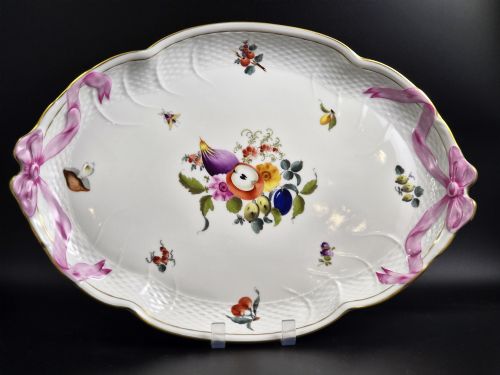
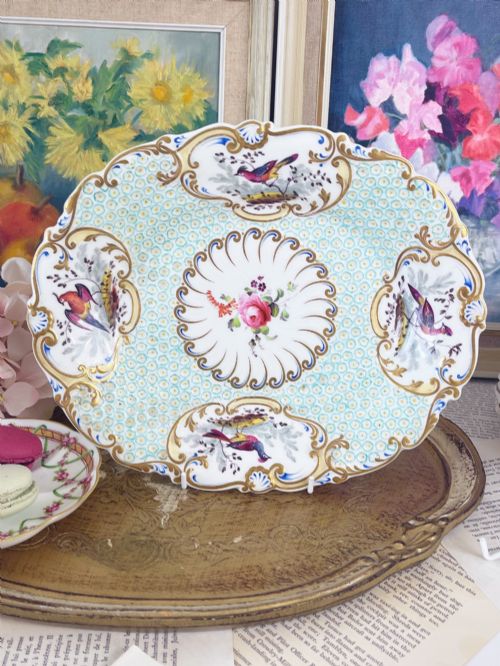

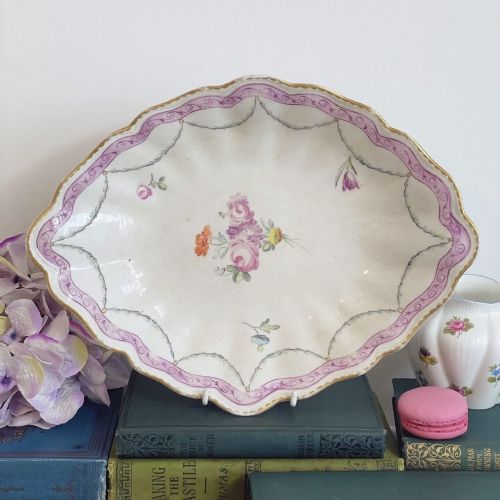
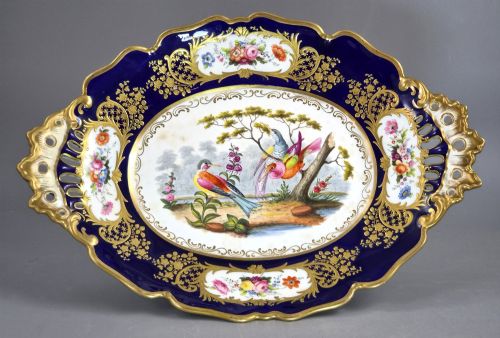

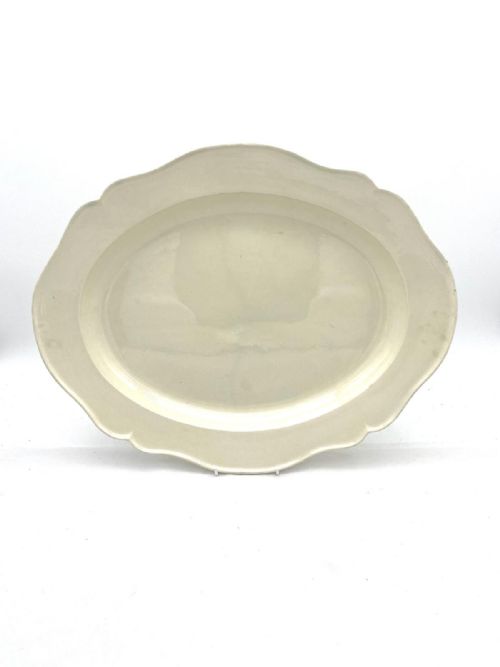
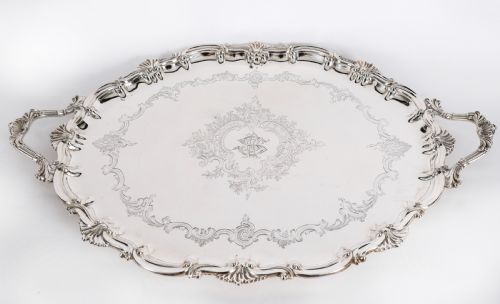
Oval Serving Platter
An oval serving platter brings both presence and utility to the table, uniting centuries of craftsmanship in earthenware, silver plate, and mahogany.
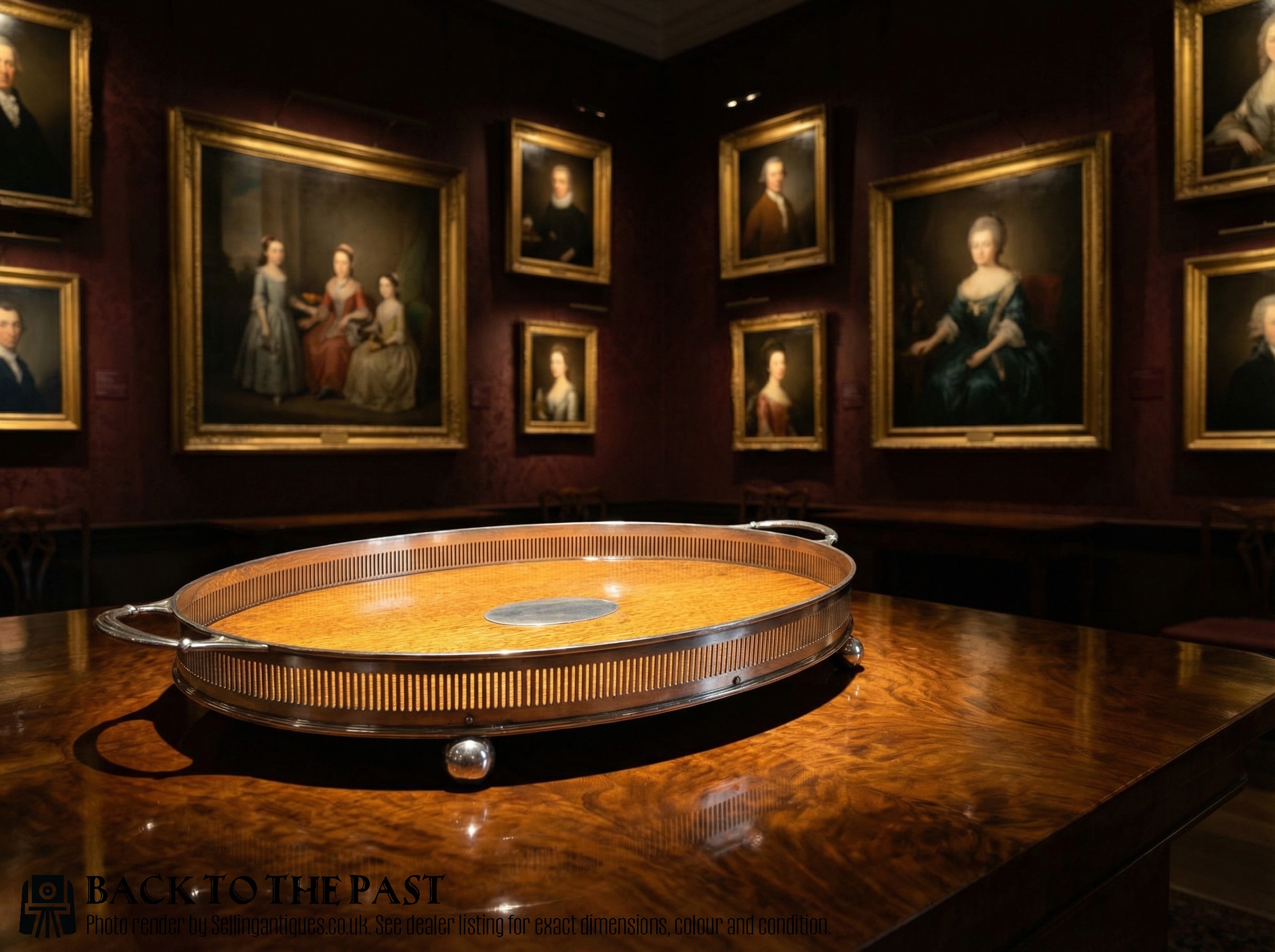
Oval Serving Platter
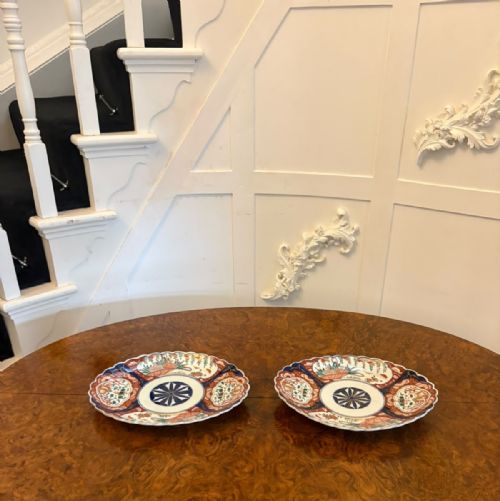
An oval serving platter is a functional dining piece designed to present meat, fish, or vegetables at the table, evolving from eighteenth-century creamware chargers to substantial Victorian silver-plated trays. The pieces found here span George III, Georgian, Victorian, and Edwardian periods, alongside Arts and Crafts copper and Japanese Imari porcelain.
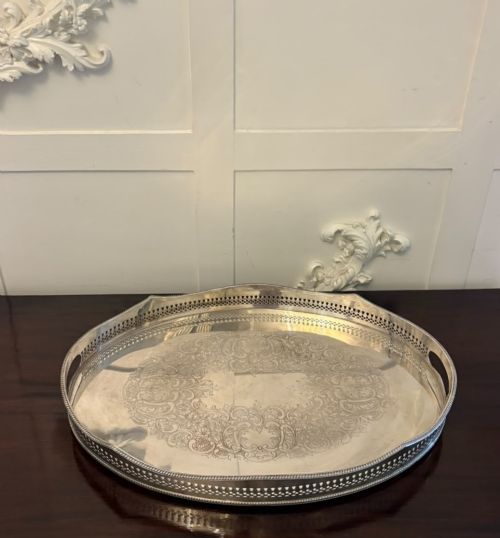
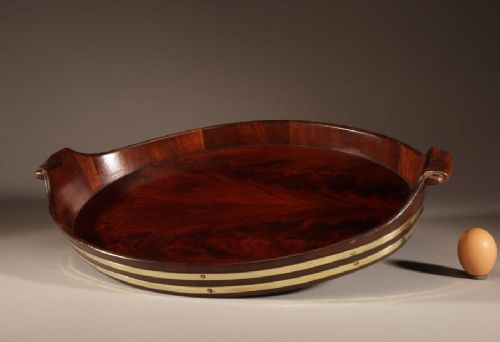
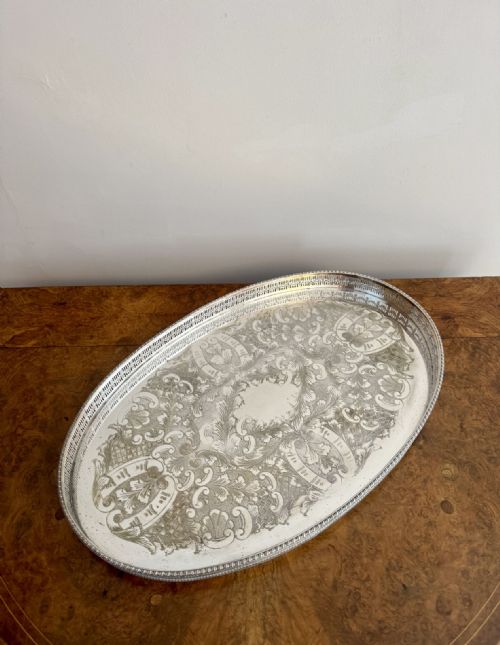
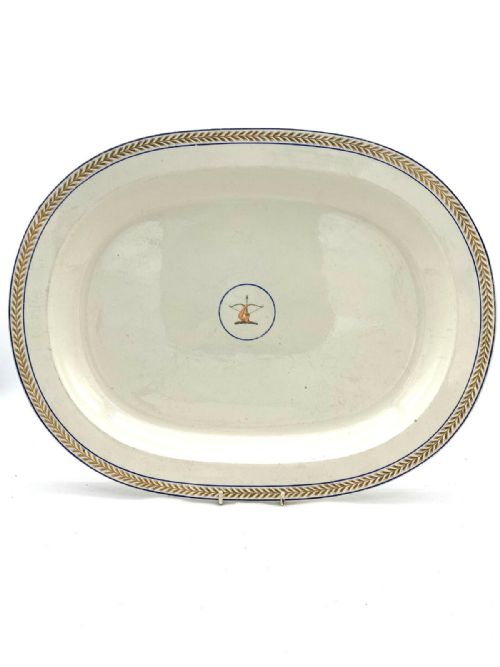
Most examples encountered on this page take the form of nineteenth-century earthenware platters with blue and white transfer prints, or Edwardian silver-plated serving trays with engraved decoration. Alongside these sit eighteenth-century creamware dishes, mahogany coopered trays, and repoussé copper work from the early twentieth century.
Originating from English potteries like Wedgwood, Derby, and Coalport, as well as continental and Asian workshops, these dishes served domestic dining rooms and grand estates alike. Their forms range from deep meat wells on heavy platters to flat galleried cocktail trays intended for drinks service.
How they were made
Pottery platters were thrown or moulded in earthenware, creamware, or porcelain, then finished with handpainted polychrome pigments or blue and white transfer printing beneath a clear glaze. Earthenware bodies required careful kiln firing to prevent warping across large spans, particularly on eighteenth-century chargers.
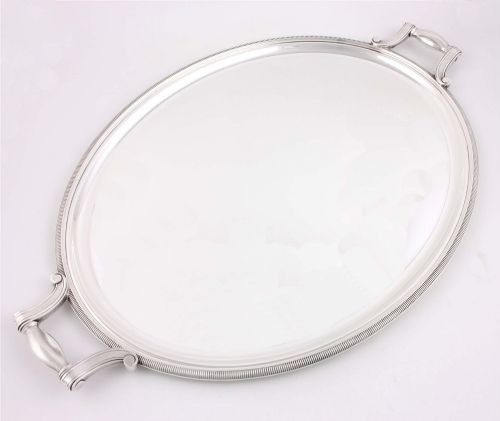
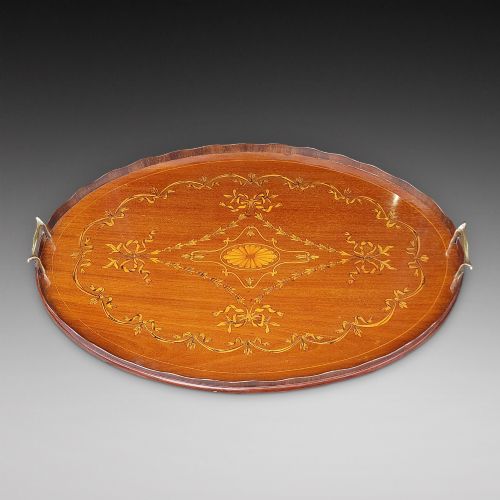
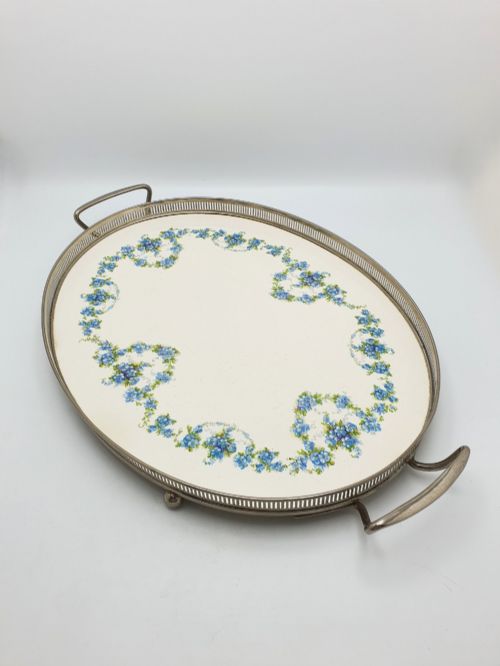
Metal pieces relied on silver plating over copper or base metals using early fusion methods like Old Sheffield Plate, or later electroplating techniques developed by firms such as Mappin & Webb and Walker & Hall. Copper vessels often received hand-beaten repoussé decoration, while wooden trays combined mahogany frames with inlaid marquetry or brass coopered bands.
The site listings feature oval serving platters spanning the eighteenth, nineteenth, and twentieth centuries, executed in silver plate, earthenware, porcelain, and copper.
What varies in quality
Quality rests in the crispness of the transfer print or the precision of the handpainted details, such as fancy birds and polychrome flowers applied by porcelain decorators. Heavier metal platters demonstrate superior gauge in their silver plate and sharper hand-engraved motifs rather than shallow machine stamping.
Structural integrity distinguishes finer wooden and ceramic pieces, visible in tight veneer work on Edwardian mahogany trays and unwarped rims on eighteenth-century creamware. Makers whose names are stamped or marked on the reverse generally indicate higher workshop standards.
H & R Daniel·Mappin & Webb·Thomas Bradbury & Sons·Hugh Wallis·Walker & Hall·Harrison Bros
The Oval Serving Platter Glossary
- Creamware
- A refined cream-coloured earthenware developed in eighteenth-century England, prized for its smooth glaze and light weight. Wedgwood mastered this body for armorial platters and chargers.
- Transfer print
- A decoration technique where an engraved copper plate transfers a design onto tissue paper, which is then pressed onto the ceramic body before glazing. Blue and white pastoral scenes were commonly produced this way in the nineteenth century.
- Old Sheffield plate
- An early method of fusing a thin sheet of silver to a thicker copper core by heat and pressure. This technique preceded electroplating and leaves a characteristic subtle copper seam along edges.
- Repoussé
- A metalworking technique where the artisan hammers the design from the reverse side to form raised patterns in relief. Arts and Crafts copper trays frequently utilise this method.
- Gallery tray
- A tray featuring a pierced or solid raised metal rim around the edge to prevent decanters and glasses from sliding off during service. These often include sturdy cast handles.
Oval Serving Platter: Frequently Asked Questions
How were oval serving platters used originally?
These platters and trays held large joints of meat, fish, or roasted vegetables at the dining table during formal family meals and grand estate dinners. Deep wells and channels routed juices away from the meat toward a small reservoir at one end.
Smaller silver-plated and mahogany versions functioned in drawing rooms for serving tea, coffee, cocktails, or decanters. Their raised galleries kept glassware secure while footmen carried them between rooms.
Can I use an antique platter for food?
Most ceramic and silver-plated platters from the eighteenth and nineteenth centuries remain structurally sound for serving dry foods, bread, or fruit at the modern table. Glazes from earlier centuries may contain lead, so acidic foods should be avoided on unglazed or damaged surfaces.
Silver-plated items benefit from gentle hand washing with mild soap rather than immersion in modern dishwashers. This preserves the remaining silver plating and prevents corrosion of the underlying base metal.
How do I distinguish eighteenth-century creamware from Victorian ironstone?
Eighteenth-century creamware exhibits a warm, buttery hue in the glaze and a lighter, more porous earthenware body beneath. Platters from this era often lack makers' marks, relying instead on characteristic throwing rings and subtle potting irregularities.
Victorian ironstone and heavy meat platters present a whiter, harder ceramic body designed to resist chipping under daily domestic use. Transfer prints on Victorian pieces also tend to feature deeper blues and sharper monochromatic definition than their eighteenth-century predecessors.
What is the difference between silver plate and sterling silver?
Sterling silver consists of a solid precious metal alloy containing a fixed proportion of pure silver, hallmarked with assay office symbols and date letters. These pieces carry intrinsic metal value alongside their age and maker.
Silver-plated items feature a thin layer of pure silver bonded to a base metal such as copper, nickel silver, or Britannia metal. Makers marked these pieces with specific trade stamps rather than official silver assay hallmarks.